Brass, Bell Metal & Neglected Arts • Bhubaneswar, Odisha
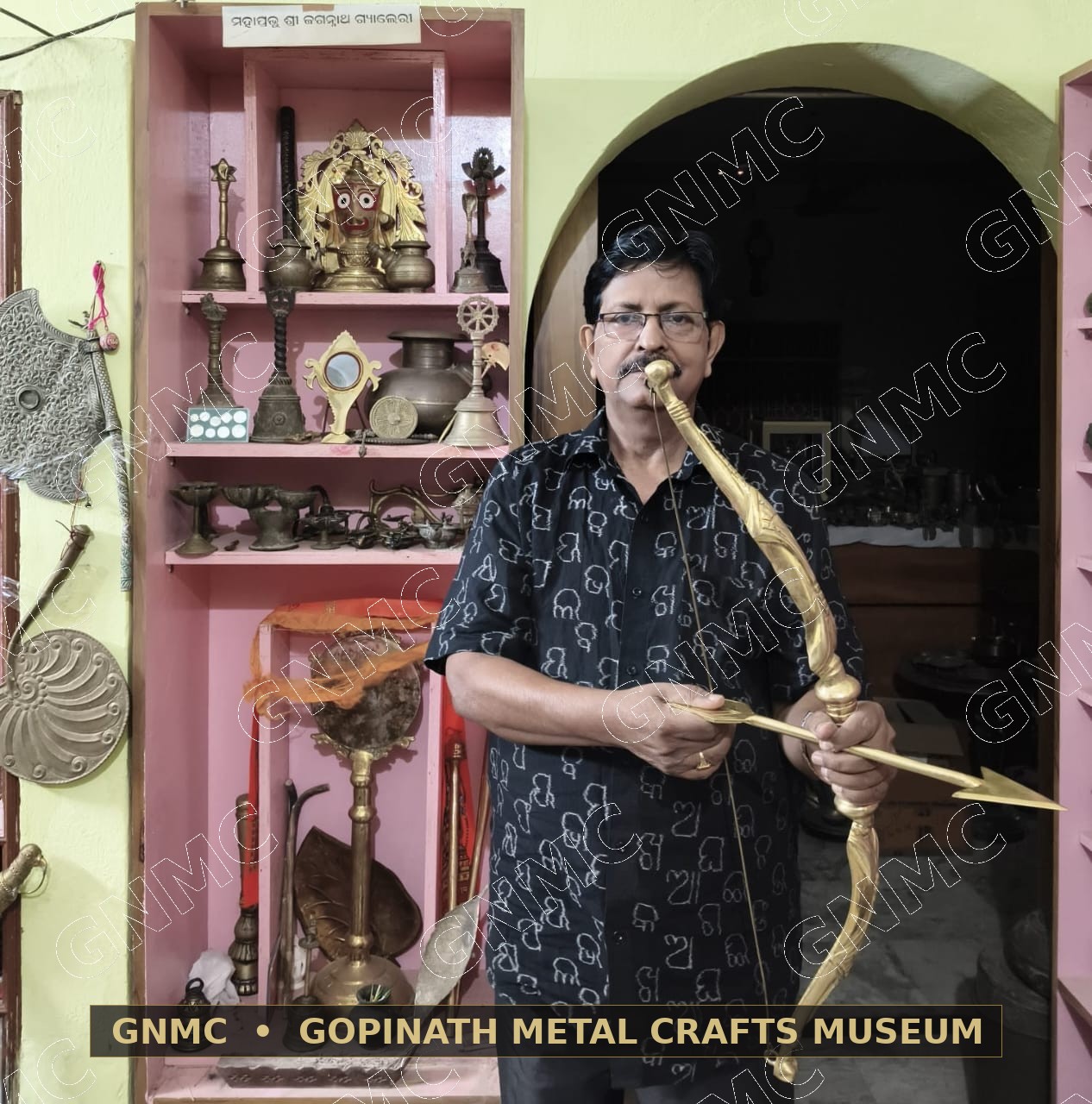
Gopinath Metal Crafts began this journey with prayers to Lord Jagannath and gratitude to the Mahaprabhoo.
Lord of the Universe
Greetings from Gopinath Heritage Museum of Brass and Bell Metal Crafts and Neglected Arts. Gopinath Metal Research Foundation, Bhubaneswar, Odisha, India.
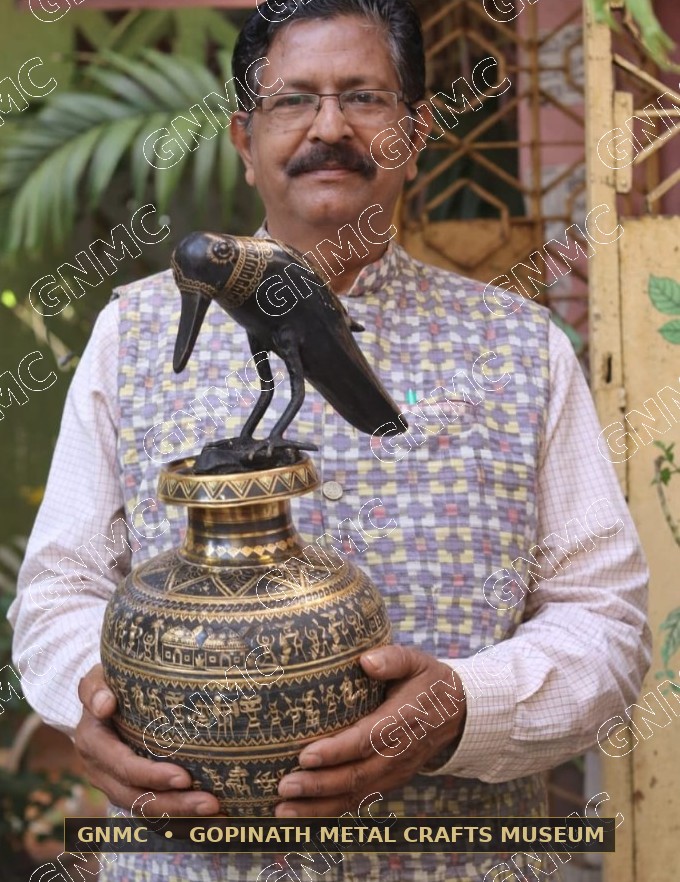
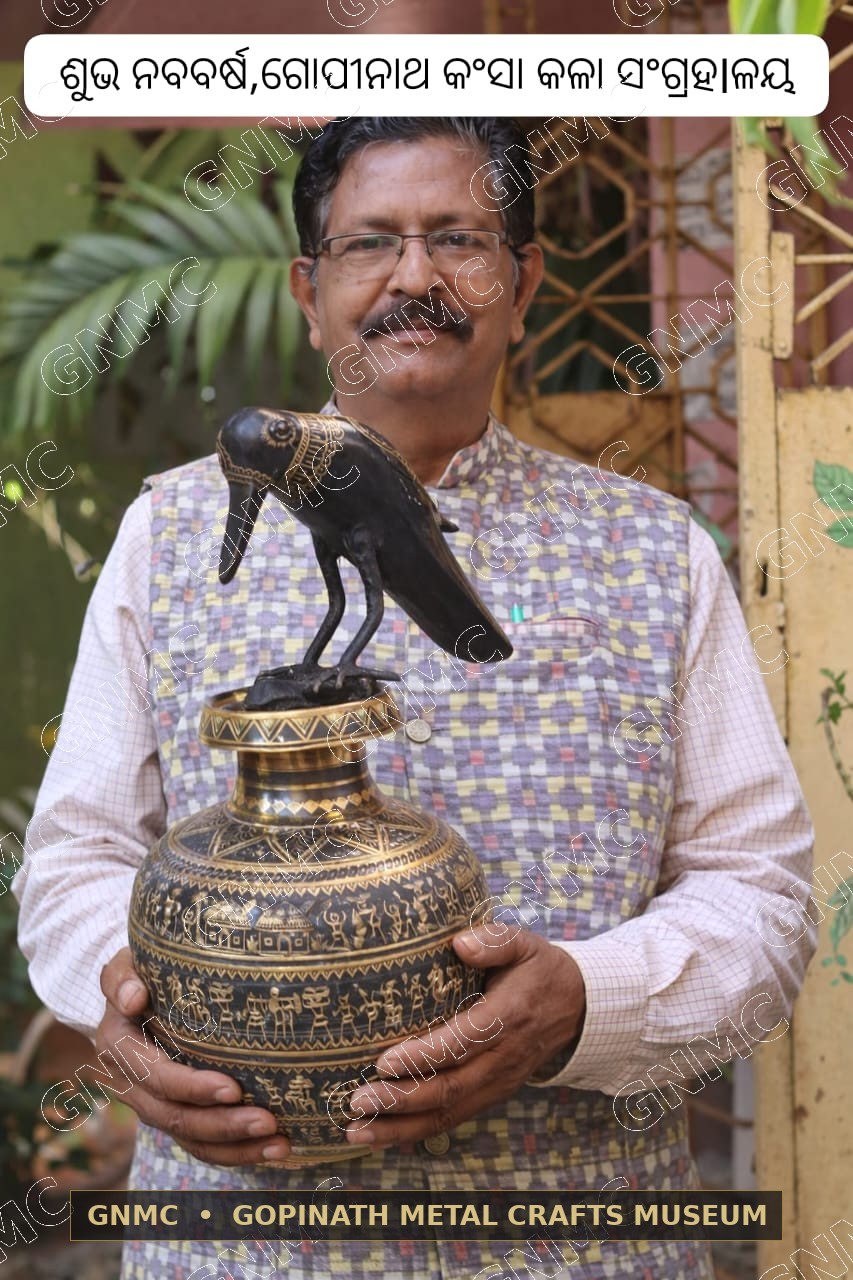
The crow in this tale is an embodiment of smart work and invention. It is persistent towards its goal. In addition to these values, this story teaches children the physics of water displacement. Overall, it is a wonderful tale to understand and share, acquainting them with timeless qualities of ingenuity and perseverance.
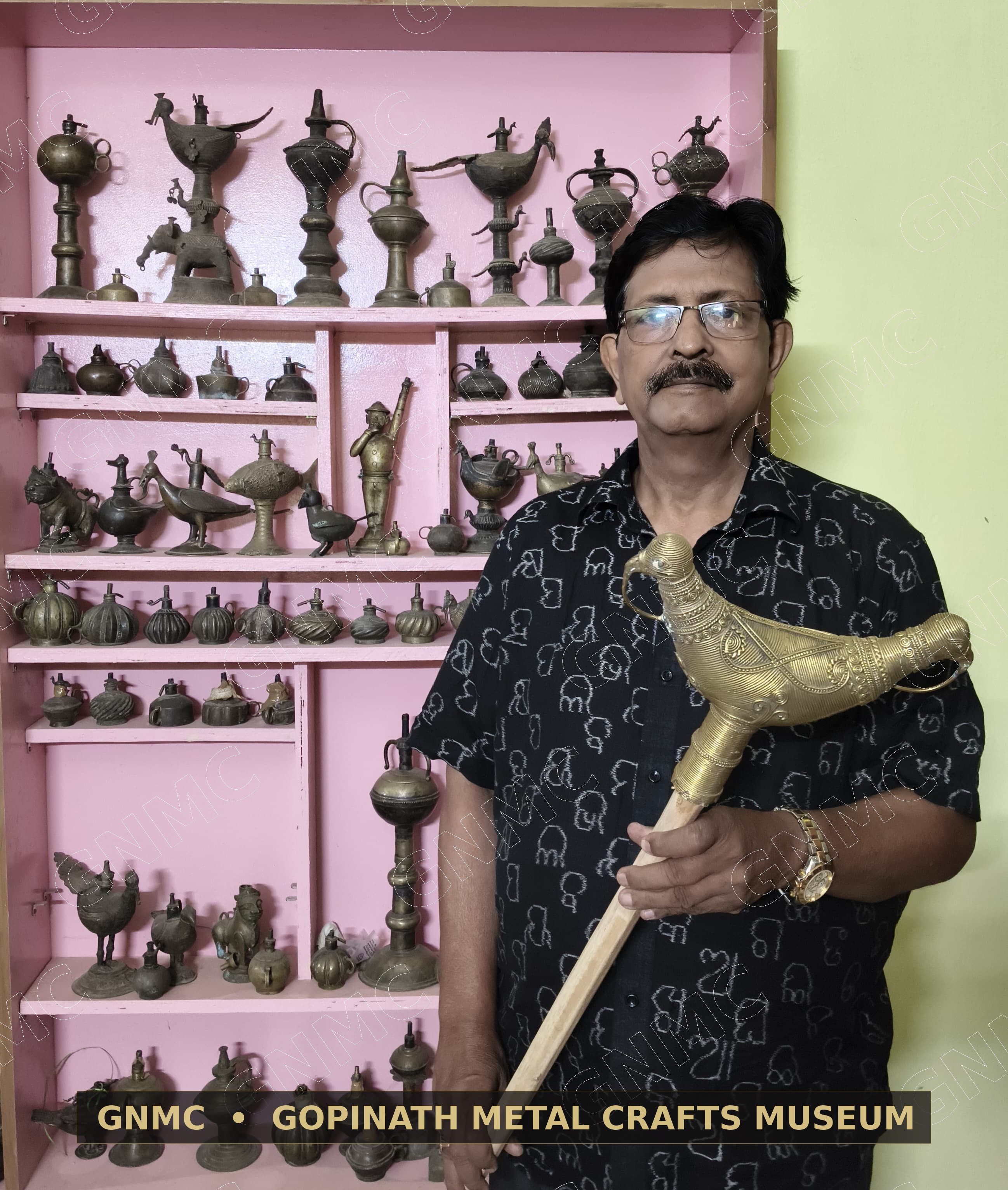
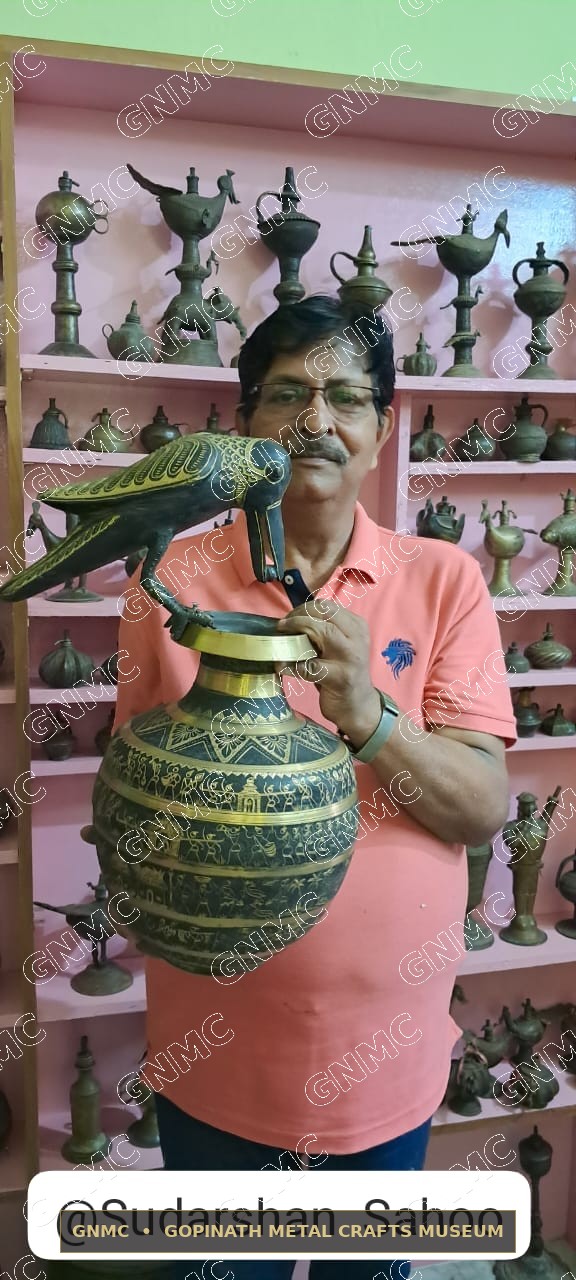
This brass craft is masterfully engraved by hand, drawing inspiration from the art (chitra) form of the Saura tribal community. The crow is life-size, and the water vessel (Kalasa) stands 14 inches high.
We humbly invite viewers to witness this short video demonstrating the extraordinary workmanship and hand-engraving artistry of this revived heritage craft.
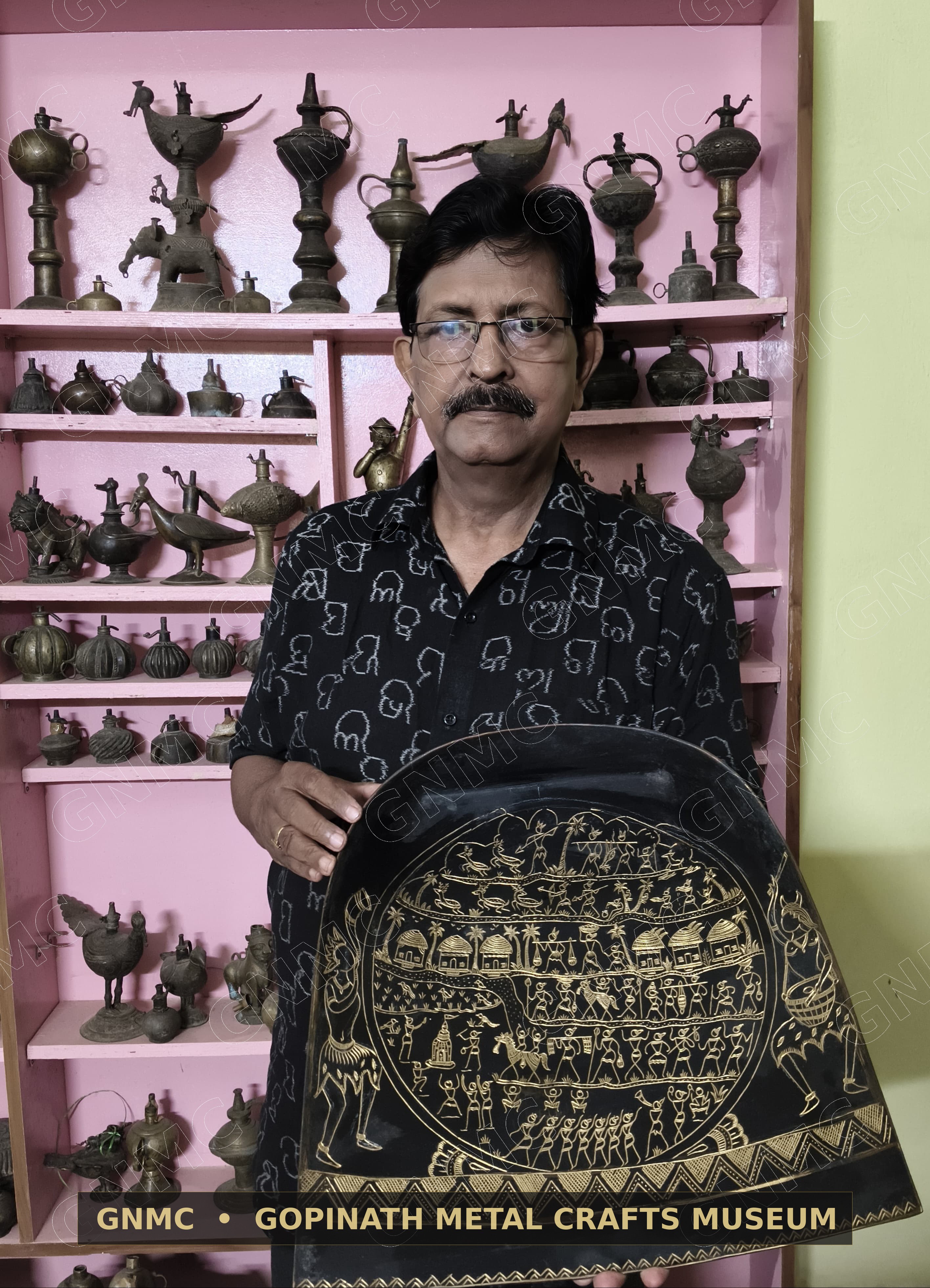
Sri Sudarshan Sahoo with the Clever Crow
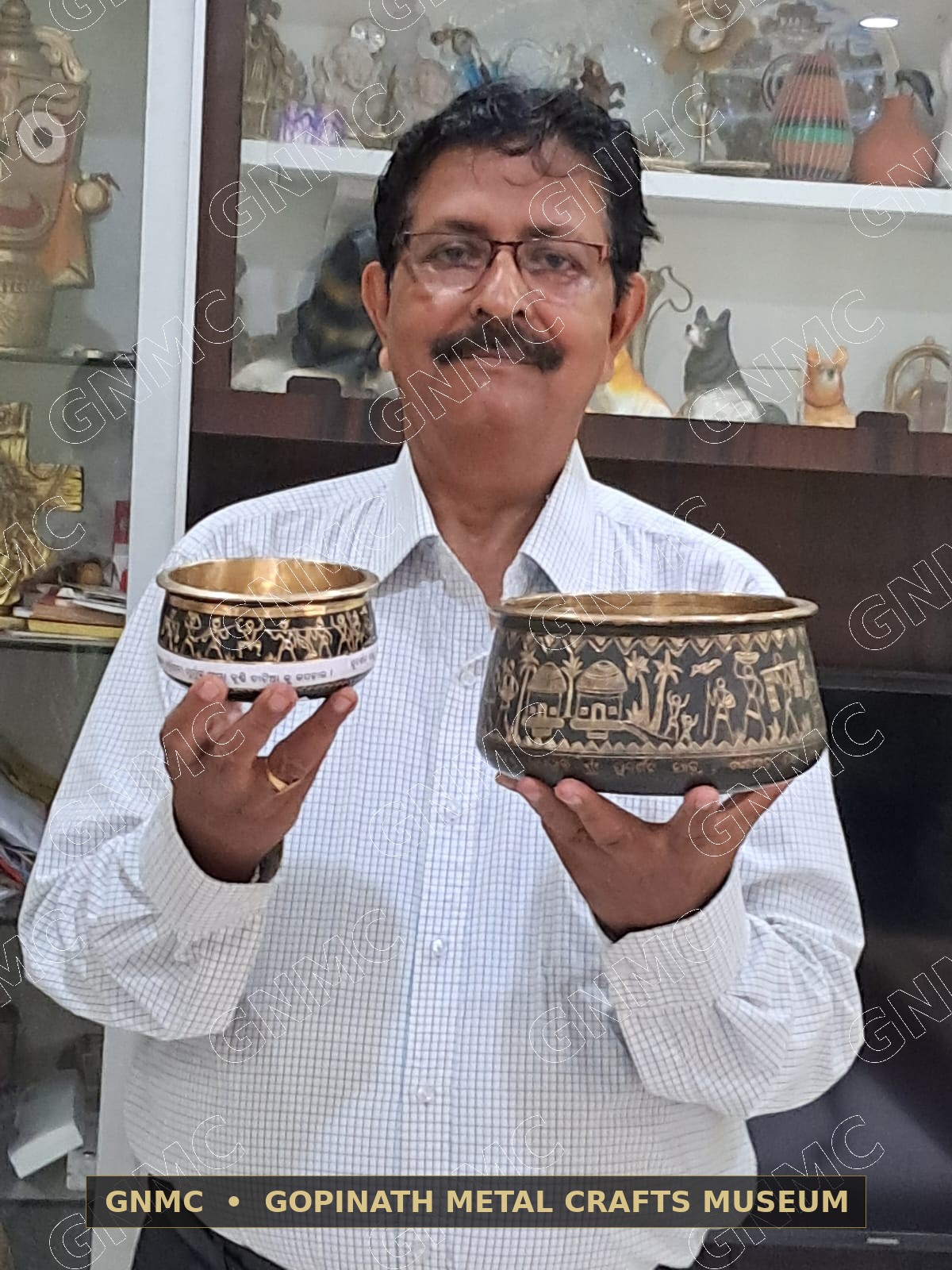
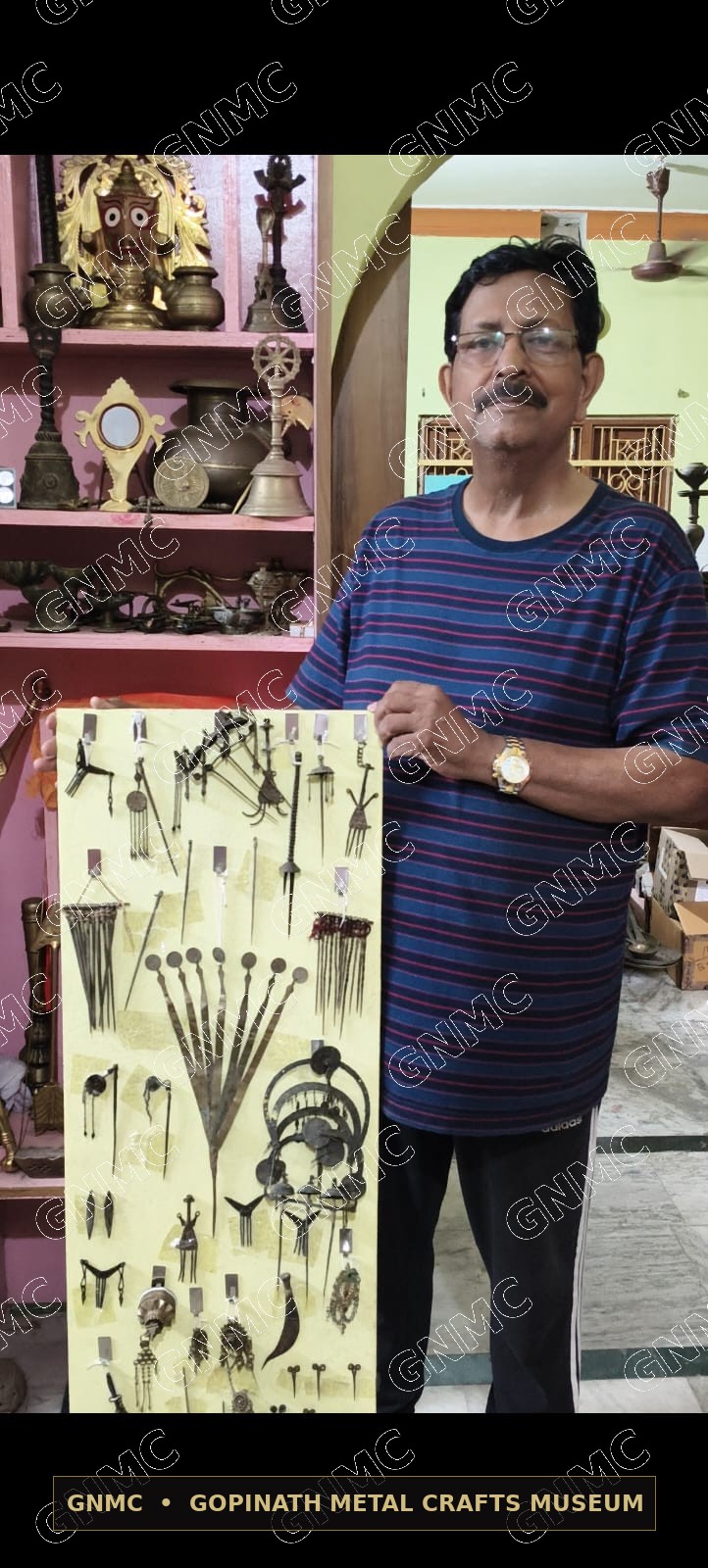
Sri Sudarshan Sahoo, an Agricultural Scientist who became a bank executive and later an Art Historian and Museologist, hails from a traditional artisan family (Kansari community) in Kantilo. Inspired by his father, Late Gopinath Sahoo (a master craftsperson of brass and bell metal utensils) and his mother, Late Champa Devi (a skilled hand engraver on metalware), he became a passionate collector of endangered and extinct brass and bell metal artefacts reflecting the great heritage, culture, and traditions of Odisha and India. Dedicated to the revival of lost and neglected metal crafts through innovative designs, he has assembled over 8,000 artefacts (including 2,000 tribal pieces) to shape a world-class museum in Bhubaneswar. For this heritage mission, he is widely acclaimed across television programs, seminars, and academic institutions, and actively publishes books and research studies on metal crafts through his own research foundation.
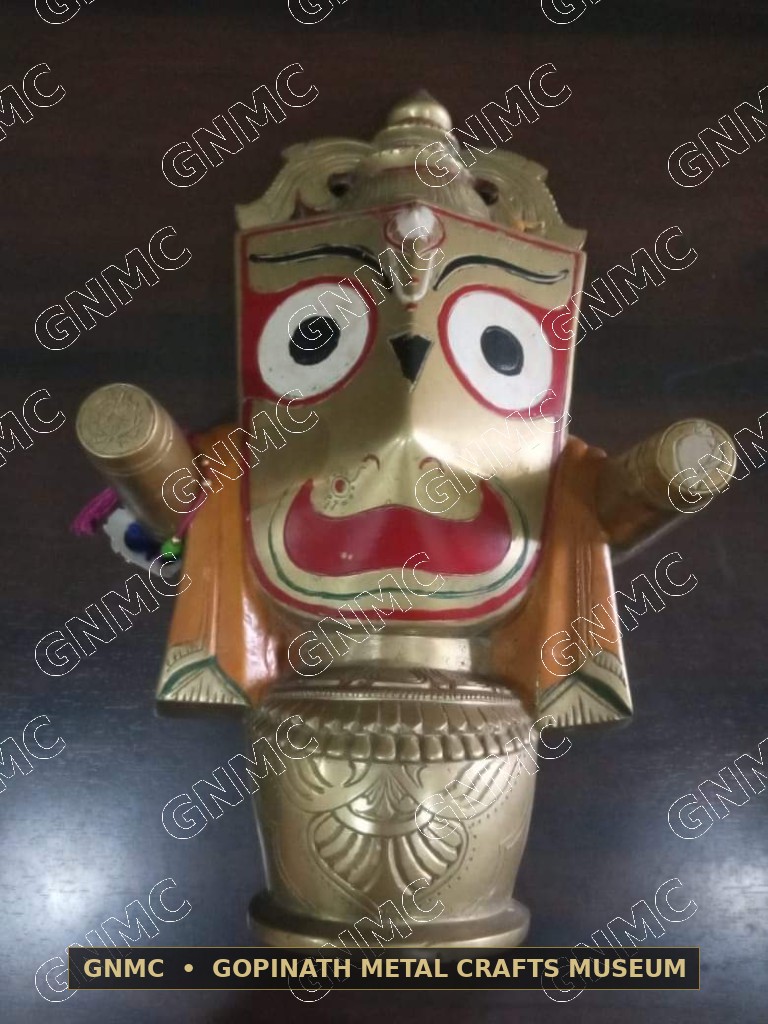
Creativity and design of the idol of the Lord of the Universe by Sri Sudarshan Sahoo, Art Historian and Museologist.
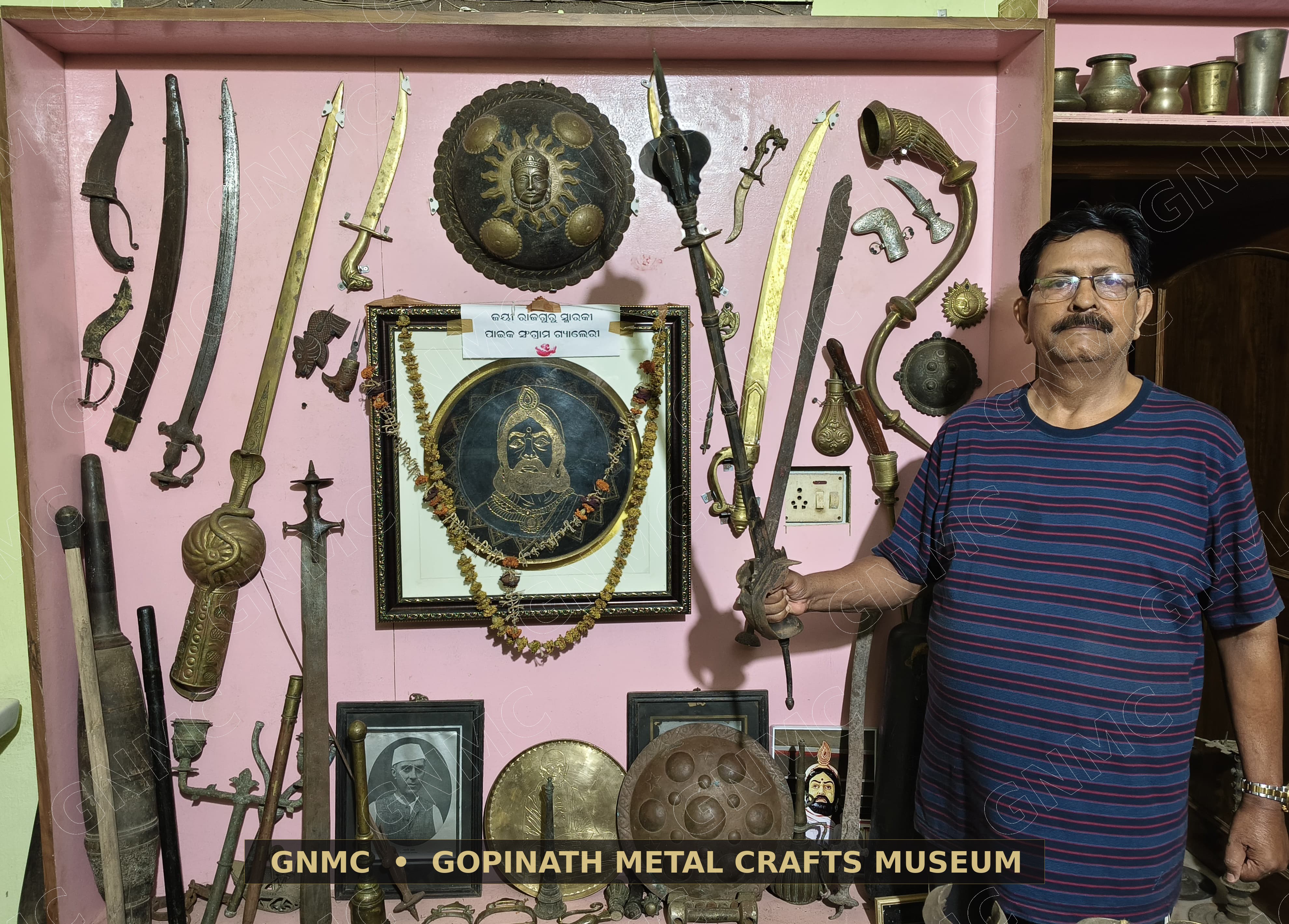
Permanent Exhibition
Precious Collection
Rare, Endangered & Extinct Metal Crafts of Odisha
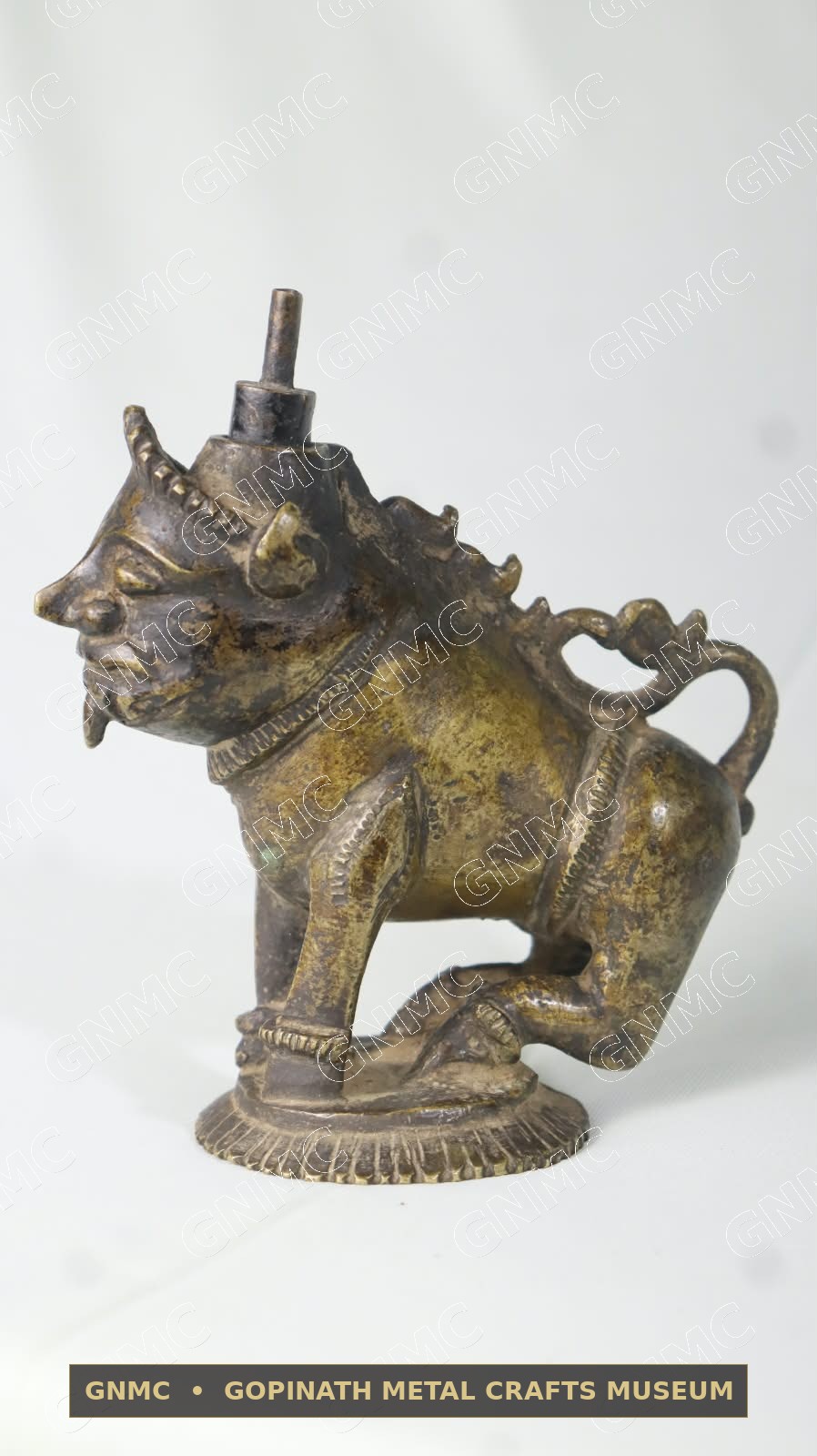
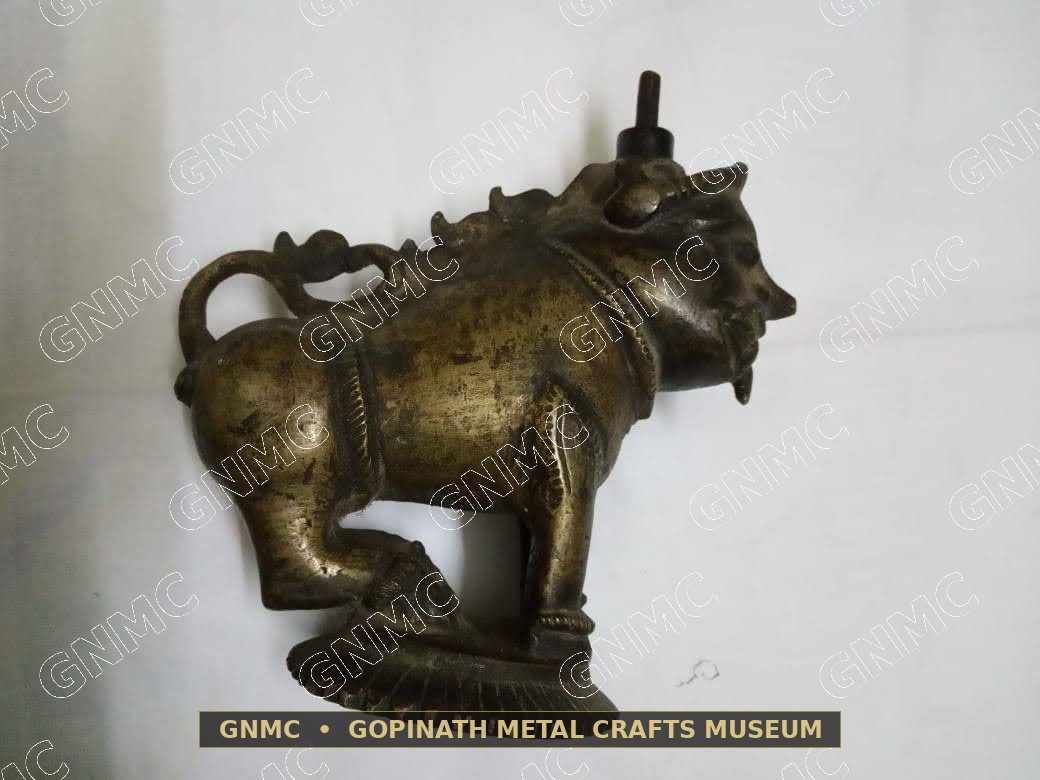
A gorgeous, uncommon and rare two-century-old lion-shaped kerosene lamp.
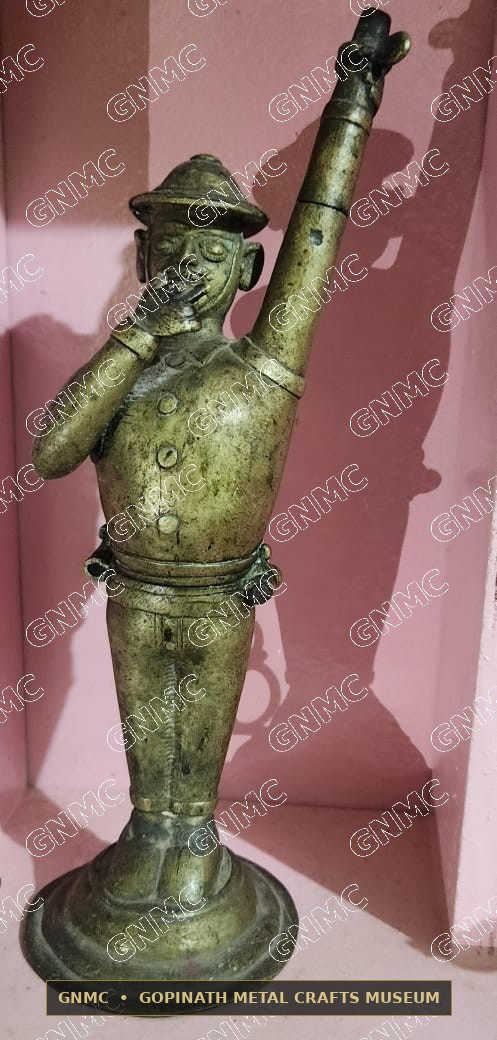
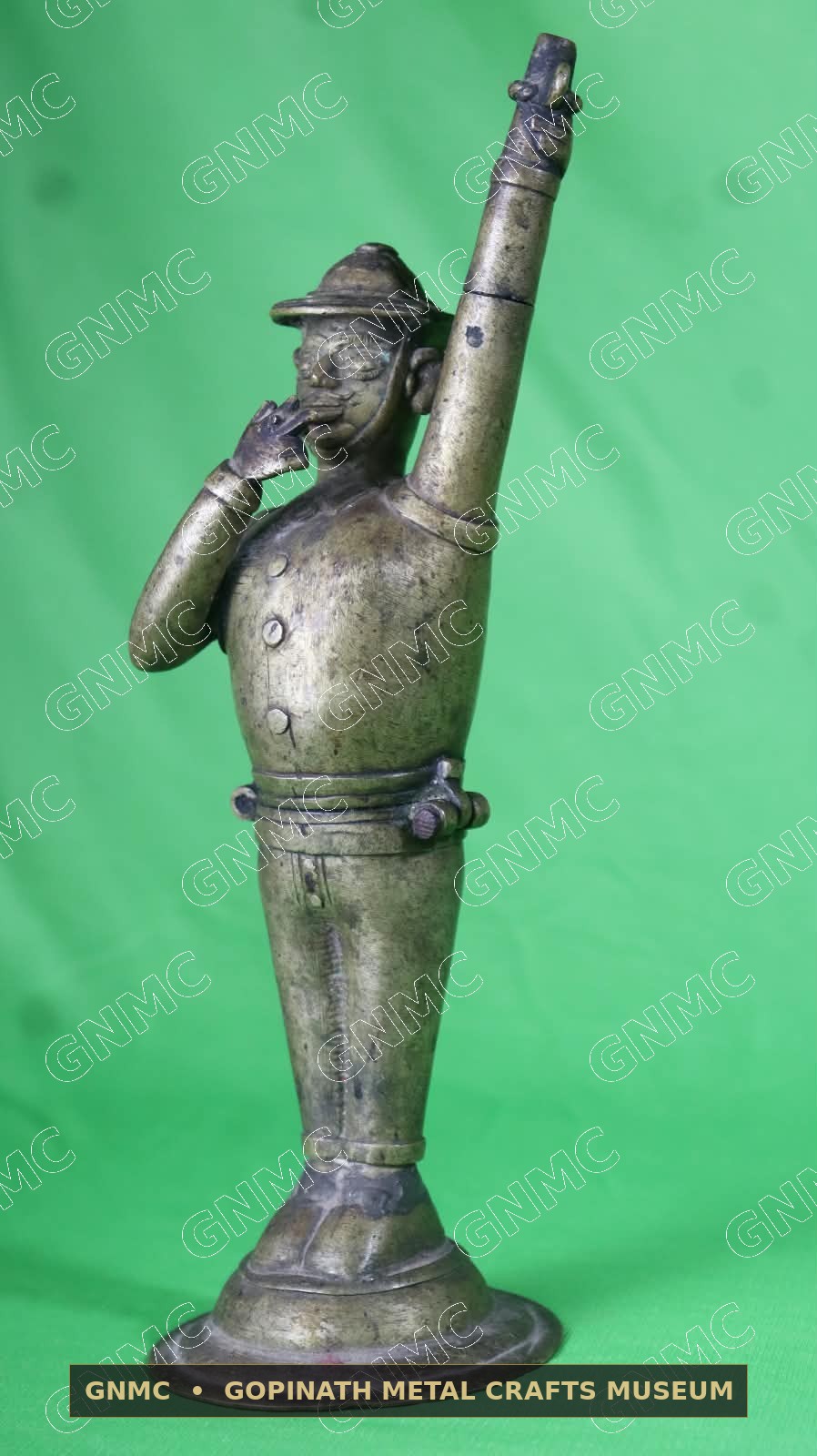
This craft (British commander design kerosene lamp) signifies defiance against colonial rule, created by a Kansari artisan on 15th August 1948 — one year after India's independence. Background: The young artisan helped freedom fighters by transporting confidential letters disguised as a wandering mendicant from village to village. Apprehended, beaten, and penalized by the Gadajata ruler and the British Dewan, he took his artistic revenge by crafting a kerosene lamp in the likeness of a British officer whose raised arm burns as the flame wick. He danced through the village carrying this lamp alongside freedom fighters in celebration of liberation.
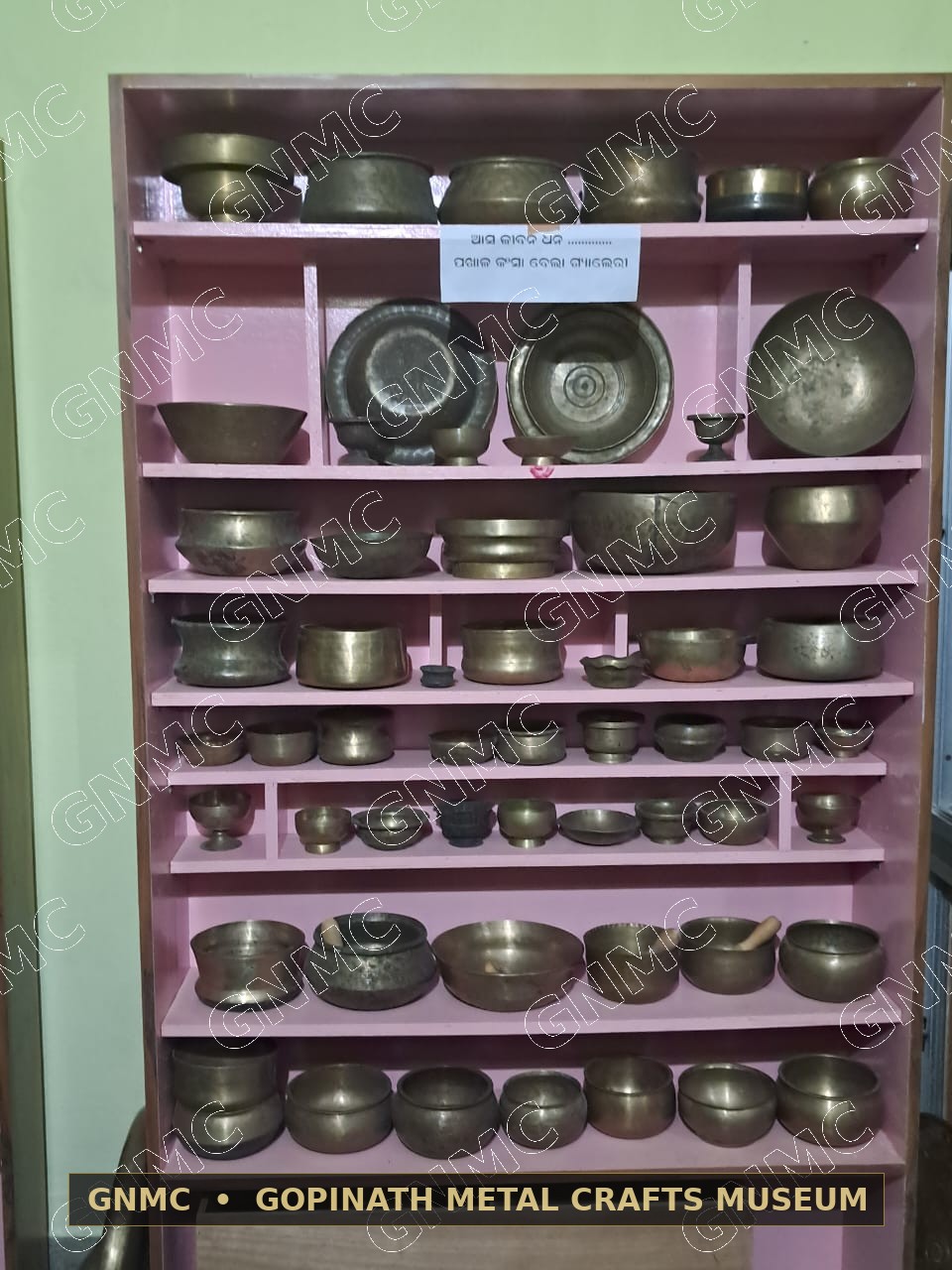
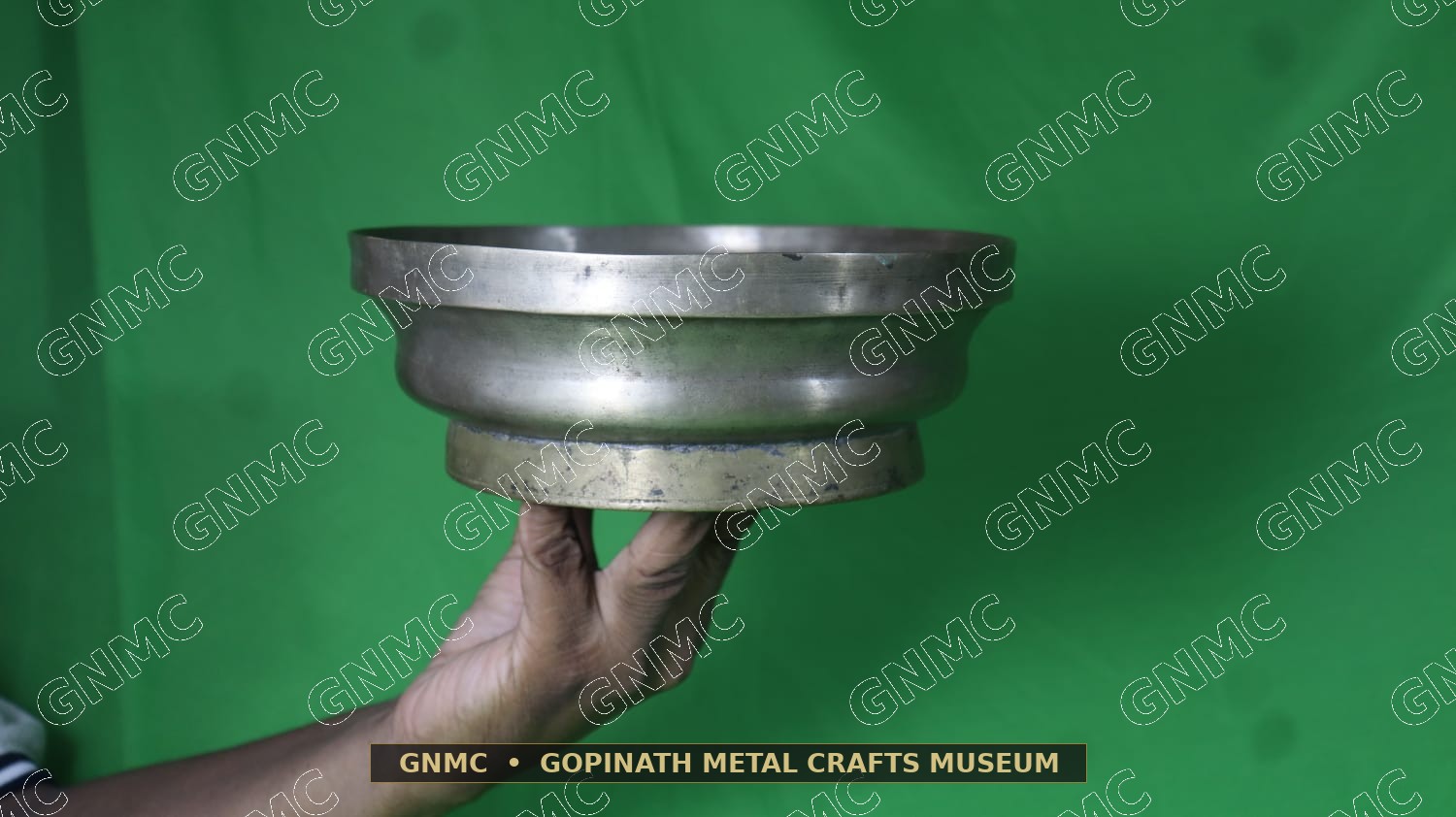
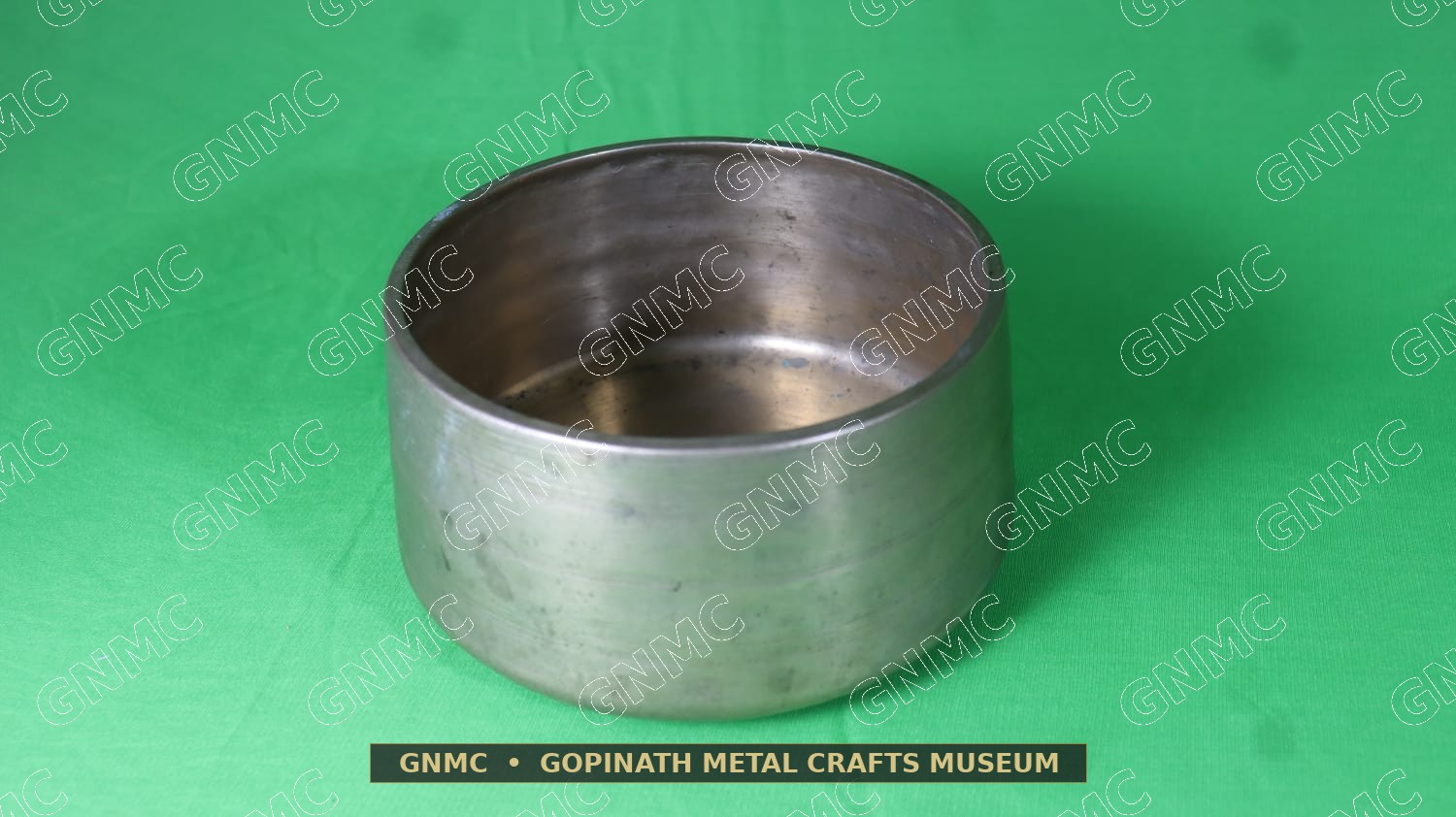
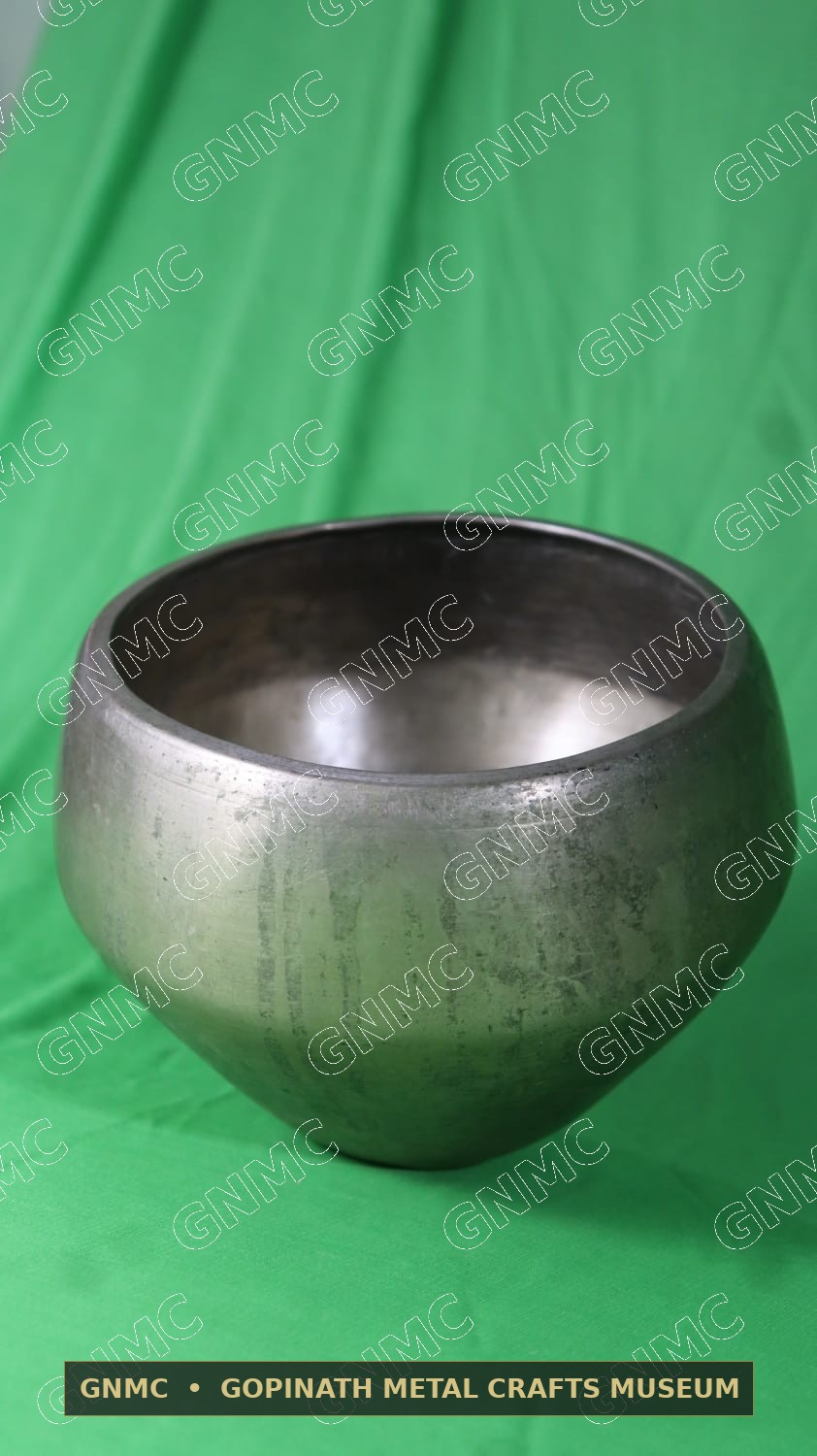
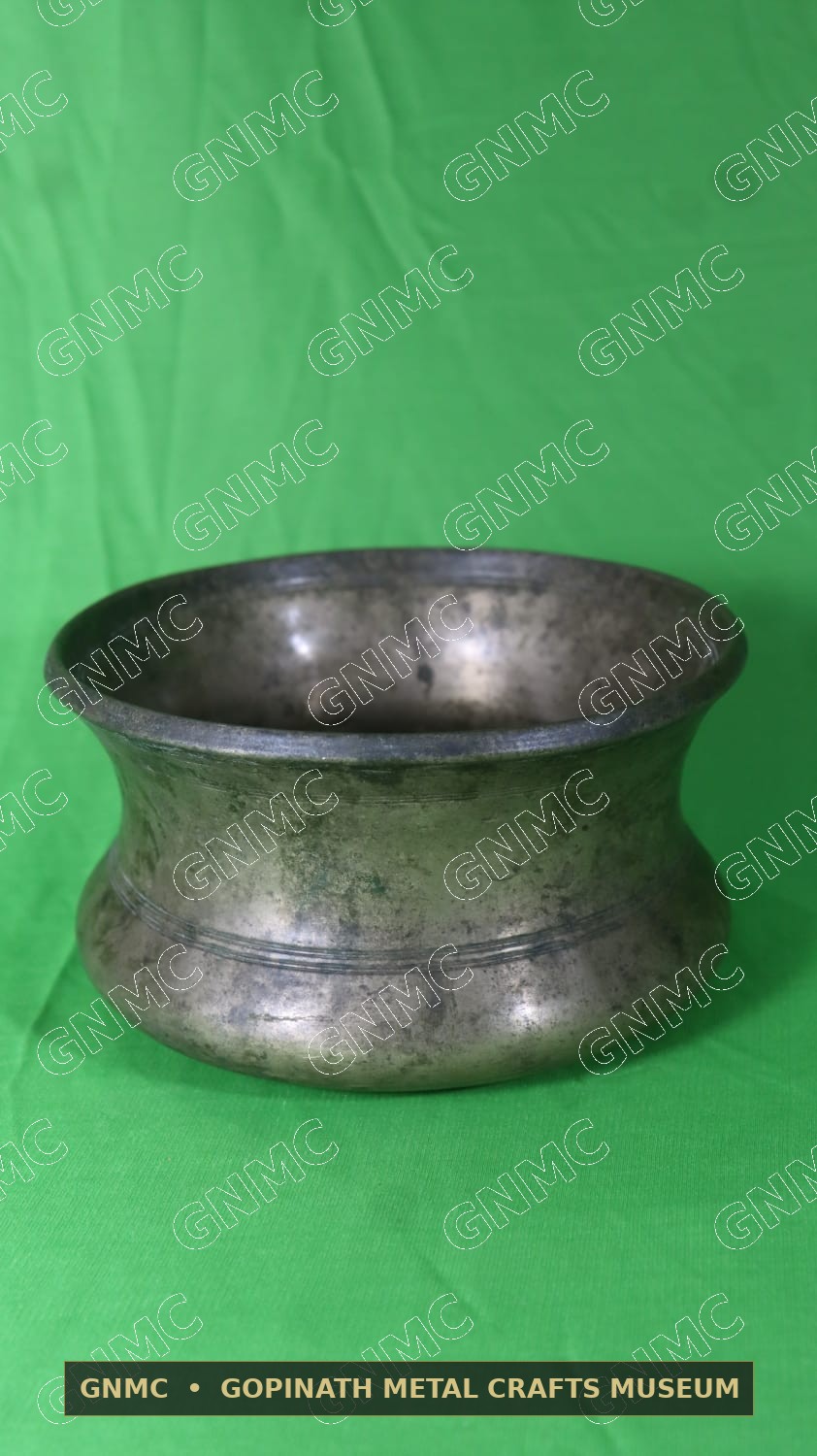
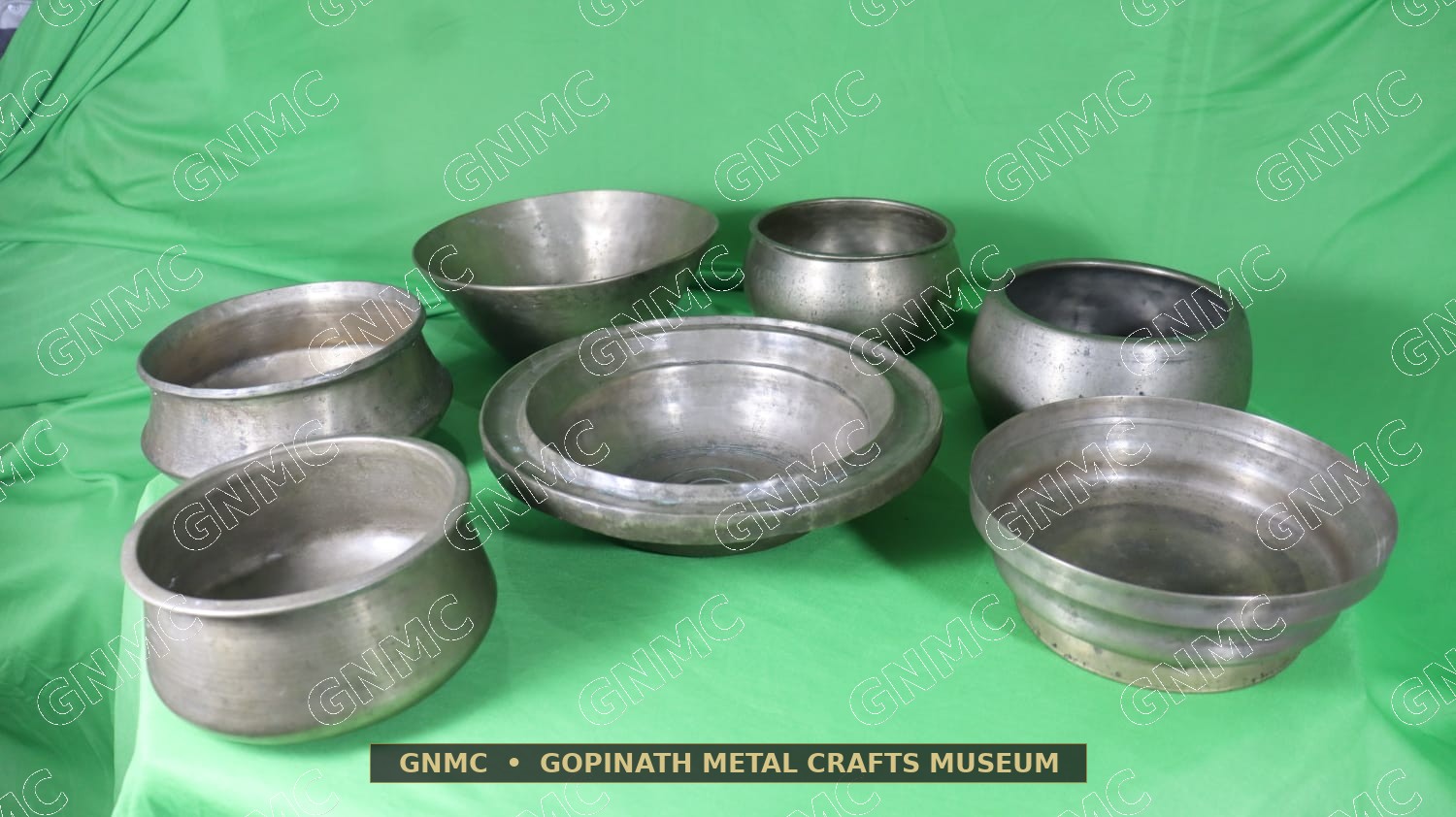
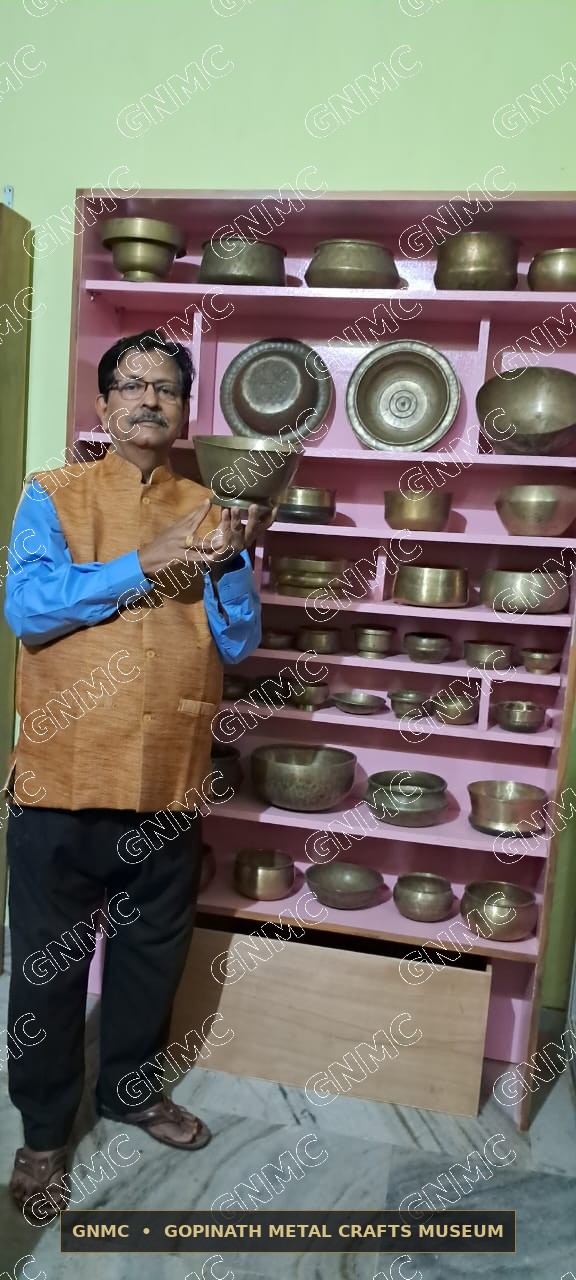
A gallery of 30 distinct designs of traditional "Pakhala KANSA bela" (fermented rice water bowl), attracting visitors, researchers, tourists, and heritage enthusiasts from across the country to the museum.
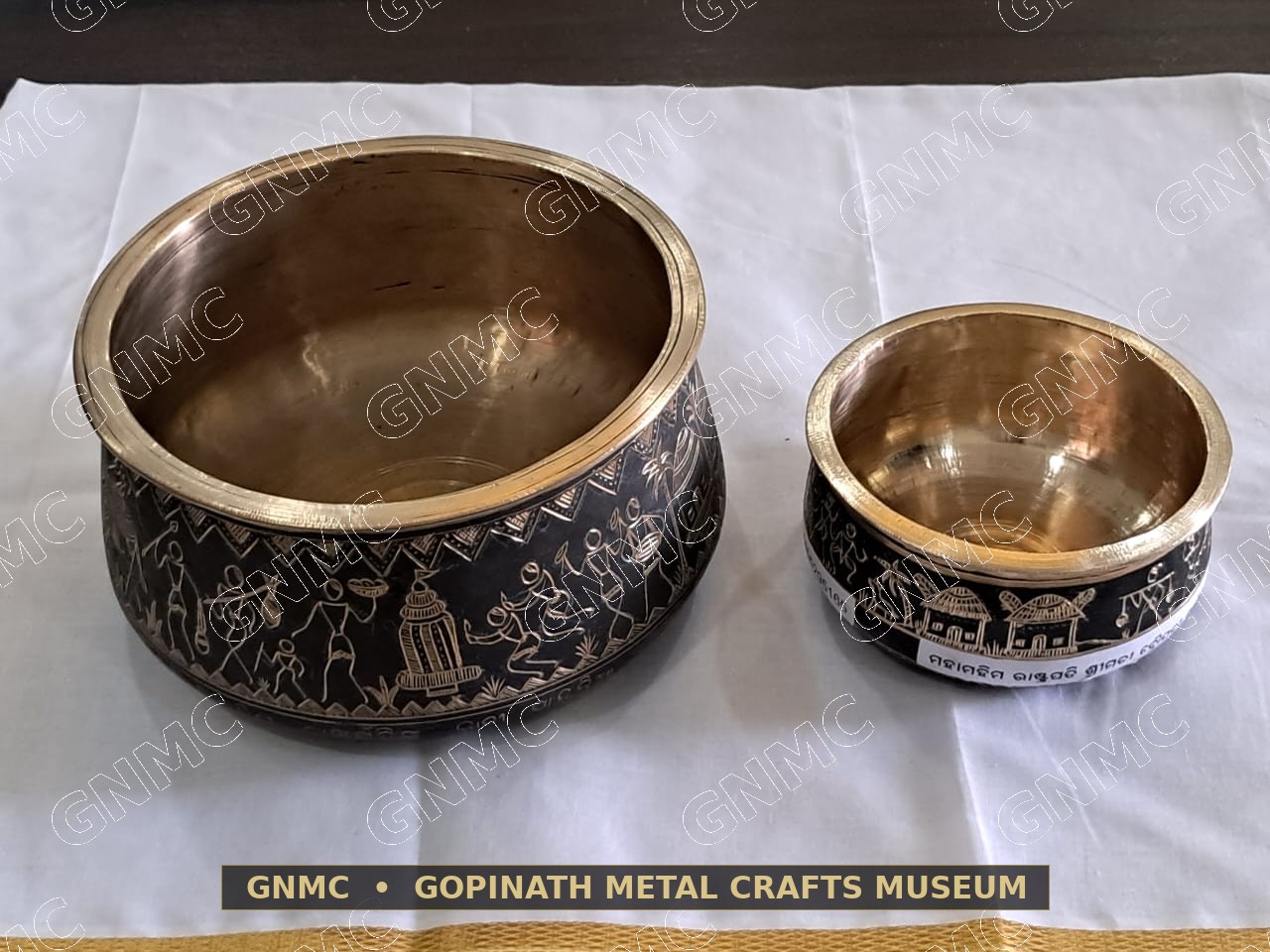
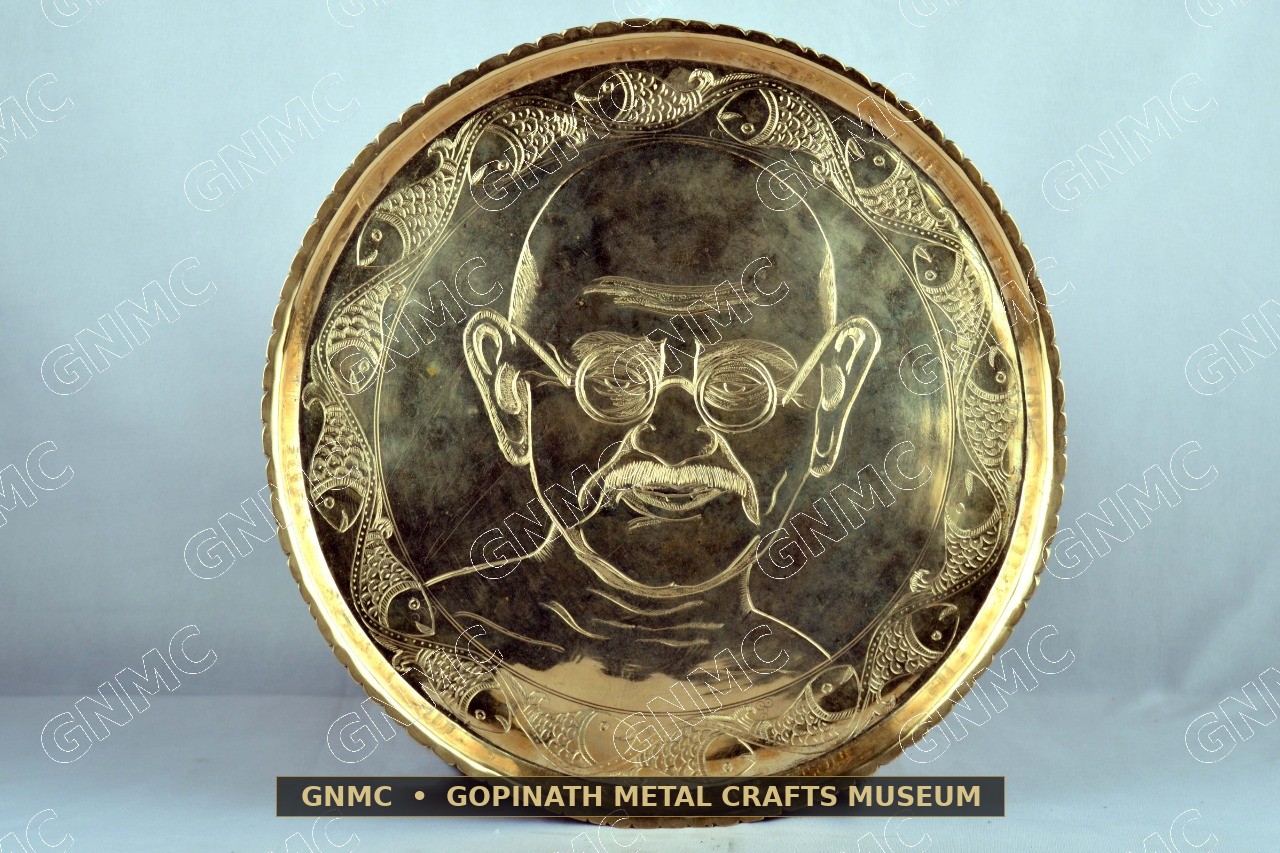
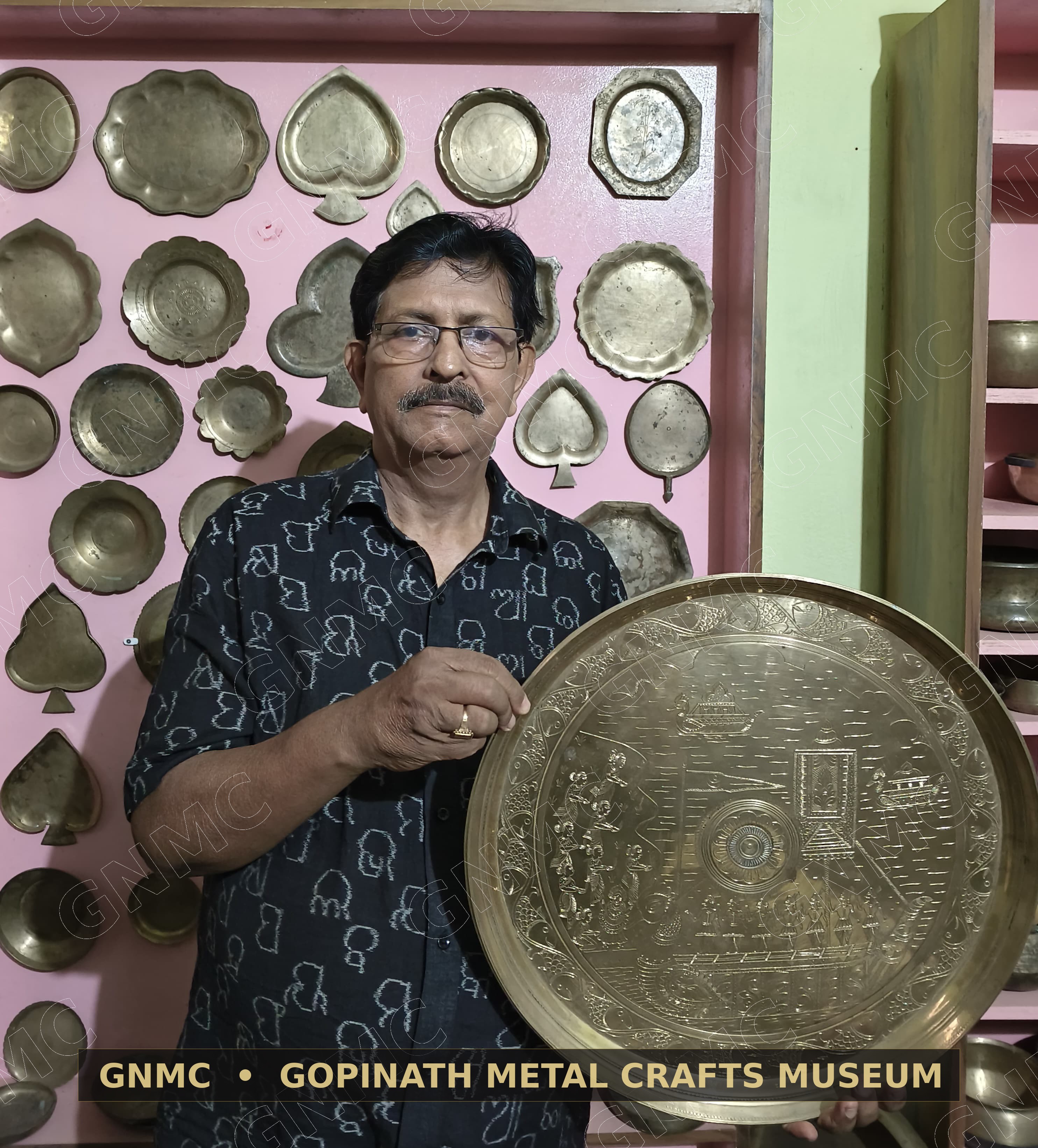
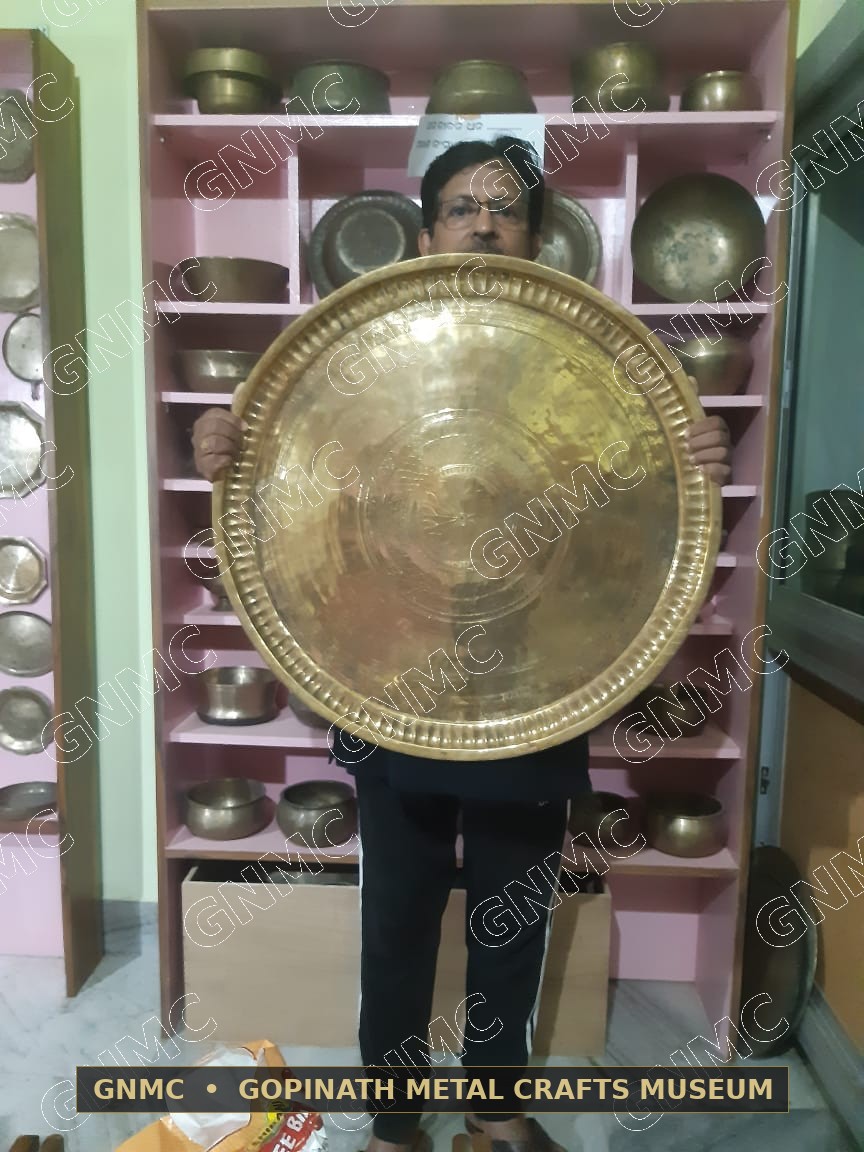
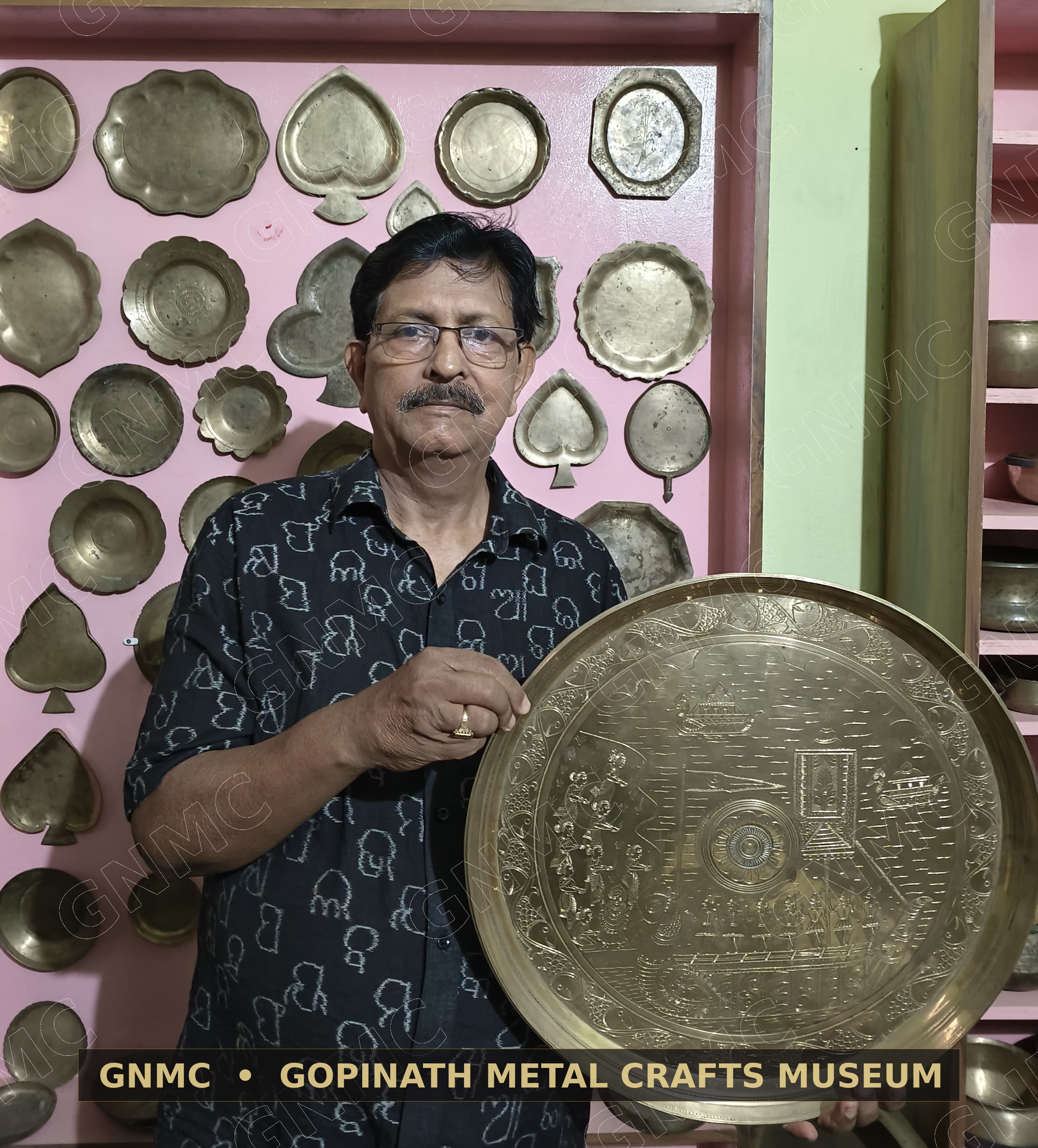
The Father of our Nation hand-engraved on a 14-inch diameter kansa (bell metal) thali. A dying craft revived.
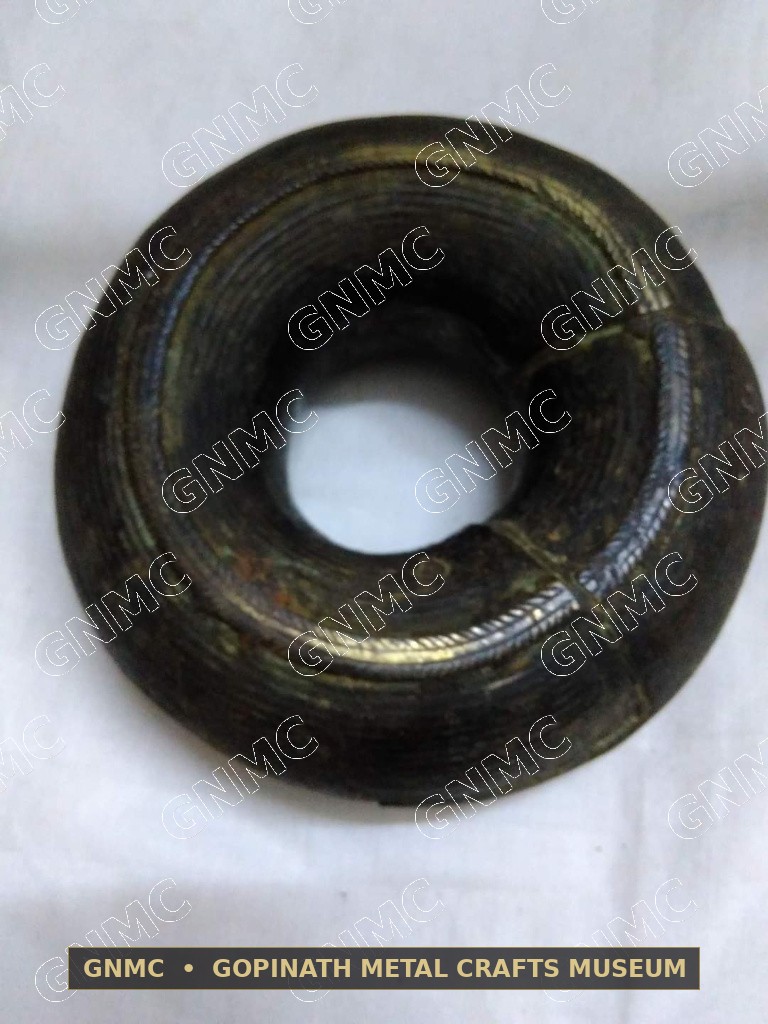
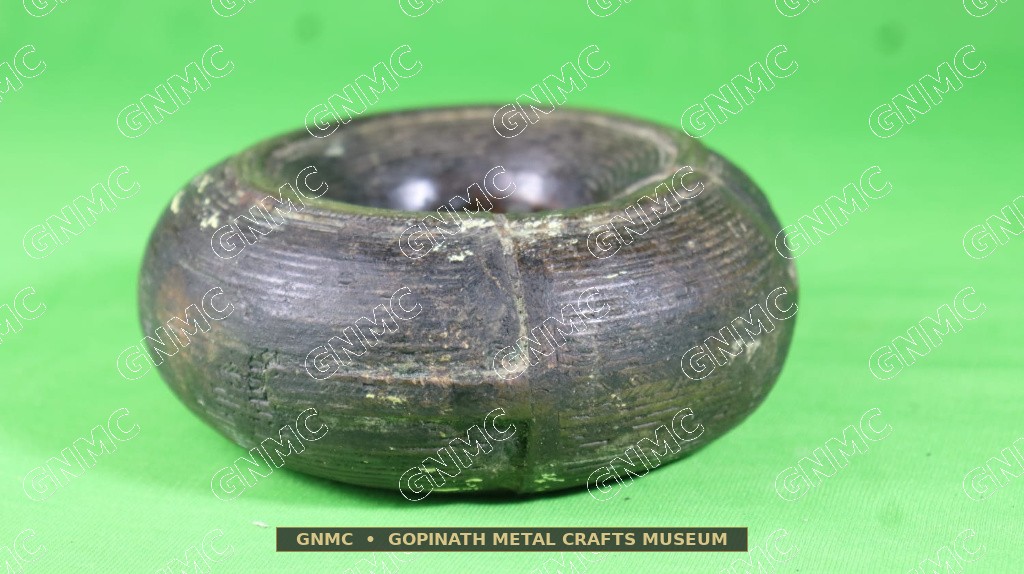
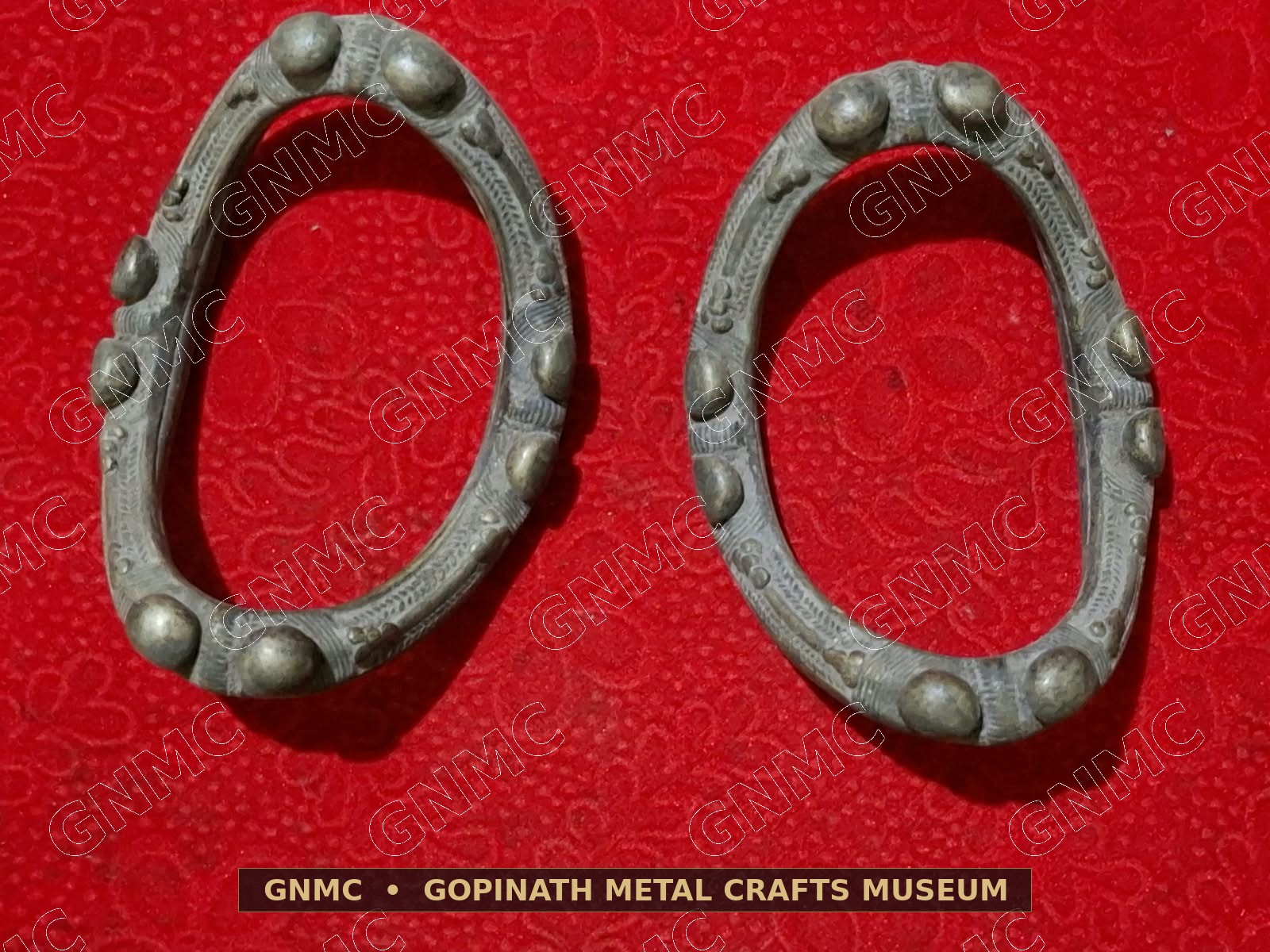
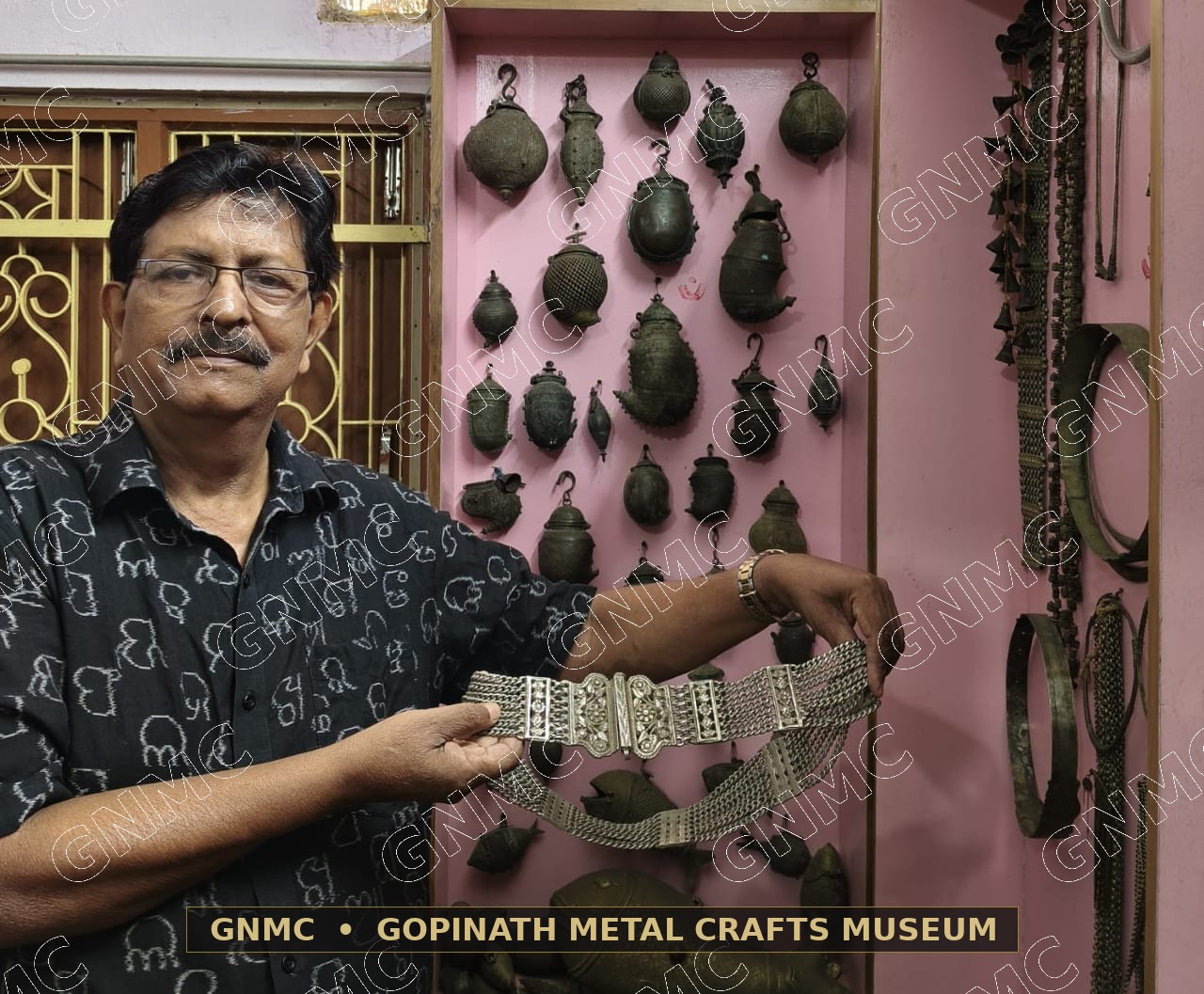
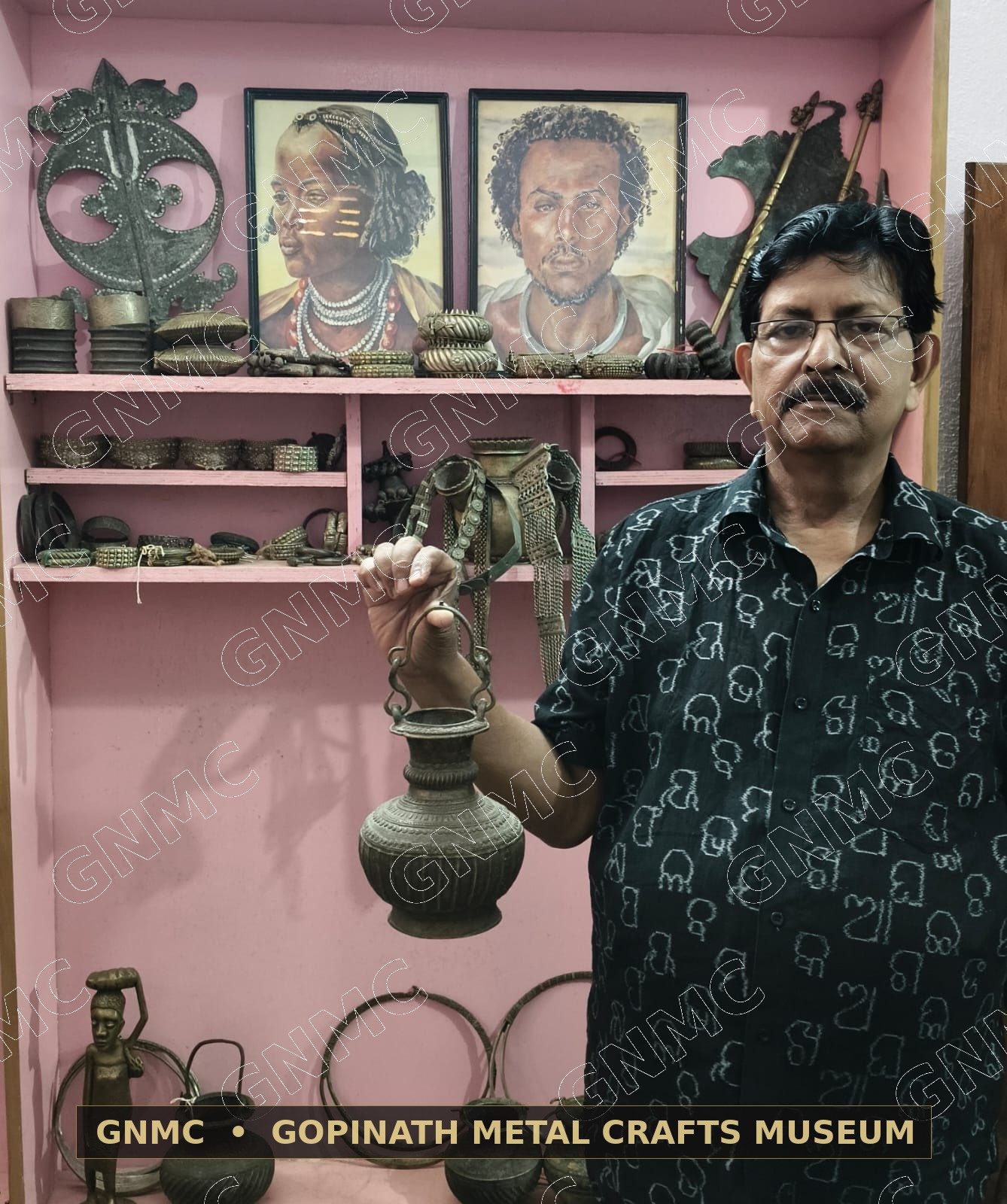
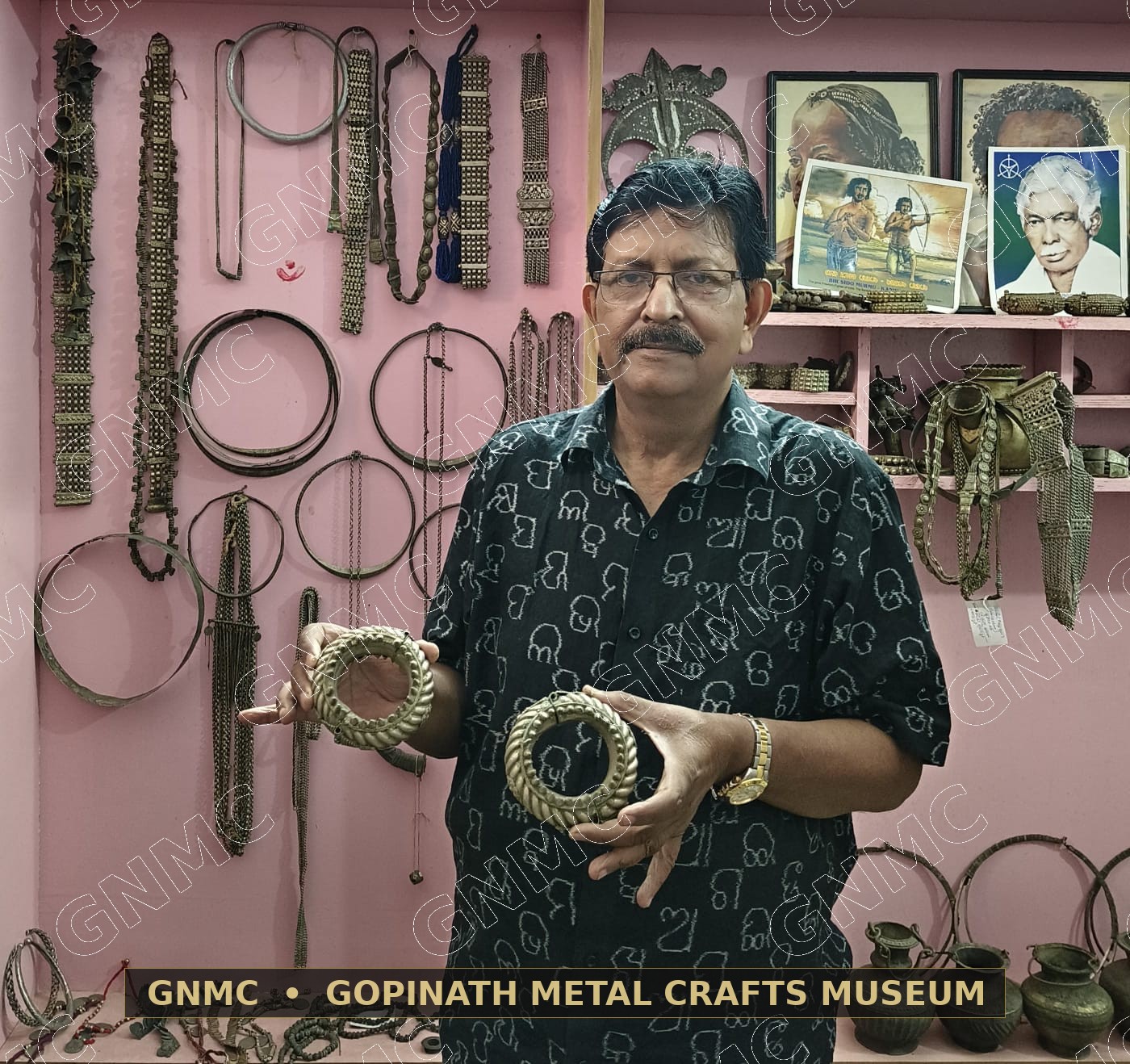
A traditional tribal anklet, locally named "JhinkaBala" (weighing approx. 5 kg), historically prevalent among the Kondh community of Odisha.
Background: In historic tribal festivals, customary matrimonial alliances were established through traditional courtship rituals. Following marriage agreements between elders, this substantial ornamental anklet was traditionally fastened to anchor the bride within the domestic sanctuary until child-bearing, safeguarding community bonds. Such heritage brass anklets were preserved collectively in village community storehouses.
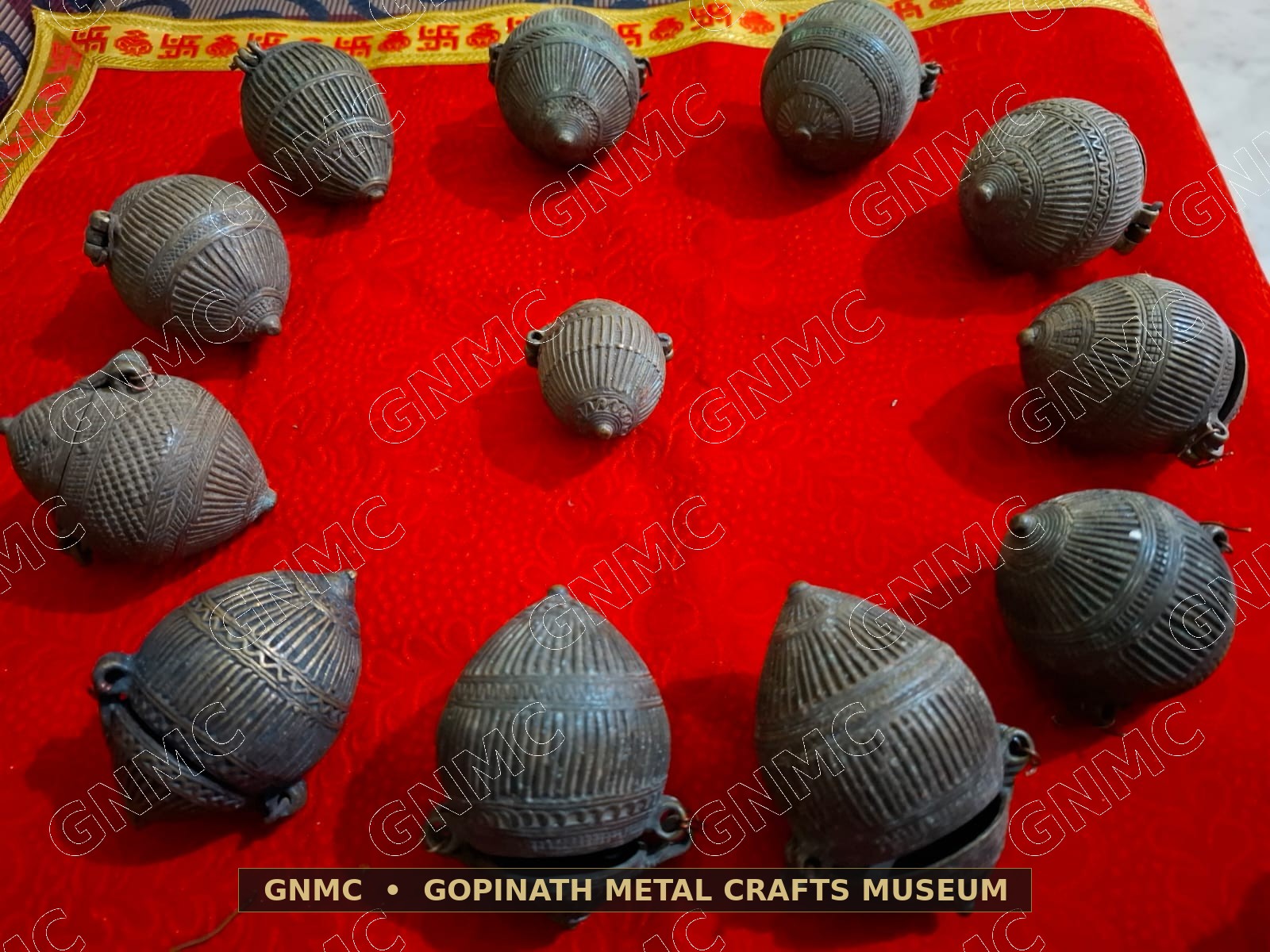
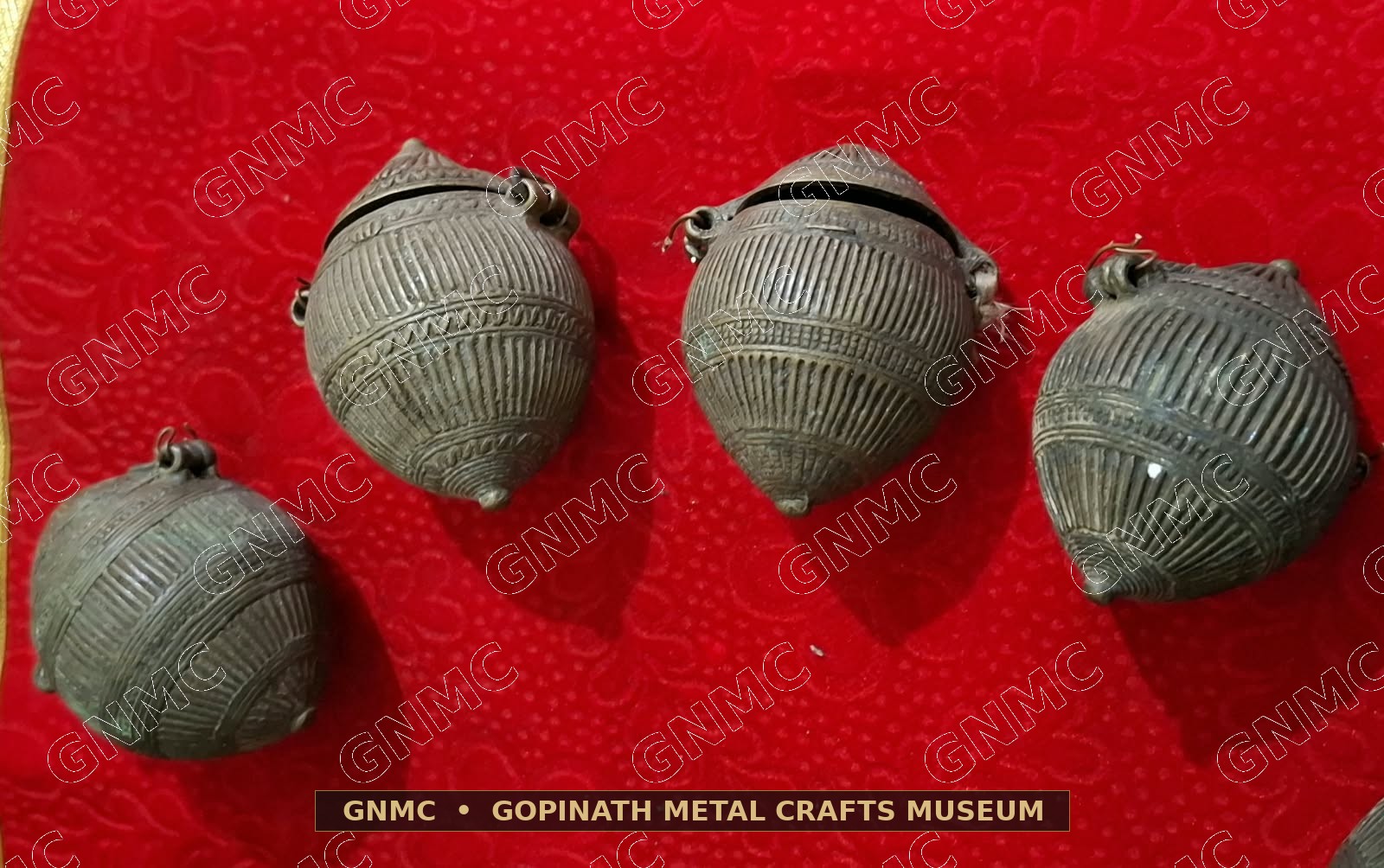
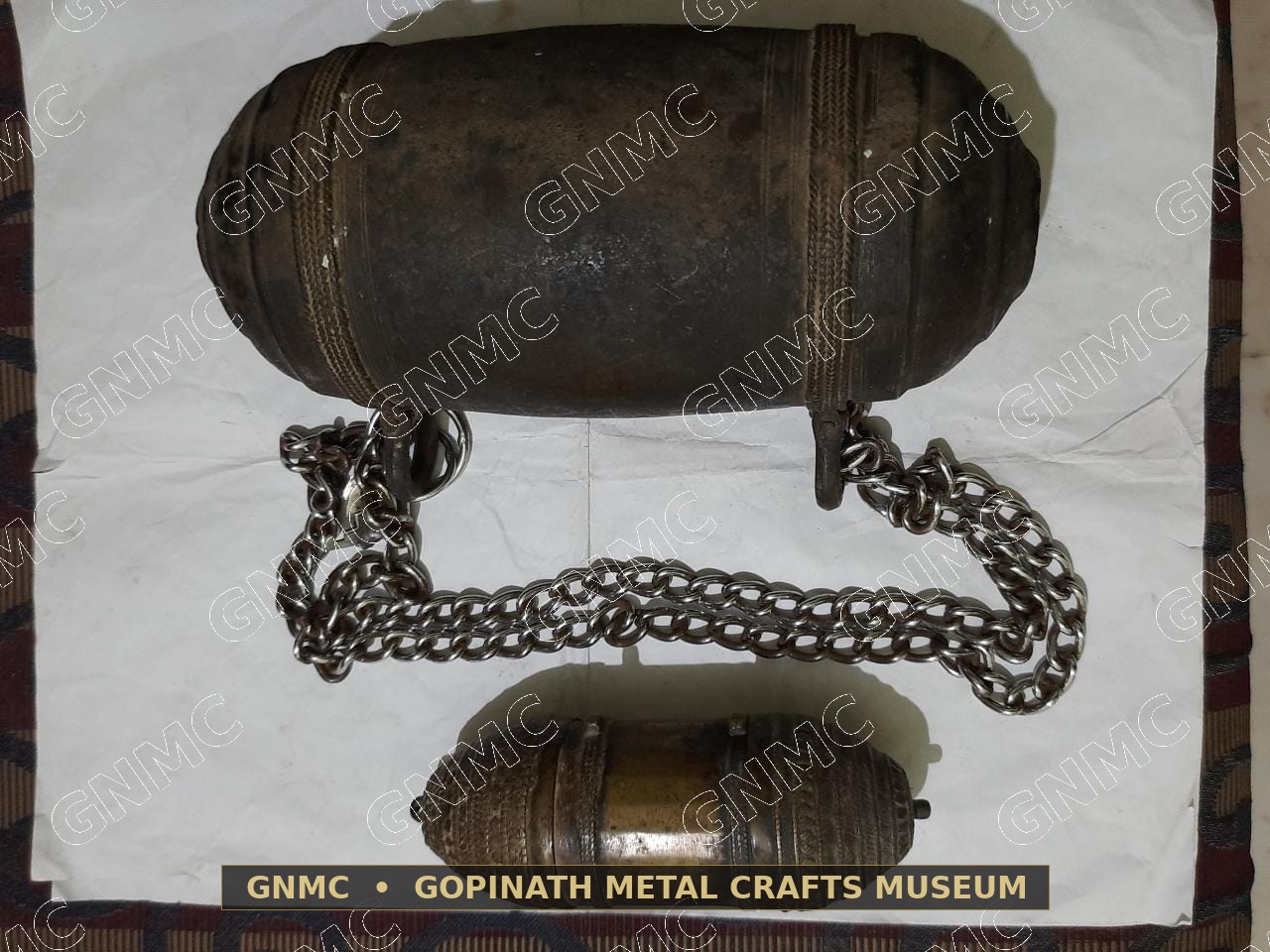
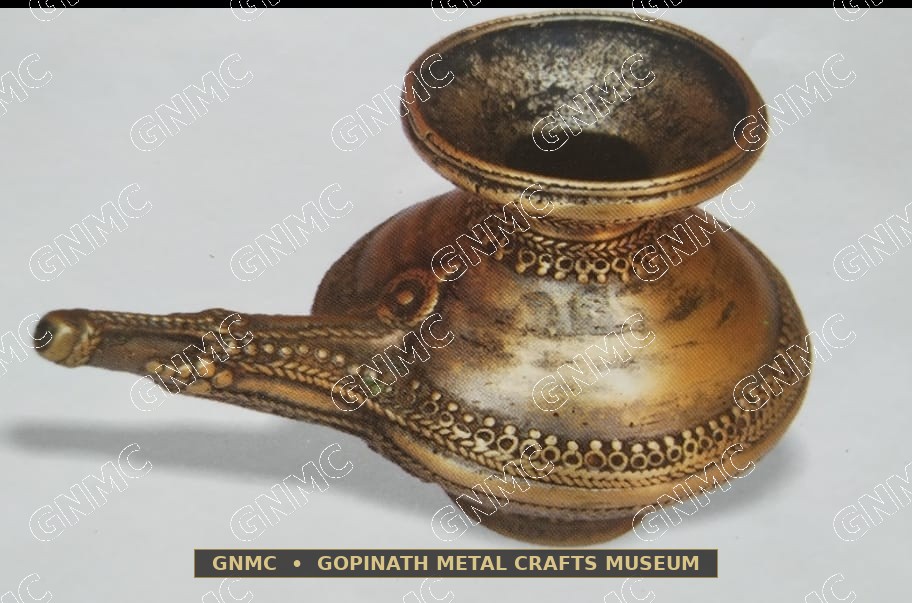
Traditional coin-keeping pot, locally called "KARATA". Highly prevalent among tribal and farming communities in coastal Odisha. Historically, grandmothers carried this vessel secured at their waist and dispensed coins to grandchildren as tokens of encouragement for study and daily treats — a cherished domestic custom preserved in this brass craft.
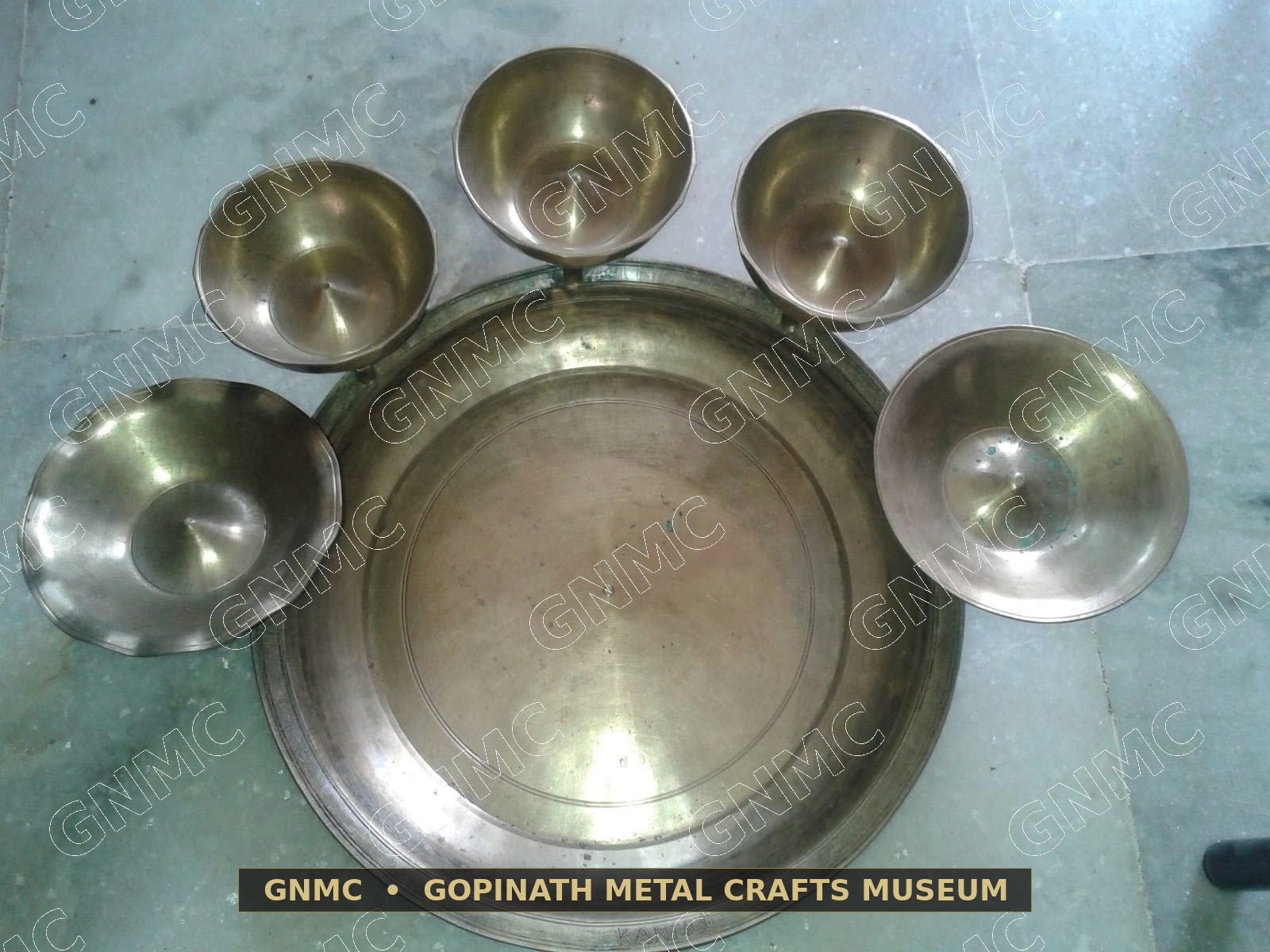
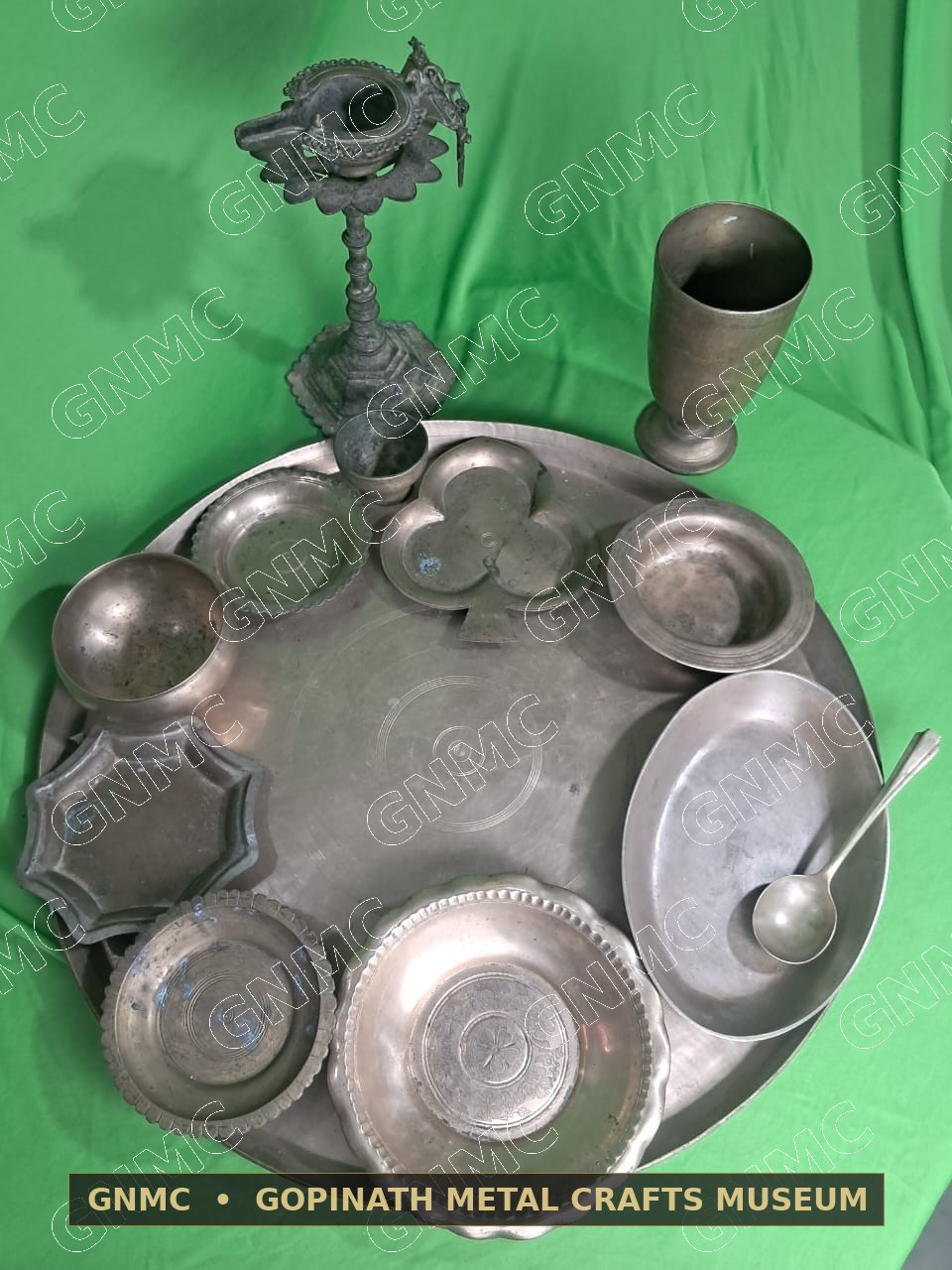
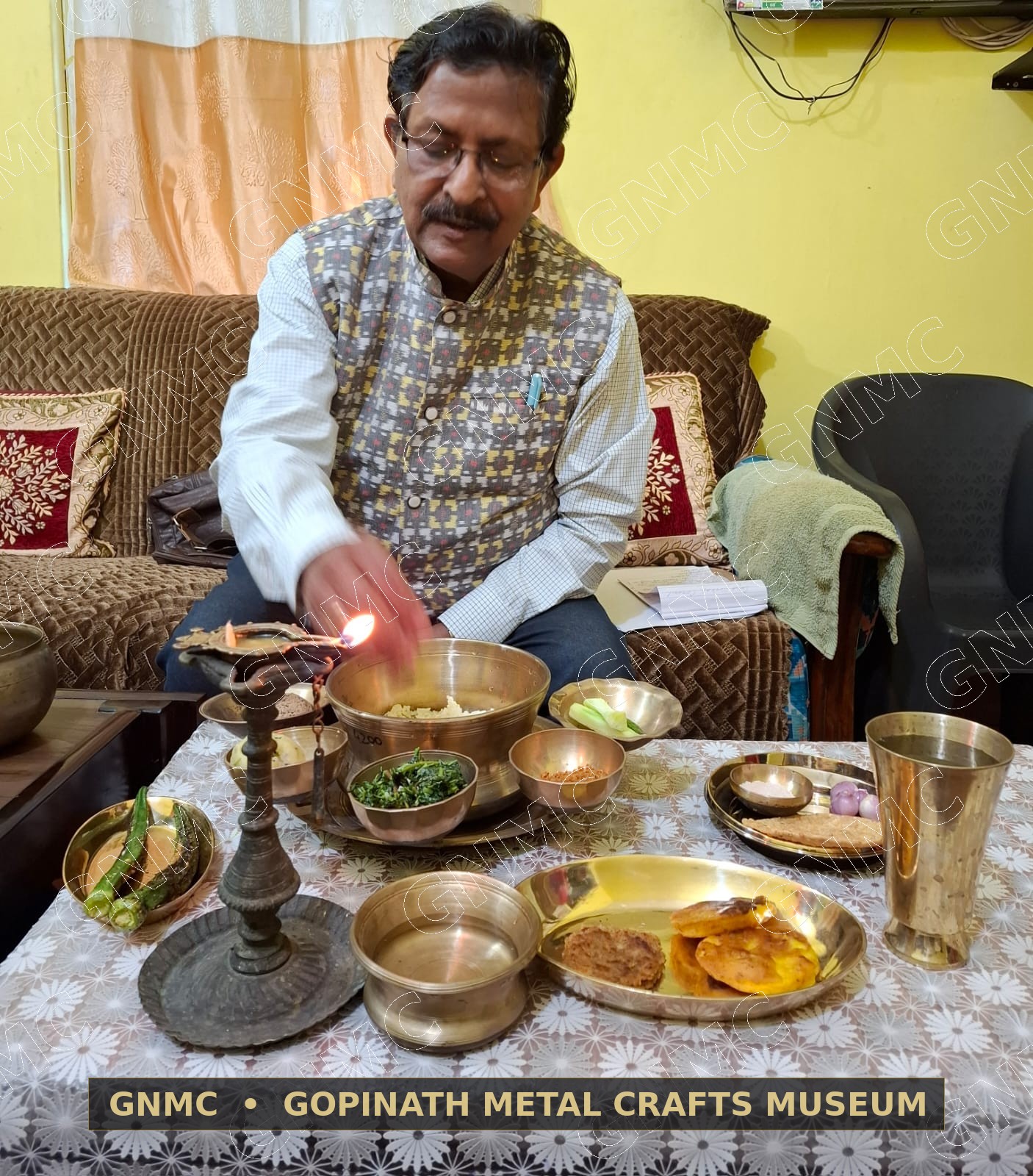
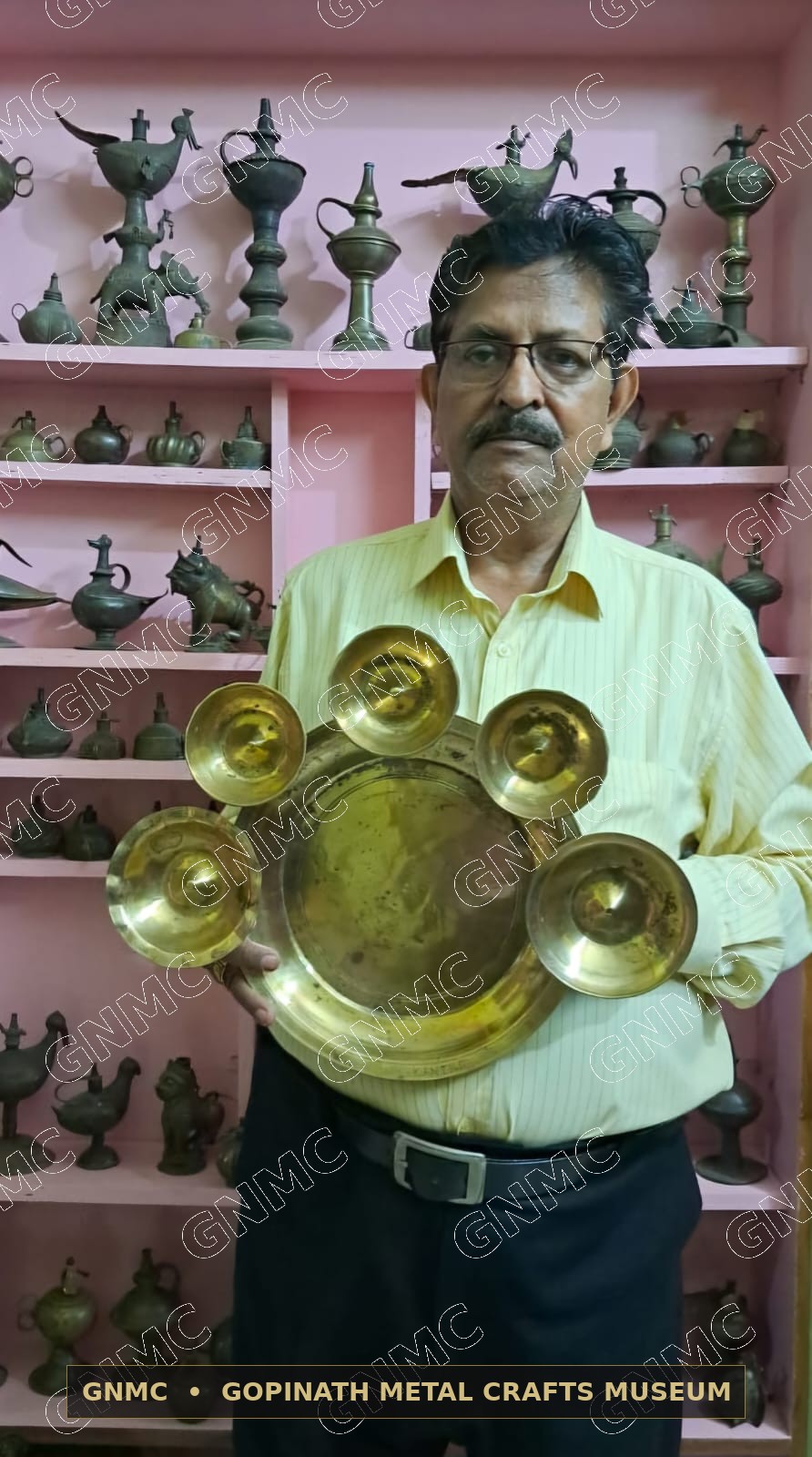
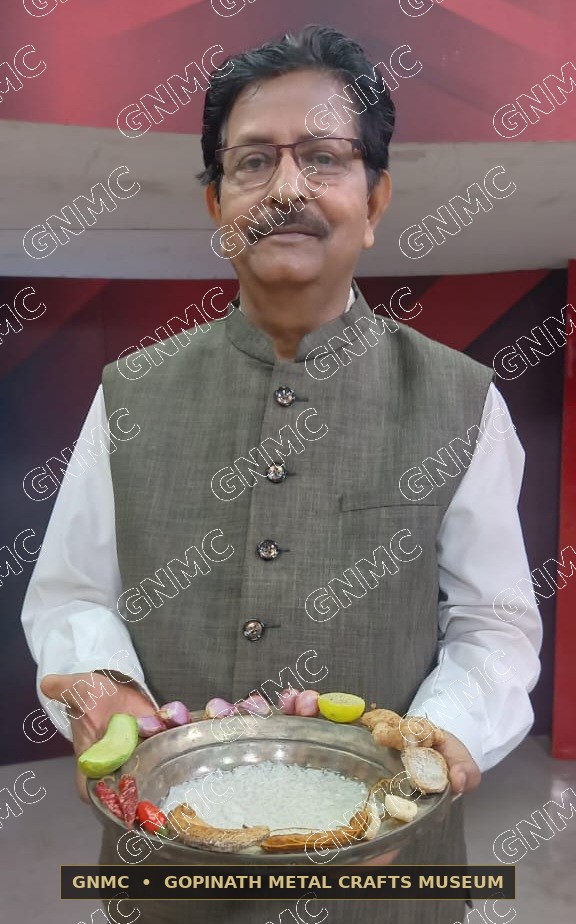
In olden times around 100 years ago, such ceremonial bronze plates were brought out from the chest to entertain the son-in-law on his first arrival after marriage in the homes of landlord, village revenue collector, village head and the rich / affluent. Such a plate measures 25 inches in diameter and weighed 5 seers. At the centre of the plate fine boiled rice, cow ghee in small cute bronze crucible, village pond rohu fish mustard curry, venison curry, paddy field minnows fry, moong dal, flat bean mustard mix, jackfruit chunks, curd with grated coconut, prawn-spinach mash, dry mango mustard porridge, condensed curd, crystal salt, jungle chilli, and fried black gram nugget powder etc. etc. in differently designed lovely bowls and deep quarter plates are jointly served by the mother-in-law and the wife of the brother-in-law. A lamp is kept near the dining place as per the Odia tradition. One or two brother-in-law and sister-in-law are a must to give company. A funnel-shaped water tumbler is kept outside the plate. Odia men / women hold the view of such elaborate food serving a cat cannot jump across. Perhaps Vyasa Kabi (Fakirmohan) has narrated like this in some book.
The plate with other accompanying vessels are taken by a special servant to the house of the son-in-law at the time of his send-off. The story does not end here. The brother-in-law and sister-in-law cut jokes with the son-in-law to carry the heavy plate up to the end of the village by himself and failing which pay a penalty of ten rupees for the village feast in forest. Where gone those days. Such plate is a unique attraction in the collection centre of Sri Sudarshan Sahoo, Art Historian and Museologist.
An assembly of approximately 50 distinct traditional designs of "Sindoor / Chandan" ceremonial brass containers. Historically gifted in matrimonial dowry sets to safeguard vermilion, sandalwood, and heirloom jewelry, this craft remains in active ceremonial use across rural Odisha.
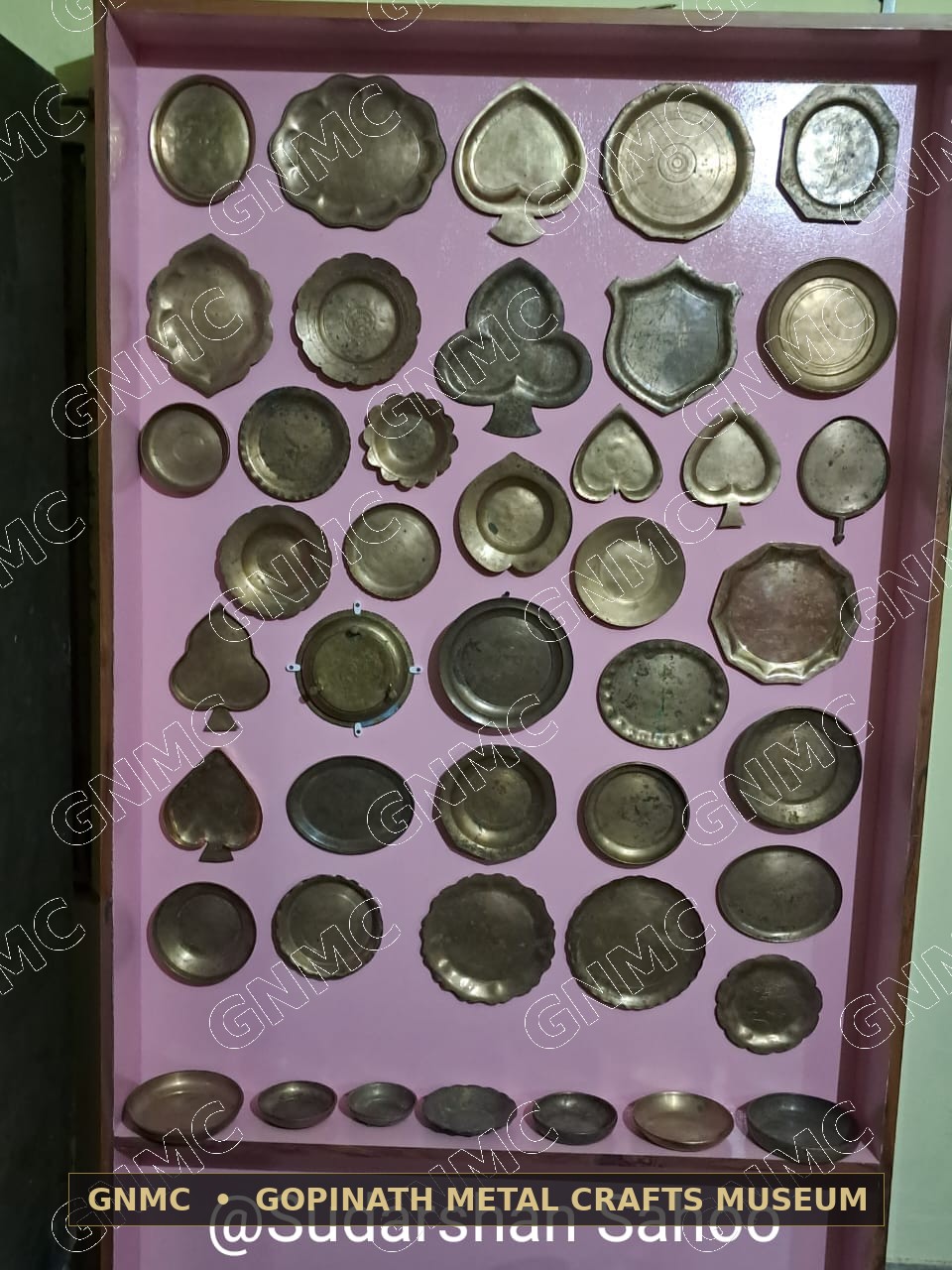
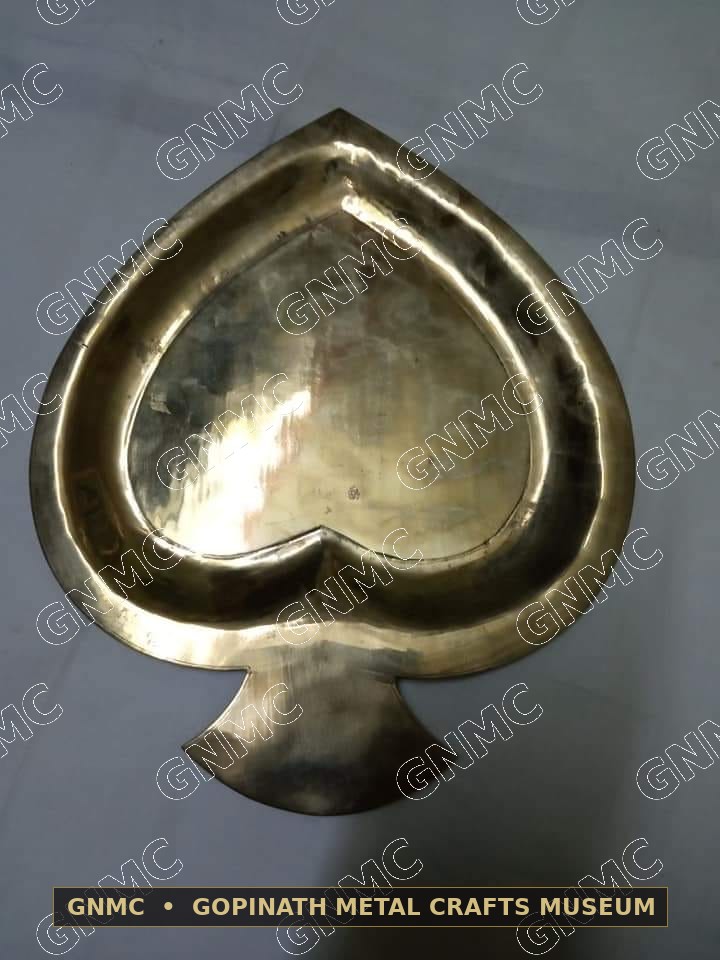
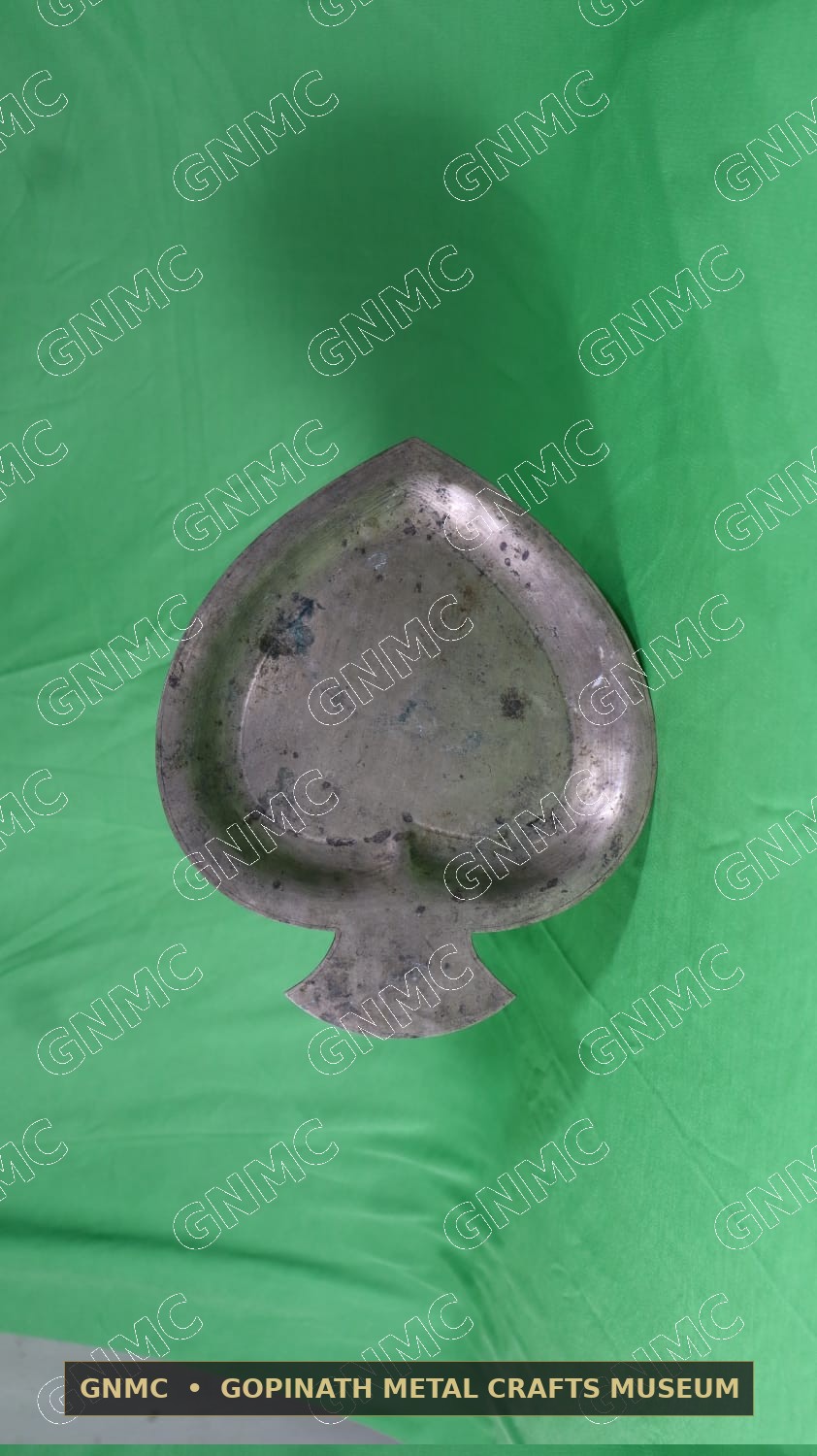
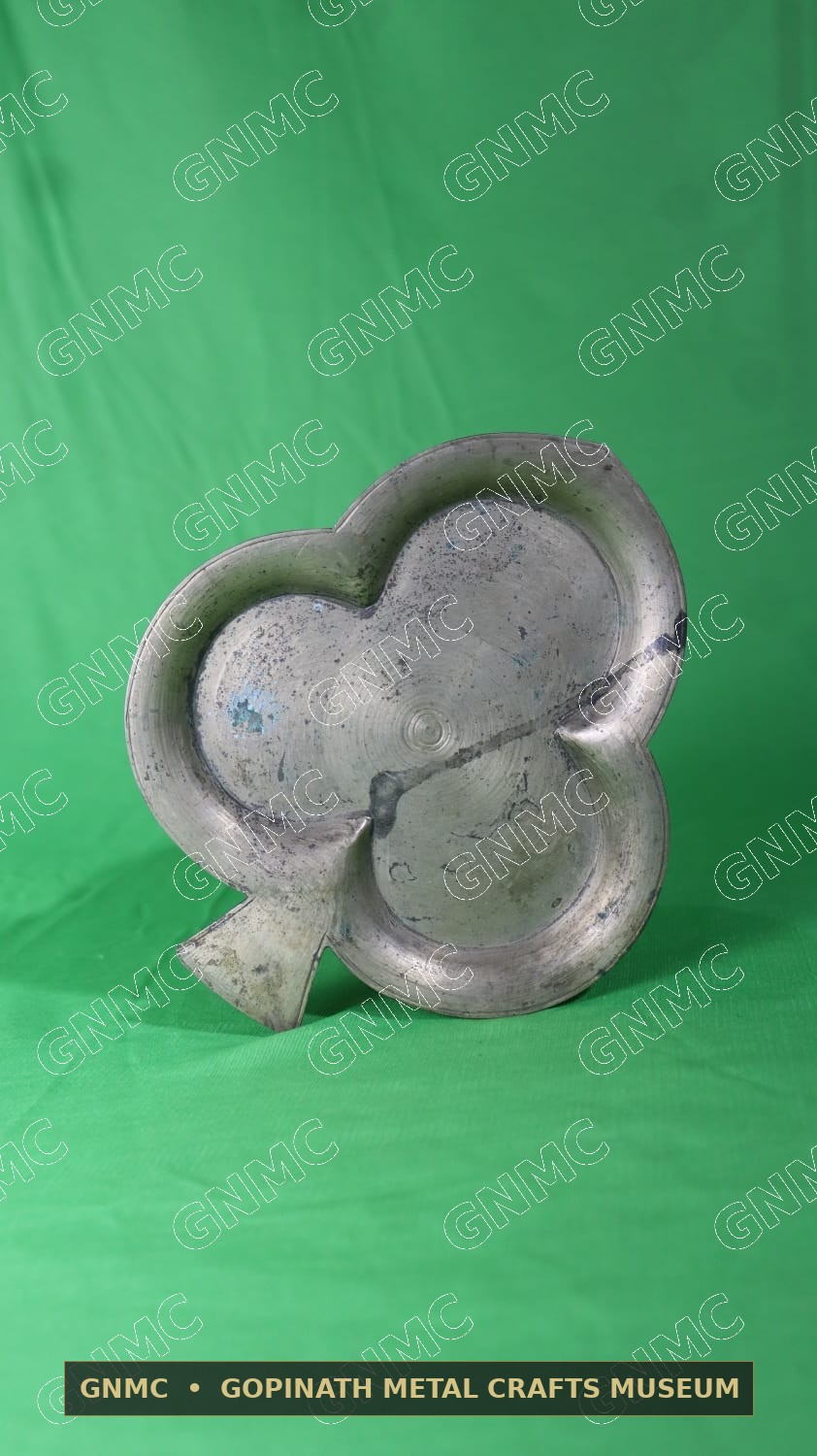
A traditional bell metal plate crafted in the "Kalipana" (playing card) motif, historically used to serve ceremonial paan, cloves, cardamom, and auspicious sweets such as khaja, kora, and Jagannath ballava during traditional celebrations.
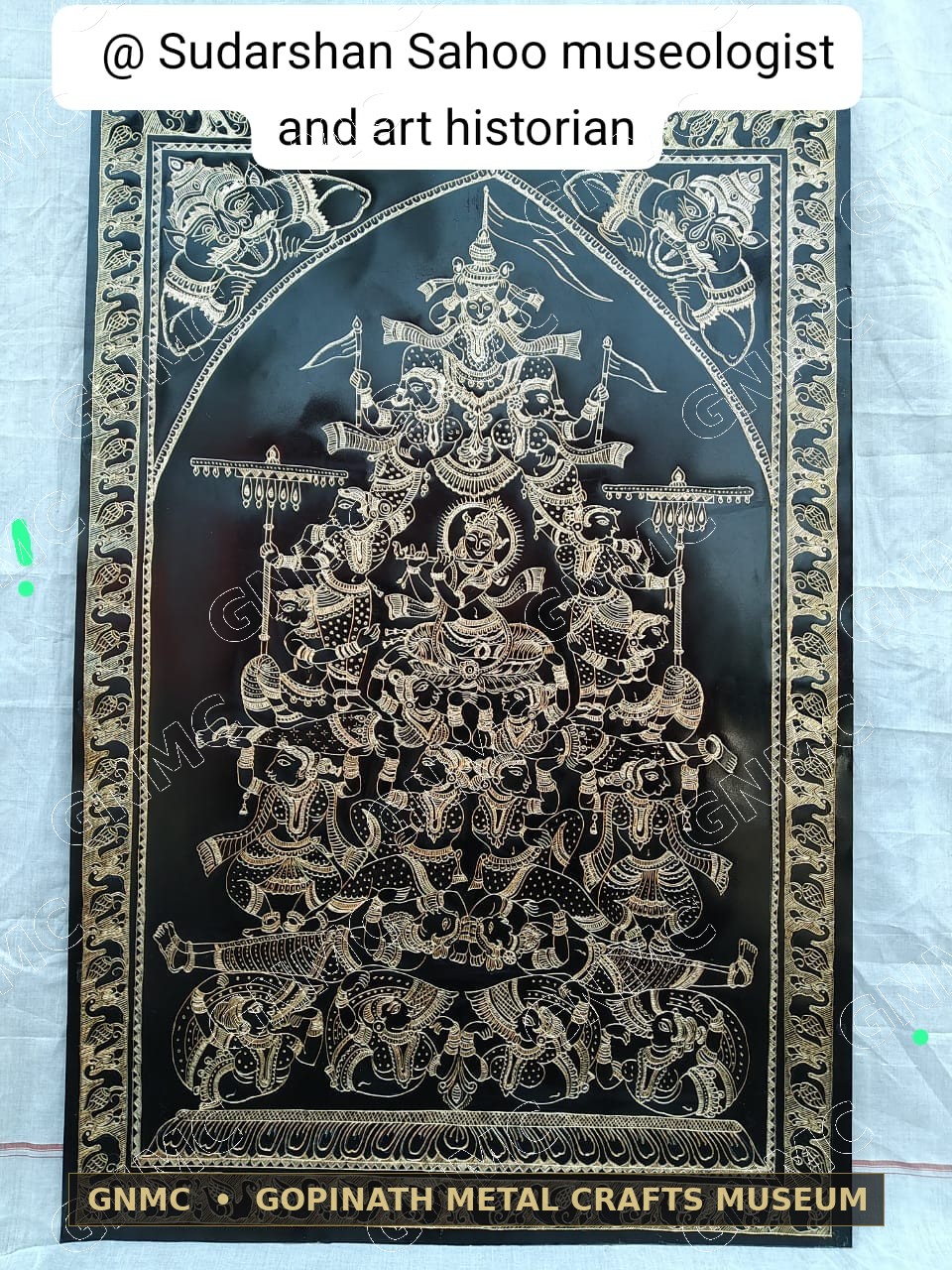
We invite viewers to observe the hand-engraving craftsmanship of Kandarpa Ratha: dancers paying homage to Lord Krishna.
Kandarpa Ratha: An intricate assembly of 18 Gopis in harmonious postures with Lord Krishna atop, forming a divine chariot reminiscent of the Puri Ratha Jatra. Hand-engraved on a heavy brass plate measuring 36 × 24 inches following classic Kalingan Pattachitra traditions, with Rahu motifs and continuous Rajahansa (swan) borders.
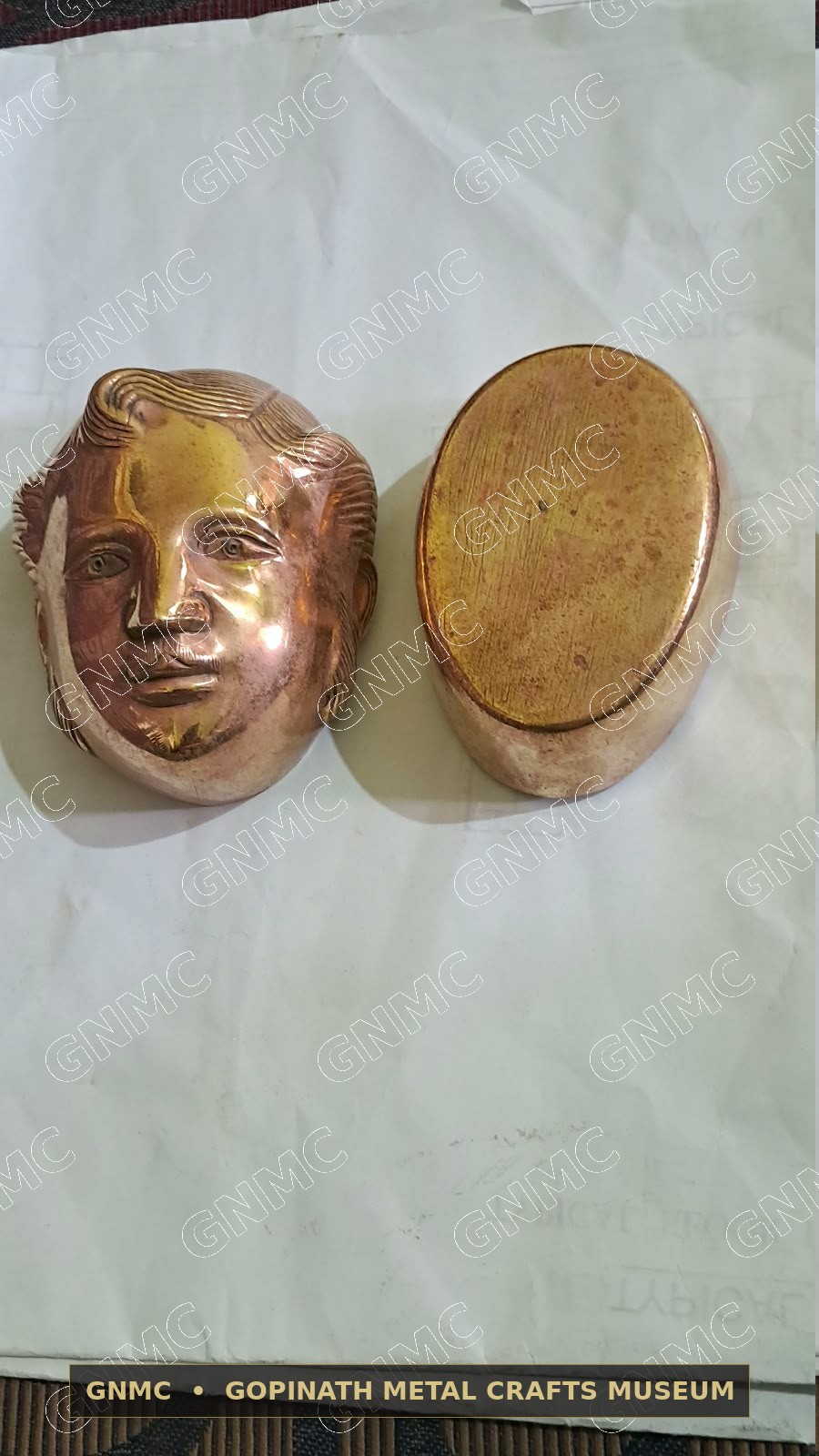
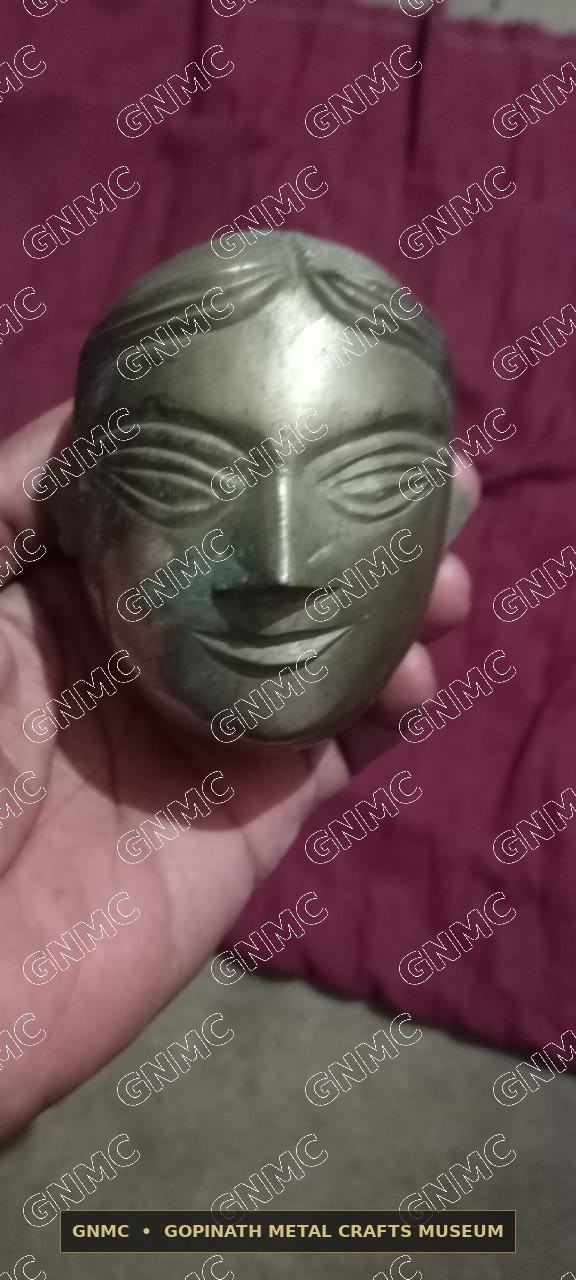
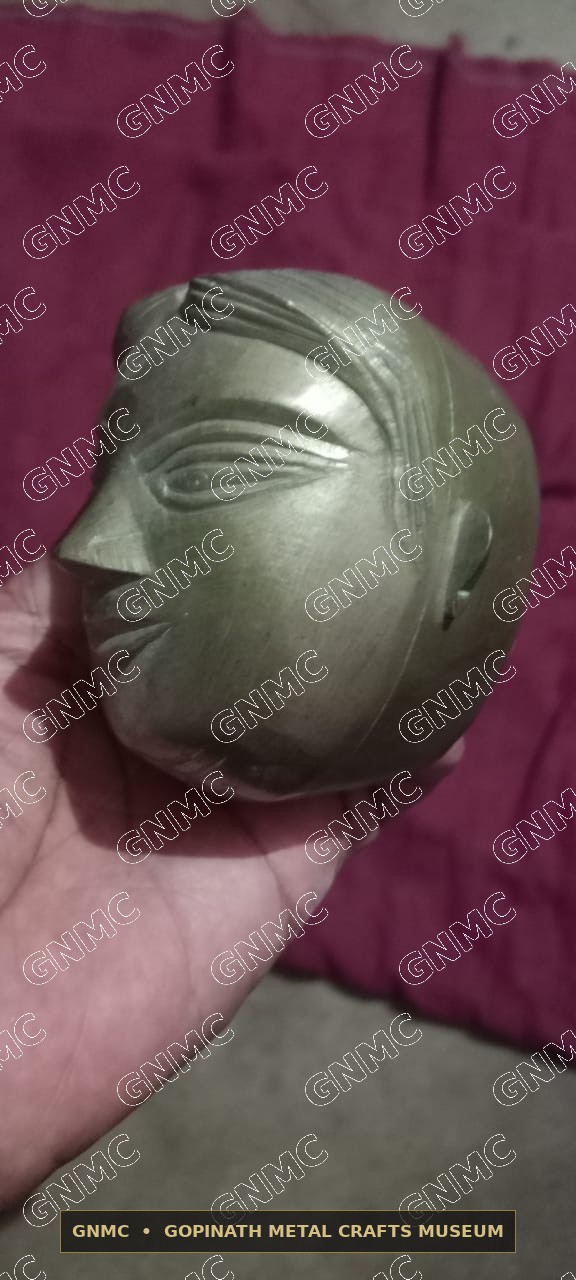
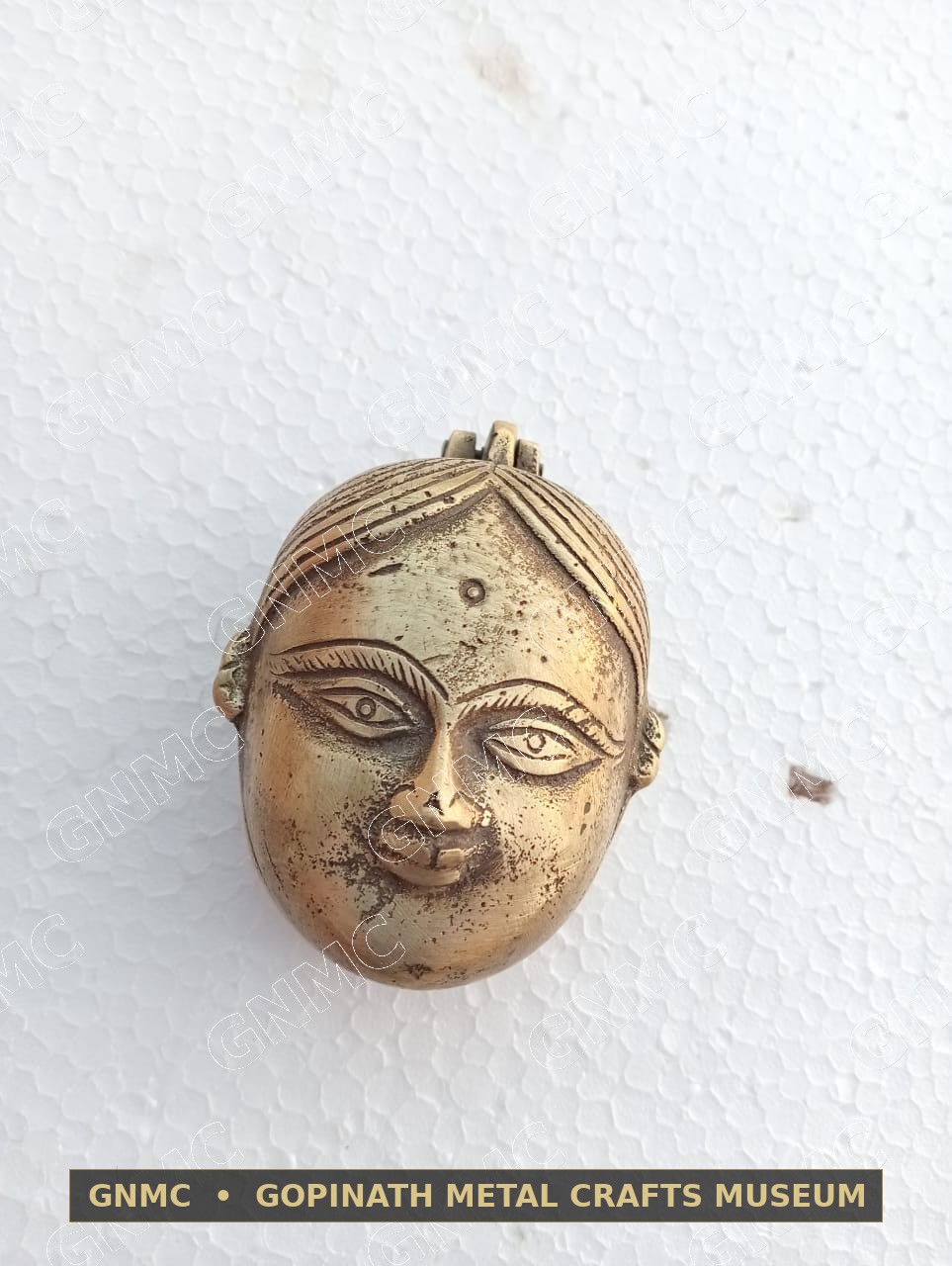
A precious ceremonial keepsake box, locally called "FARUA". Traditionally sculpted in the graceful shape of a woman's head with a fitted lid, historically presented as an heirloom gift to newly married brides for keeping cherished jewelry.
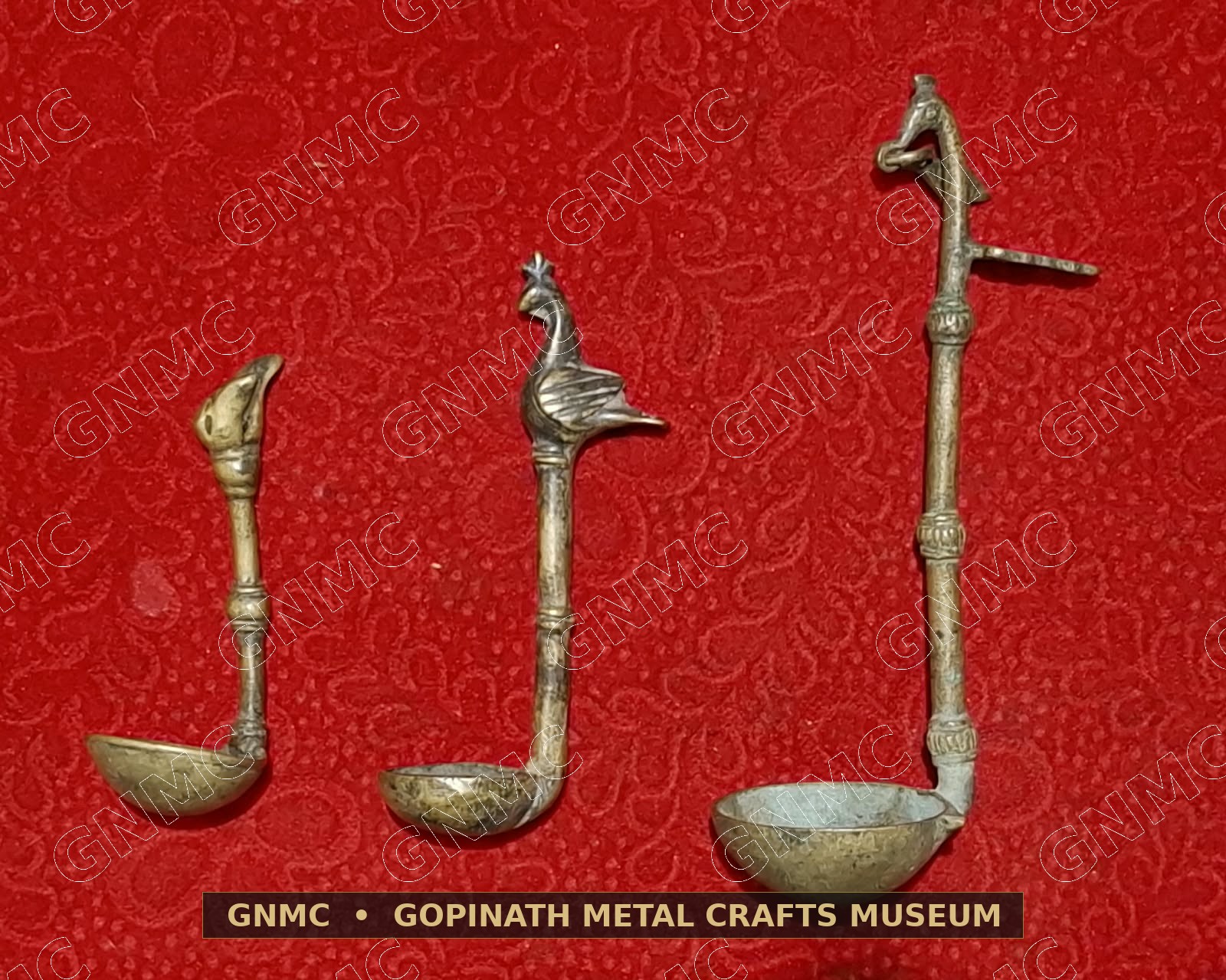
Traditional coconut oil measuring vessel, locally called "Tela Pala". Widely utilized in rural markets during earlier eras, where patrons purchased measured oil units (pala) at neighborhood grocers before river bathing.
A traditional paired betel leaf and lime container, locally called "CHUNAKHAI". Carried inside a woven cotton pouch ("Batua") to share prepared paan among friends and visitors as an emblem of goodwill and hospitality.
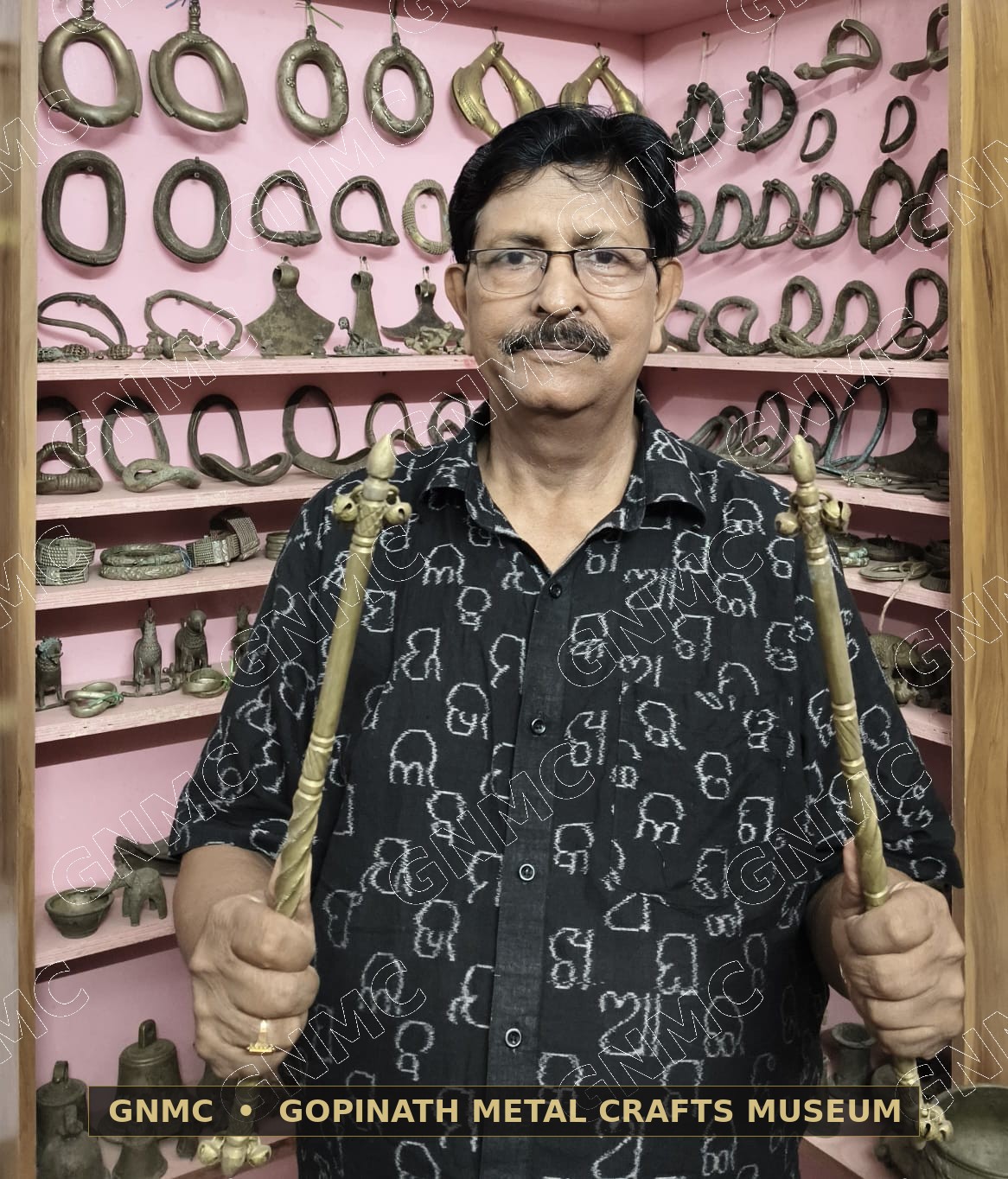
A primitive tribal anklet locally called "KADU GAGOLI", crafted from cast brass with engravings at its four nodes, representing the traditional ornamental heritage of the Desia Kondh community.
A tribal ceremonial liquor vessel, locally known as "JERRY" (capacity approx. 150–200 ml), utilized by the Lanjia Saura community of Odisha in ritual offerings and festive celebrations.
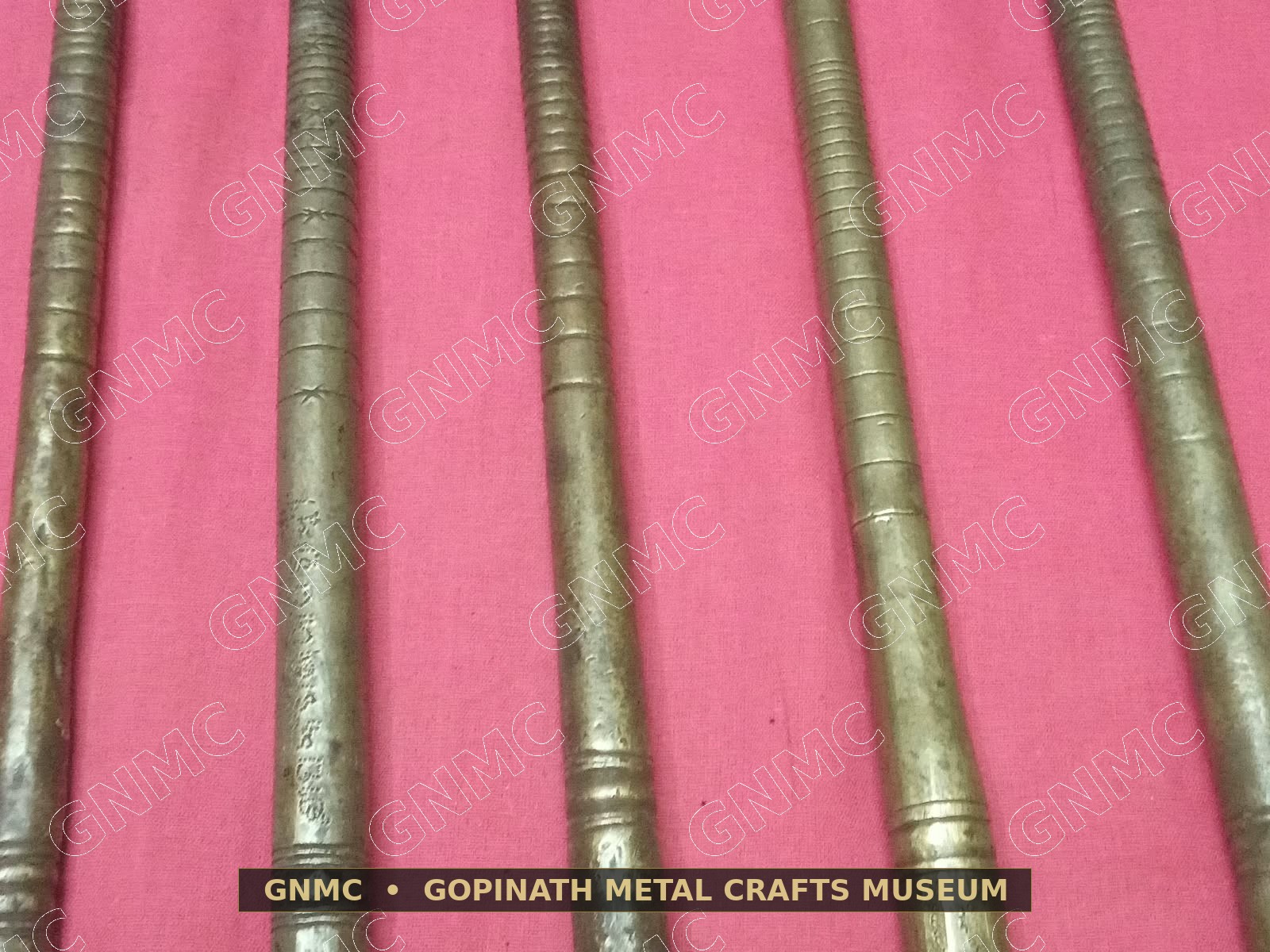
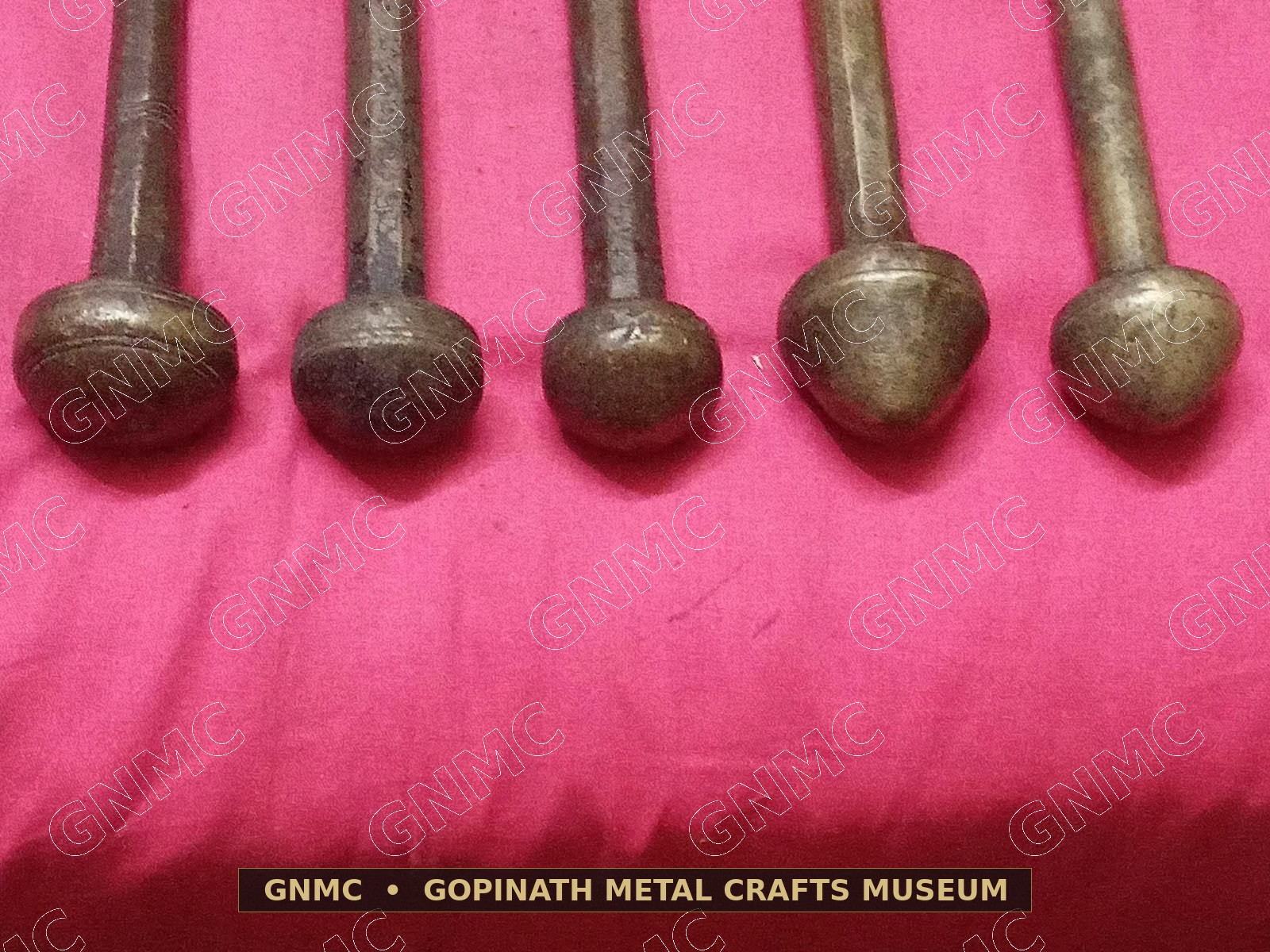
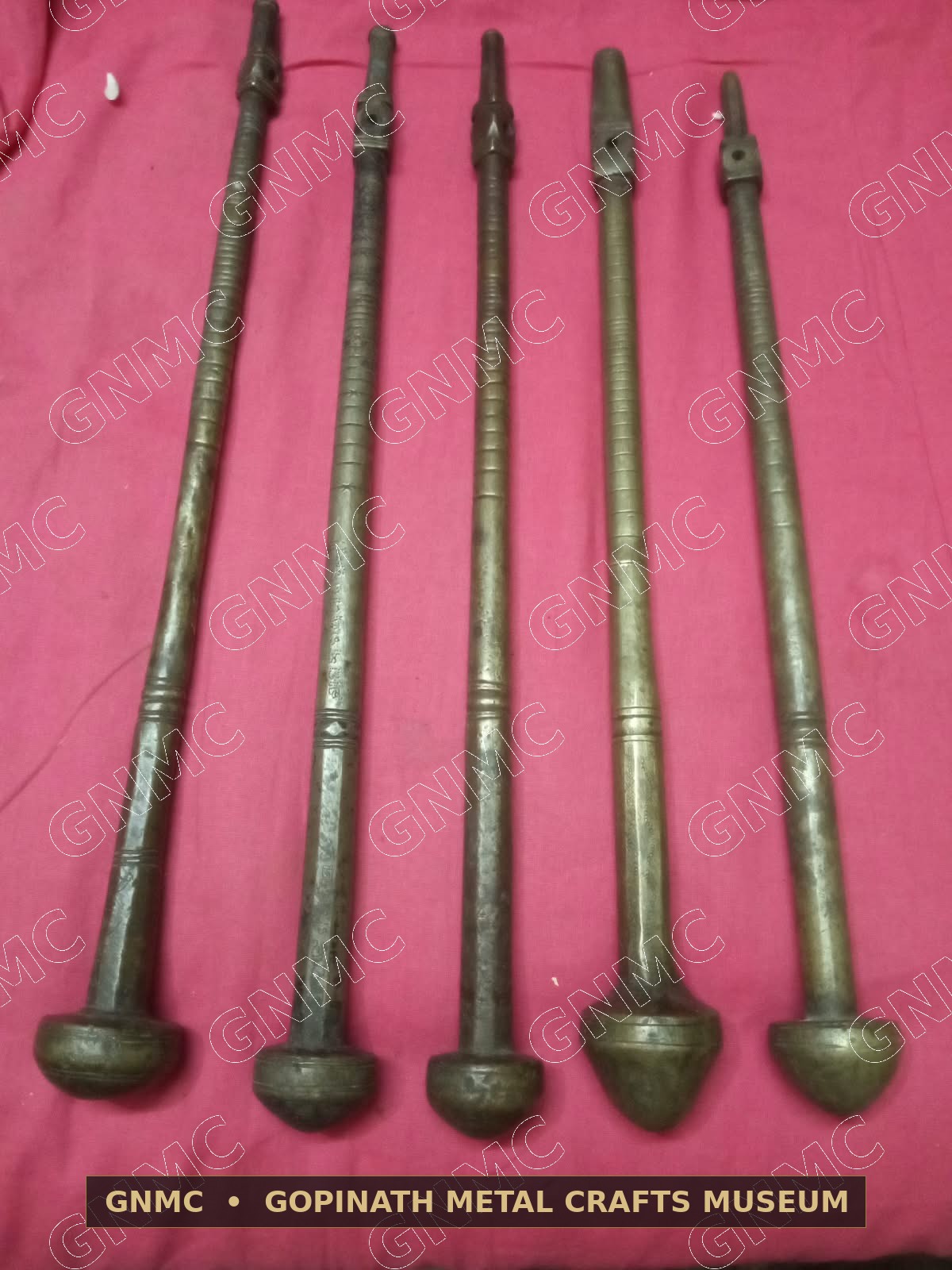
Traditional brass weighing beam balance: utilized across historical markets in Odisha, featuring graduated balance notches ranging from 5 pala (approx. 200 g) to 3 seers (approx. 3 kg), balanced manually with suspended cordage.
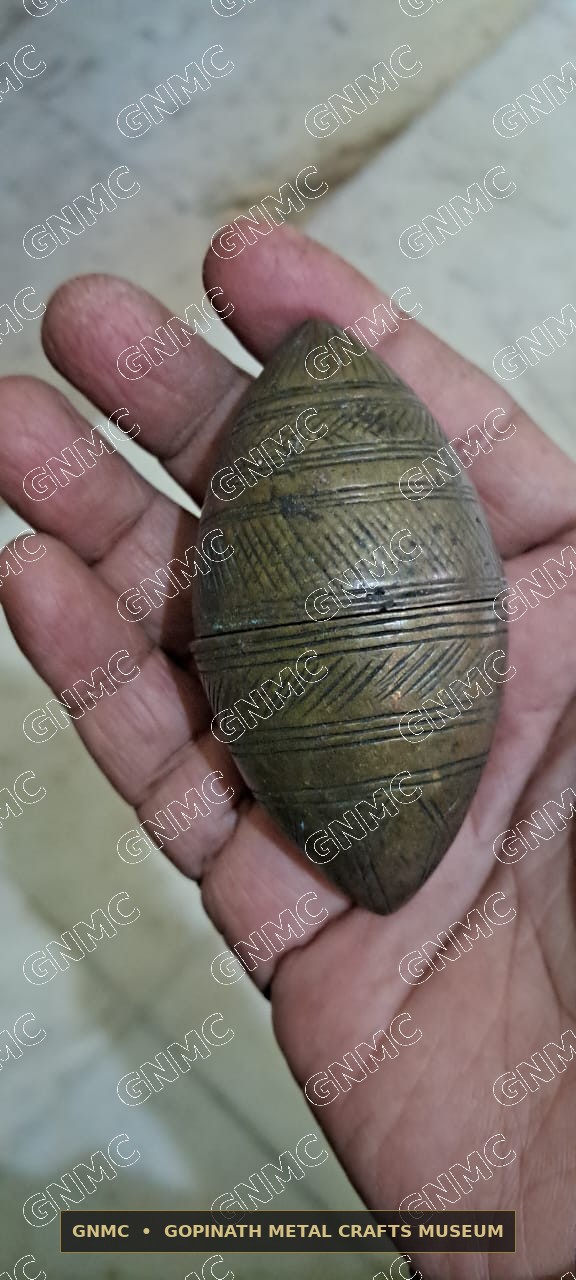
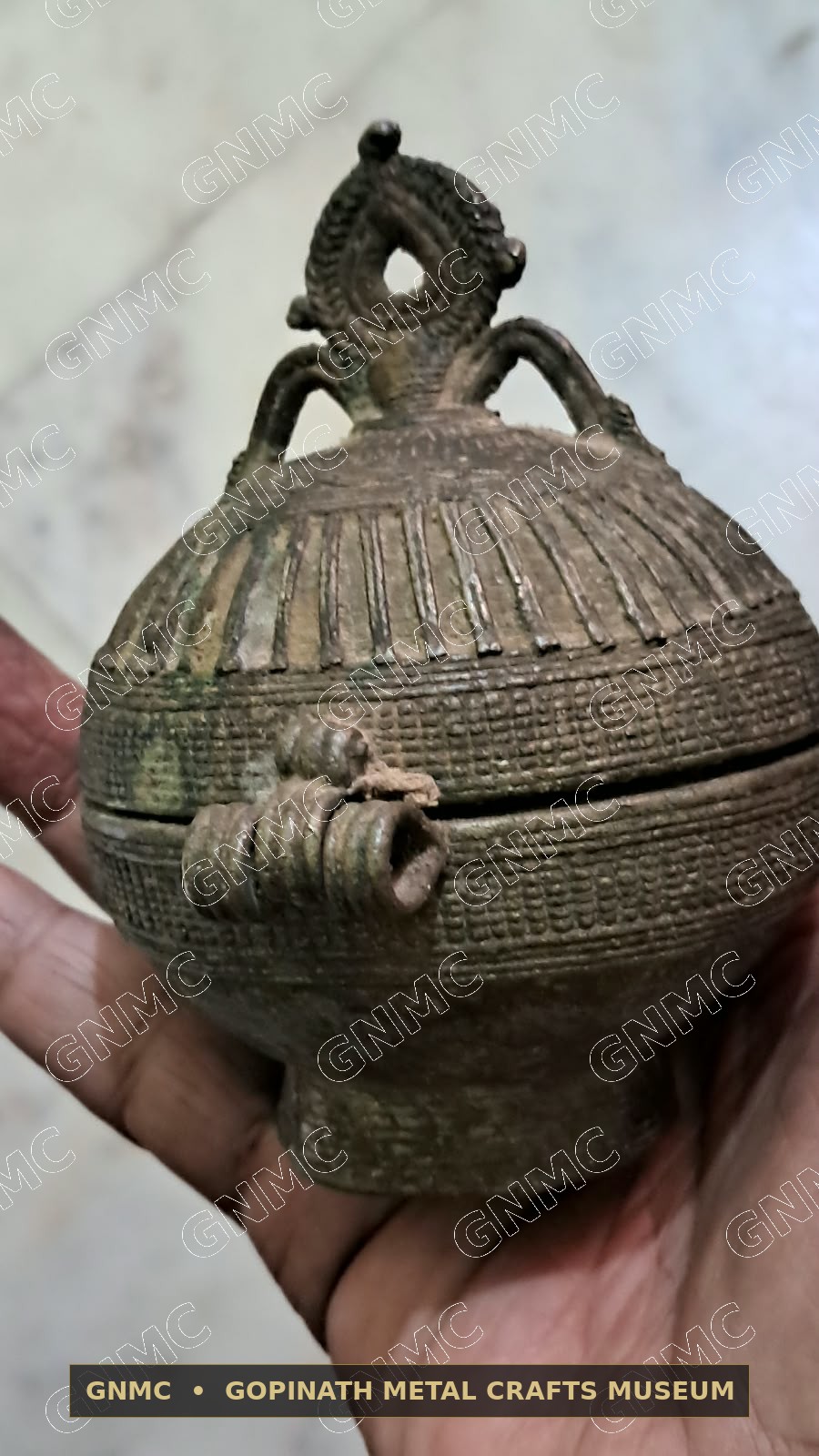
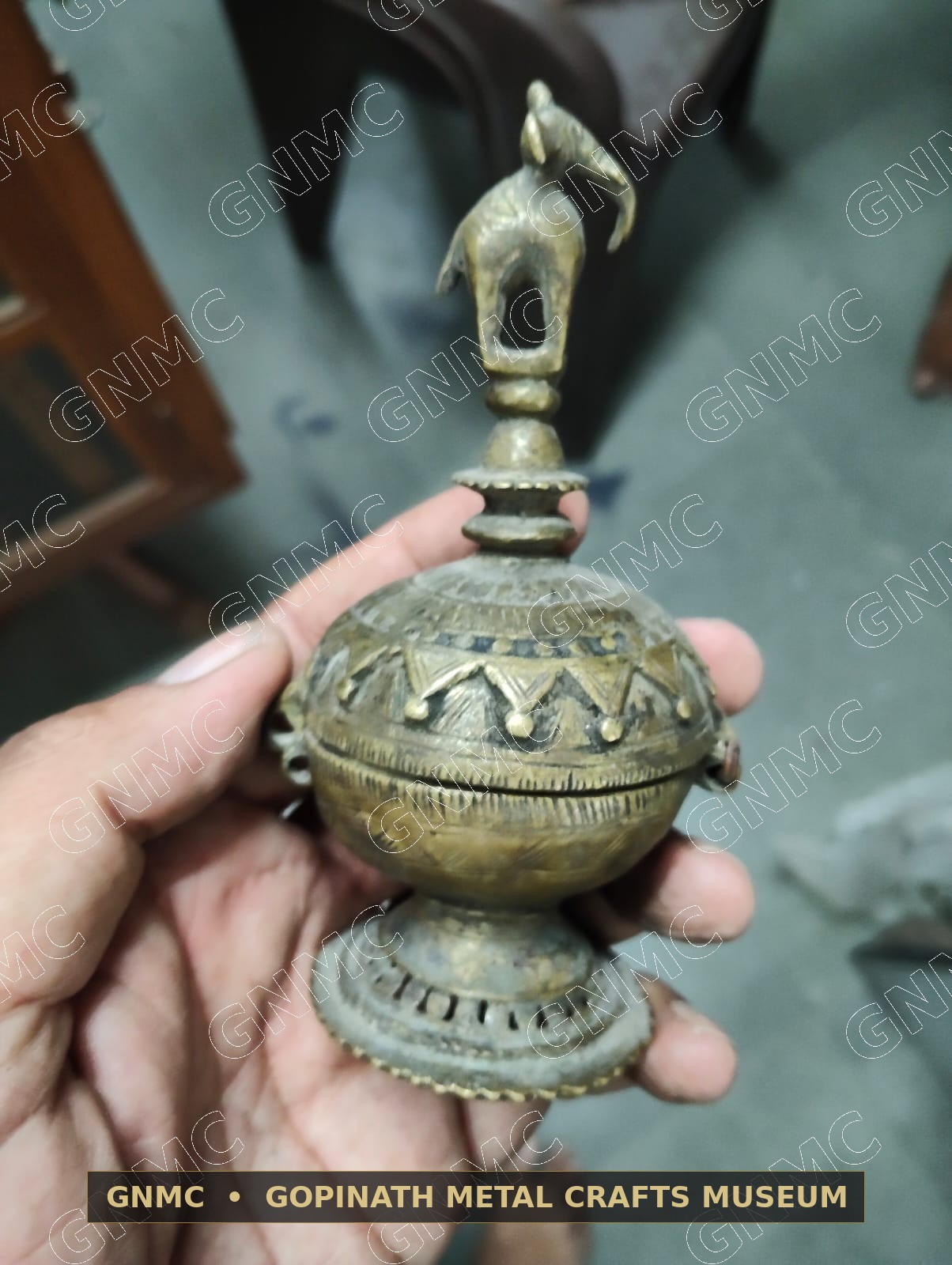
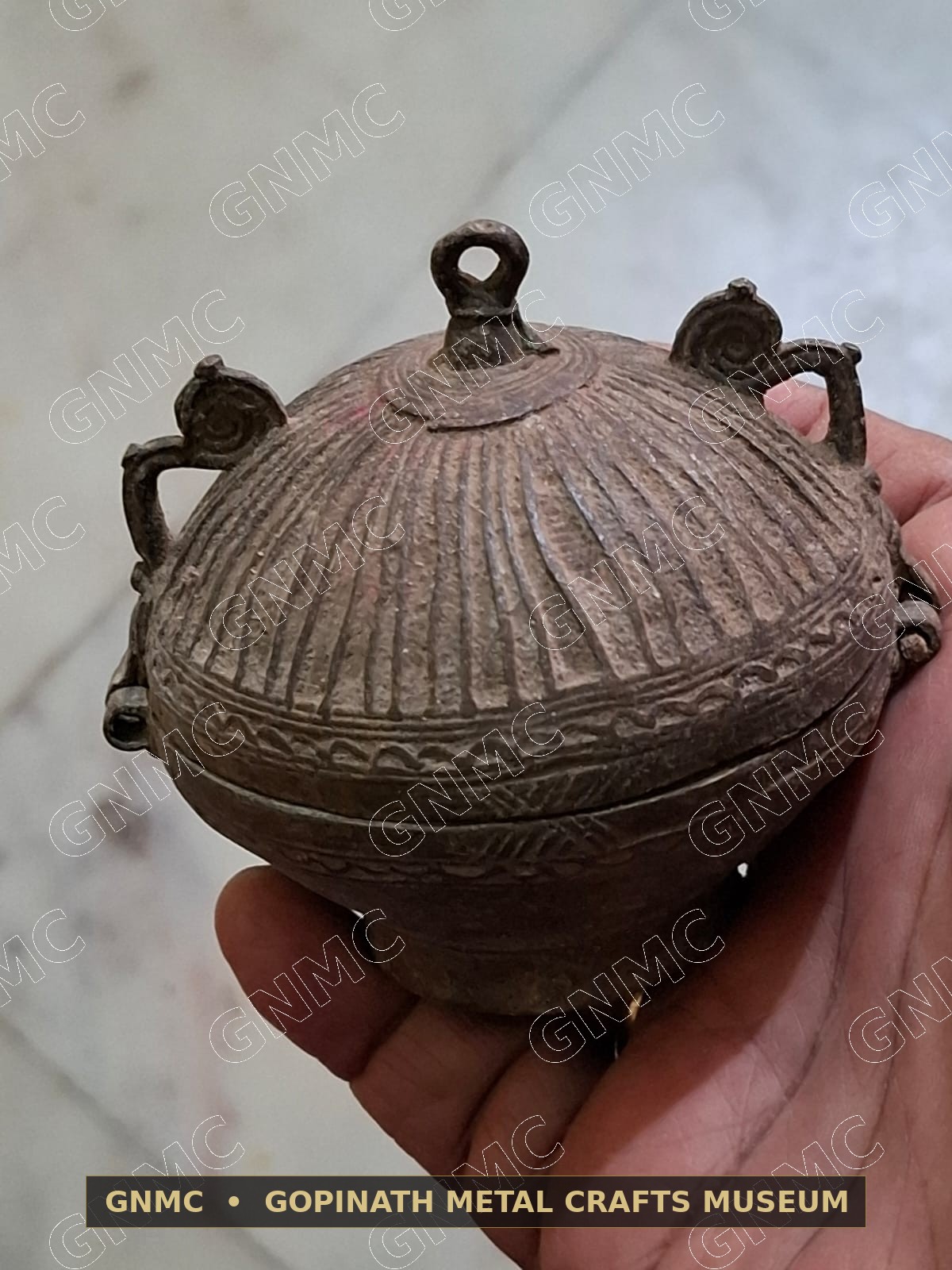
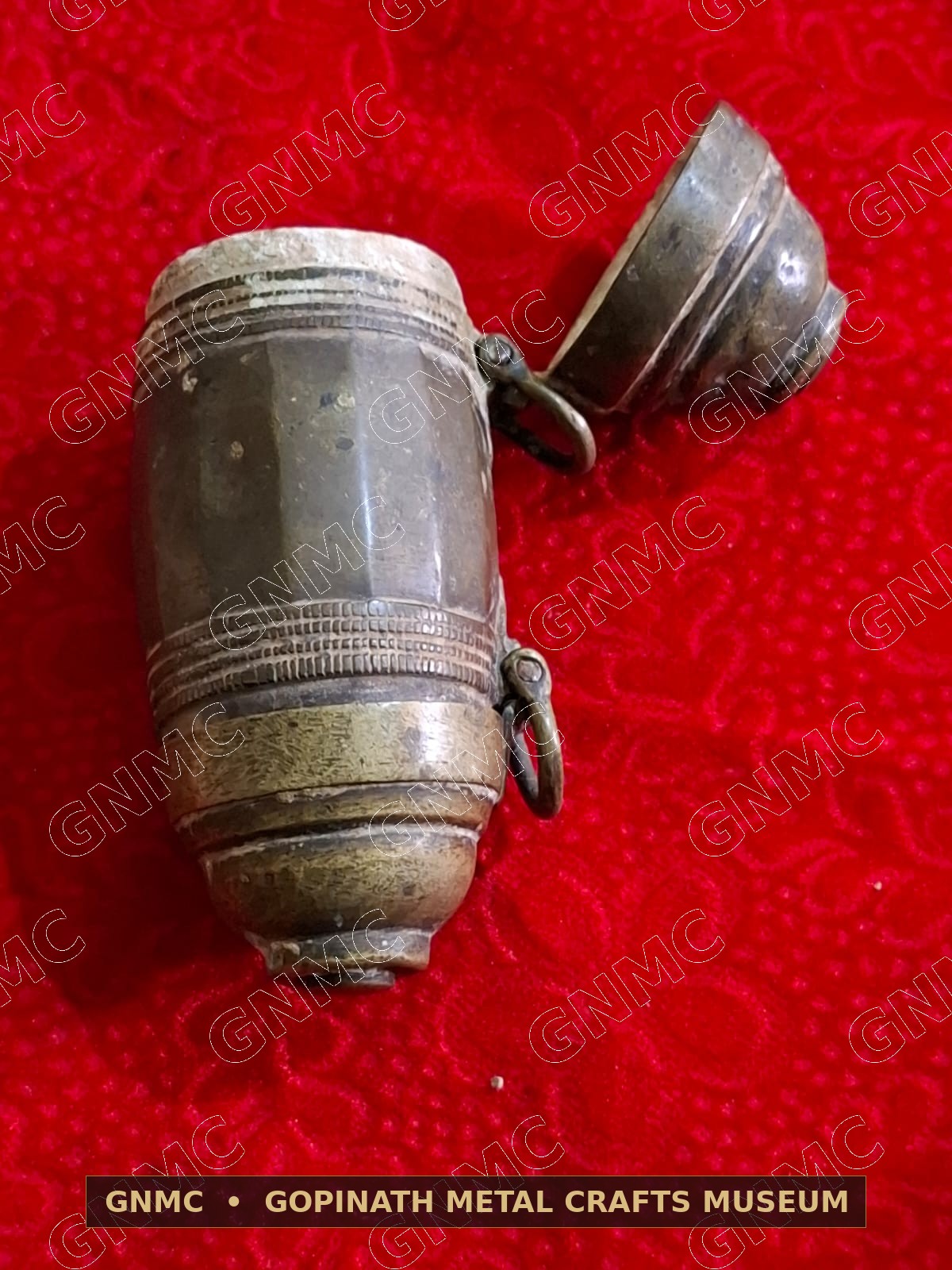
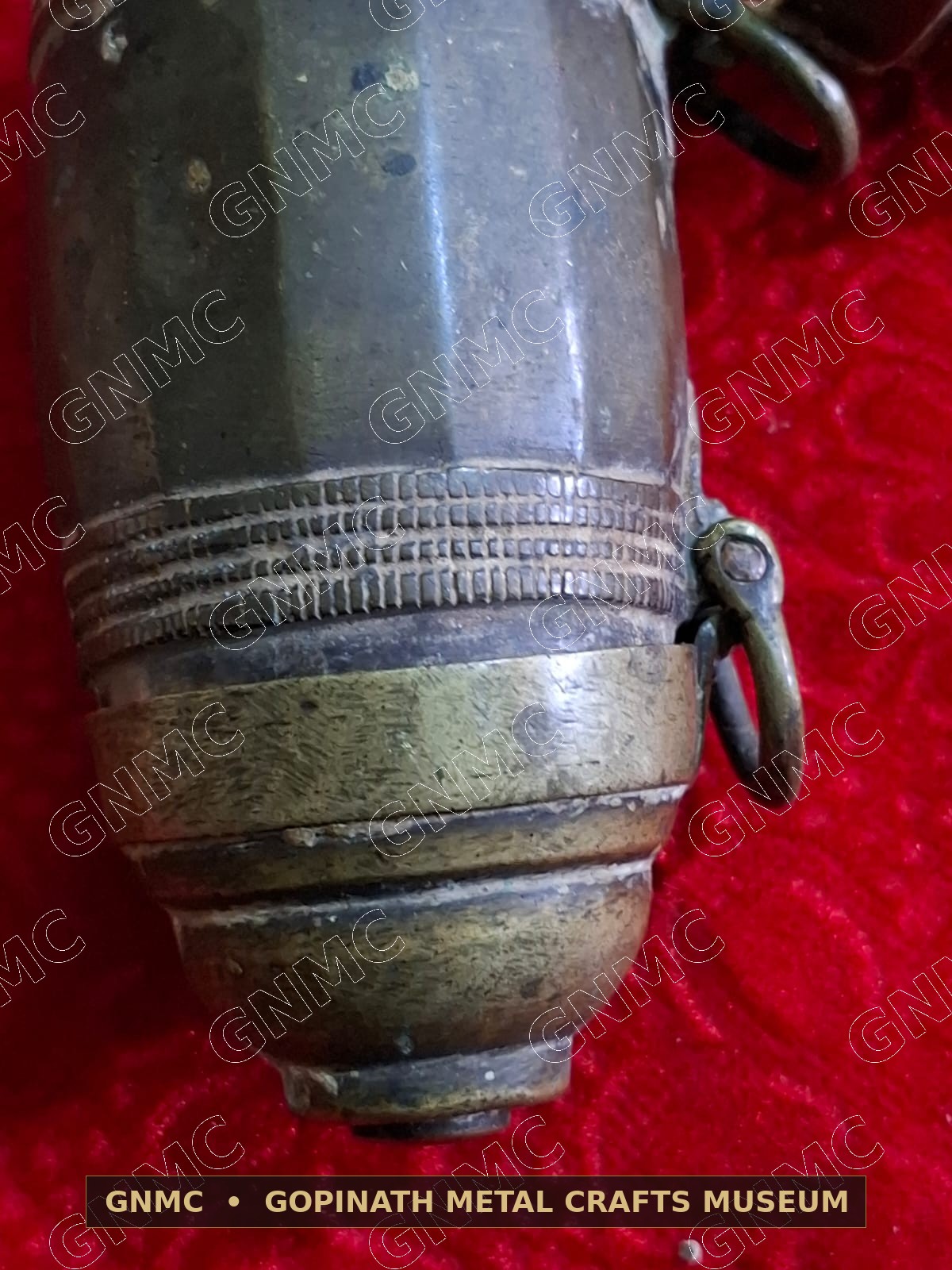
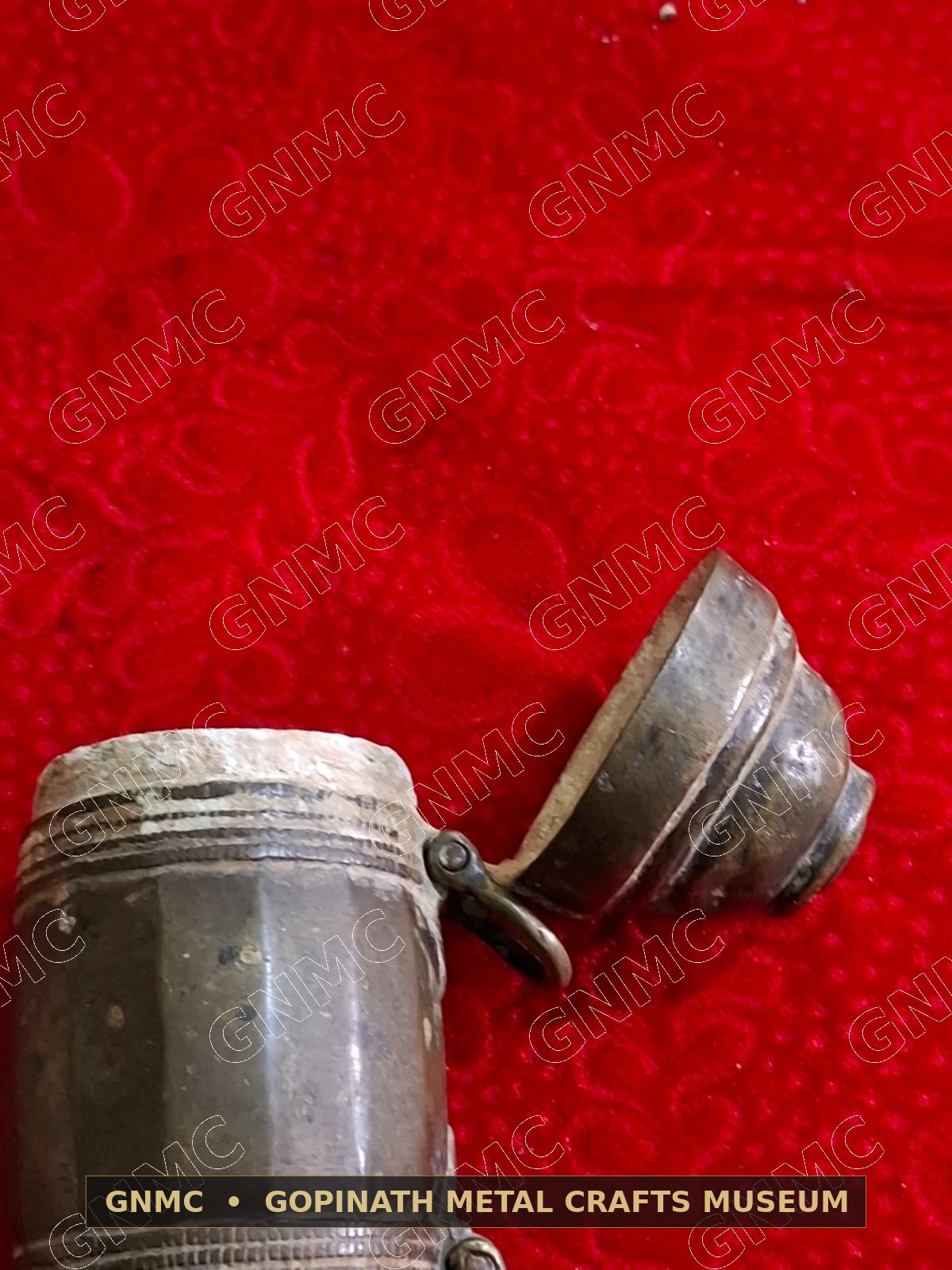
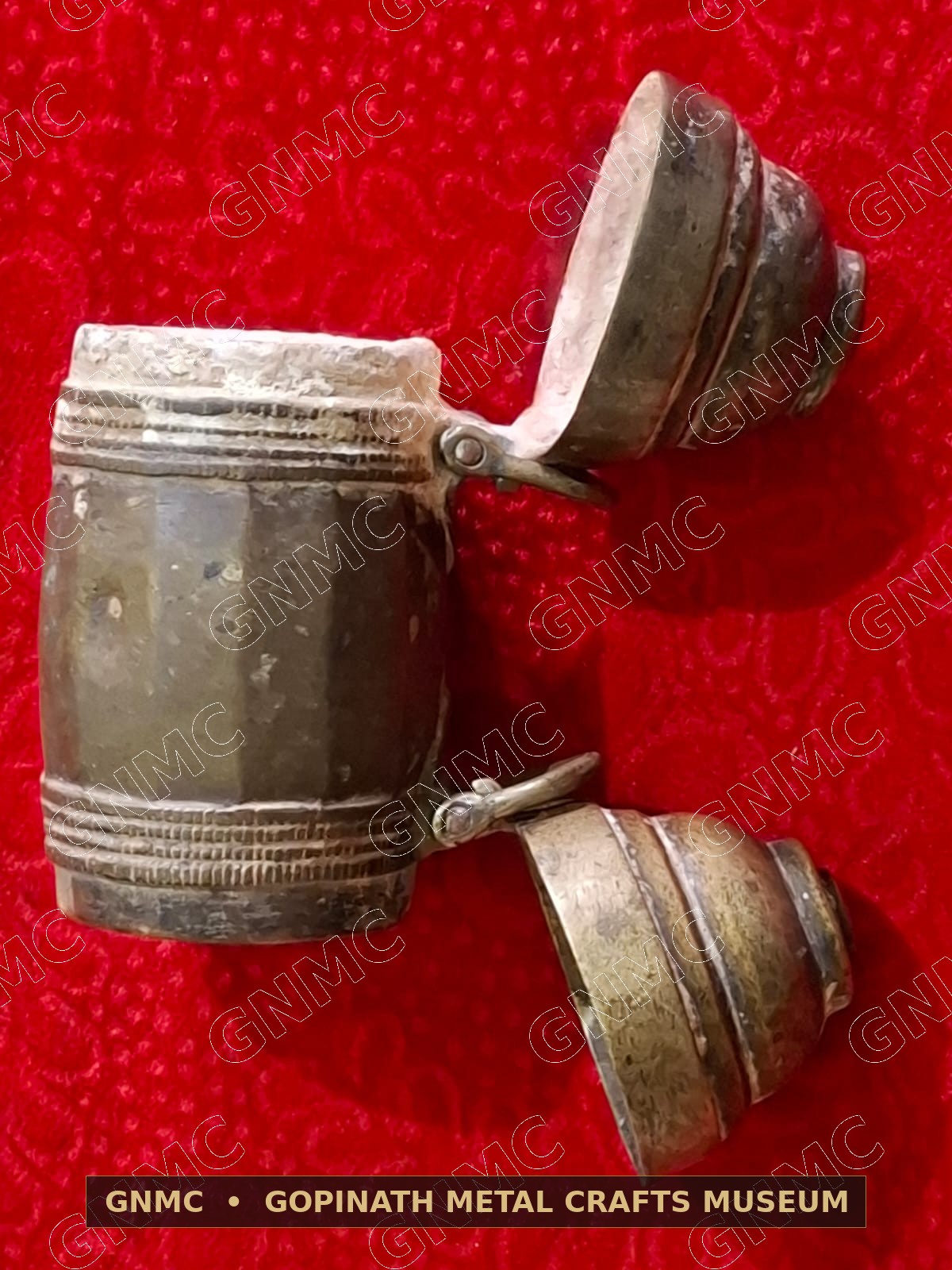
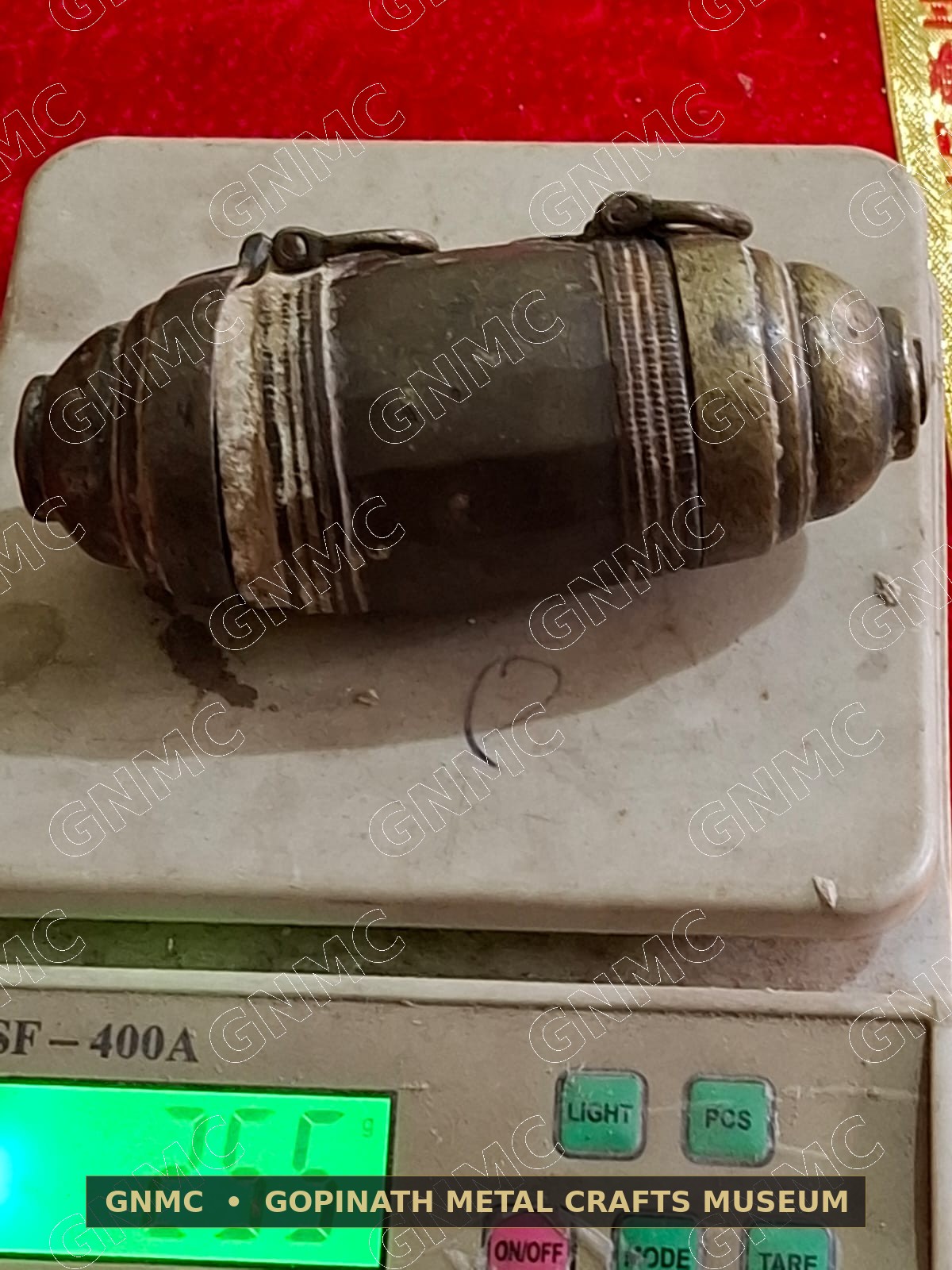
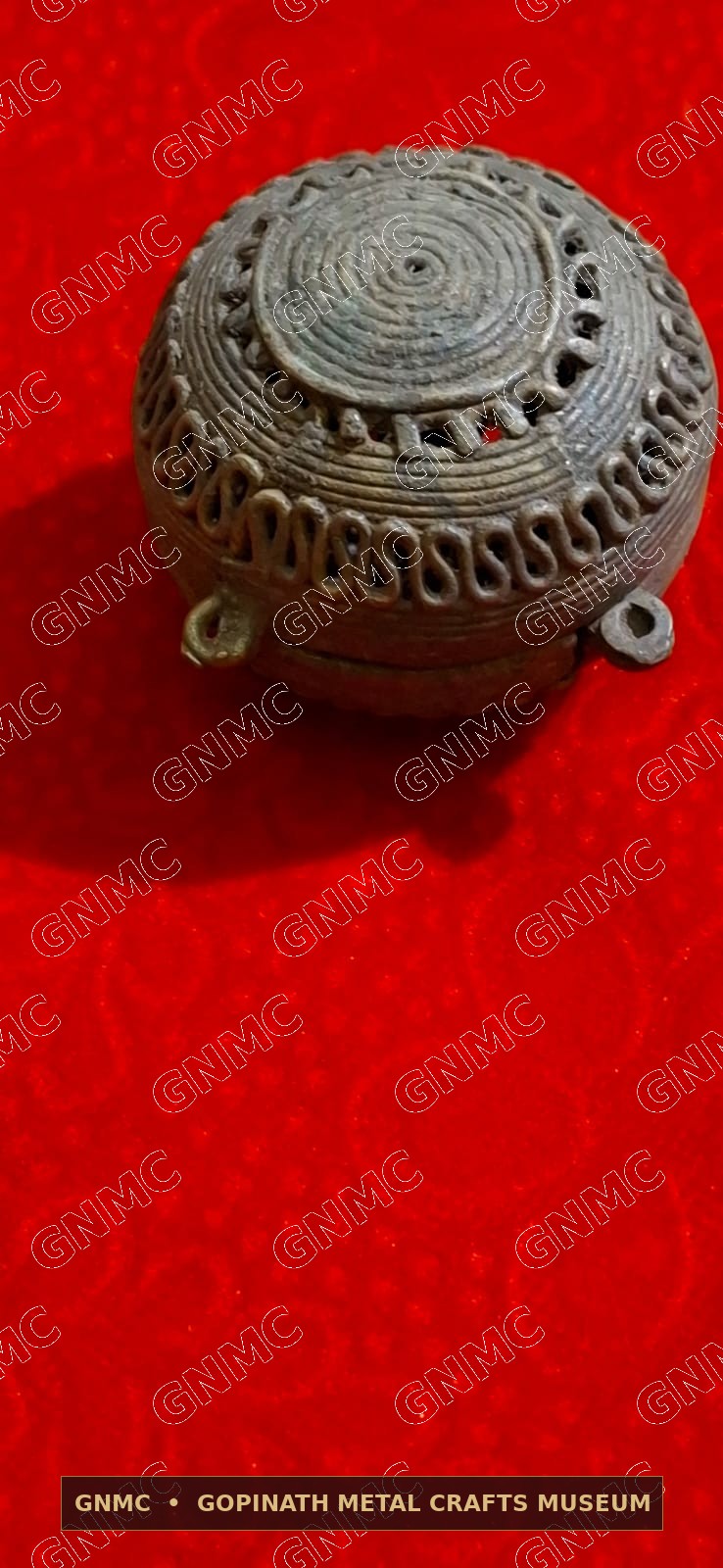
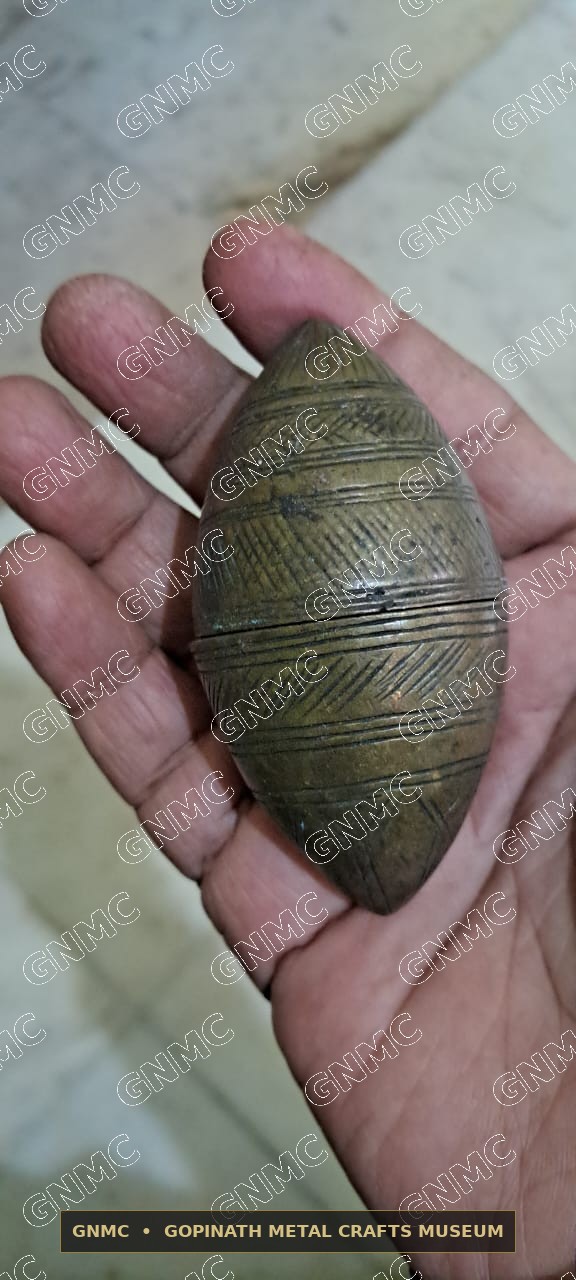
Traditional brass coin-keeping Karata pot (length 3 to 3.5 inches, weight 70 g to 130 g) featuring a removable top lid, preserving the domestic craft heritage of Odisha.
Customer Price – ₹2,200/-
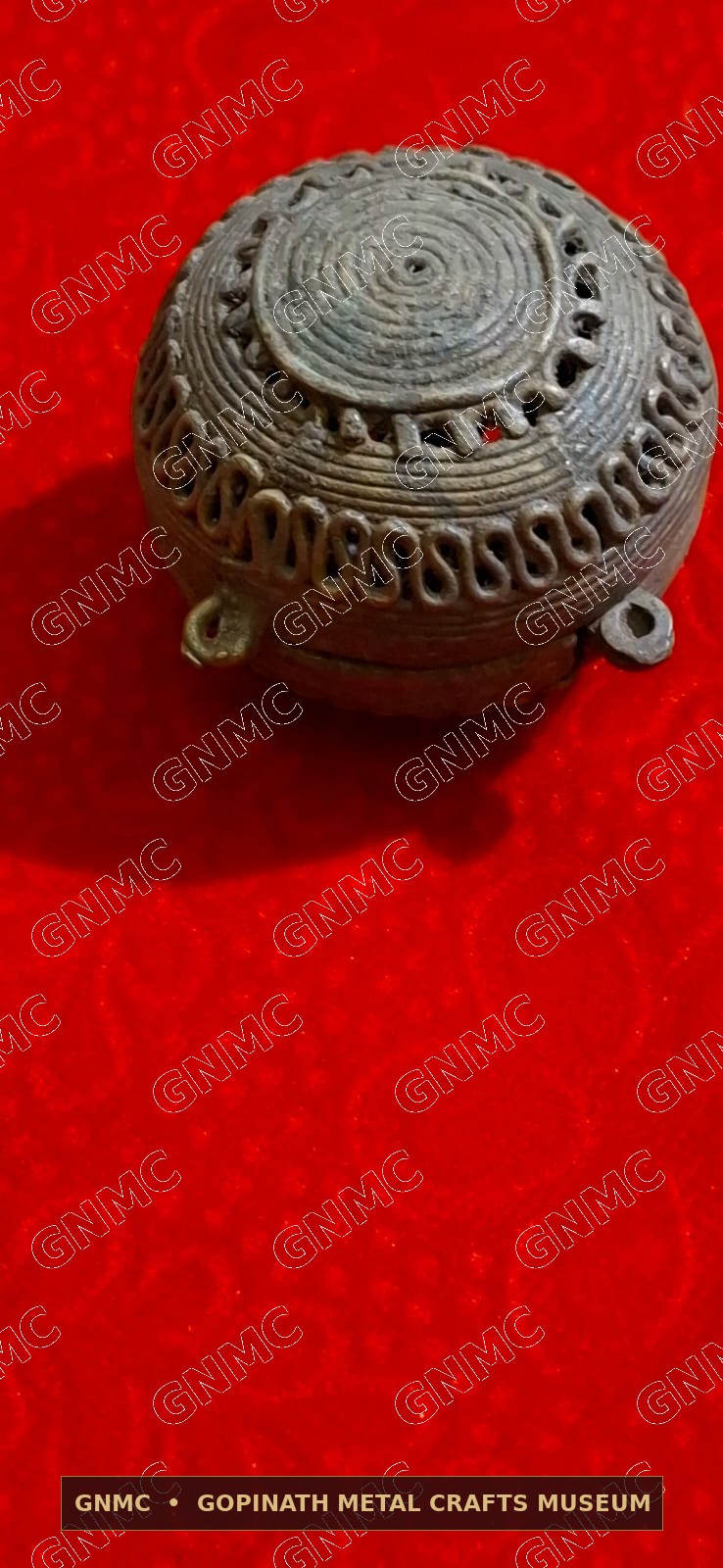
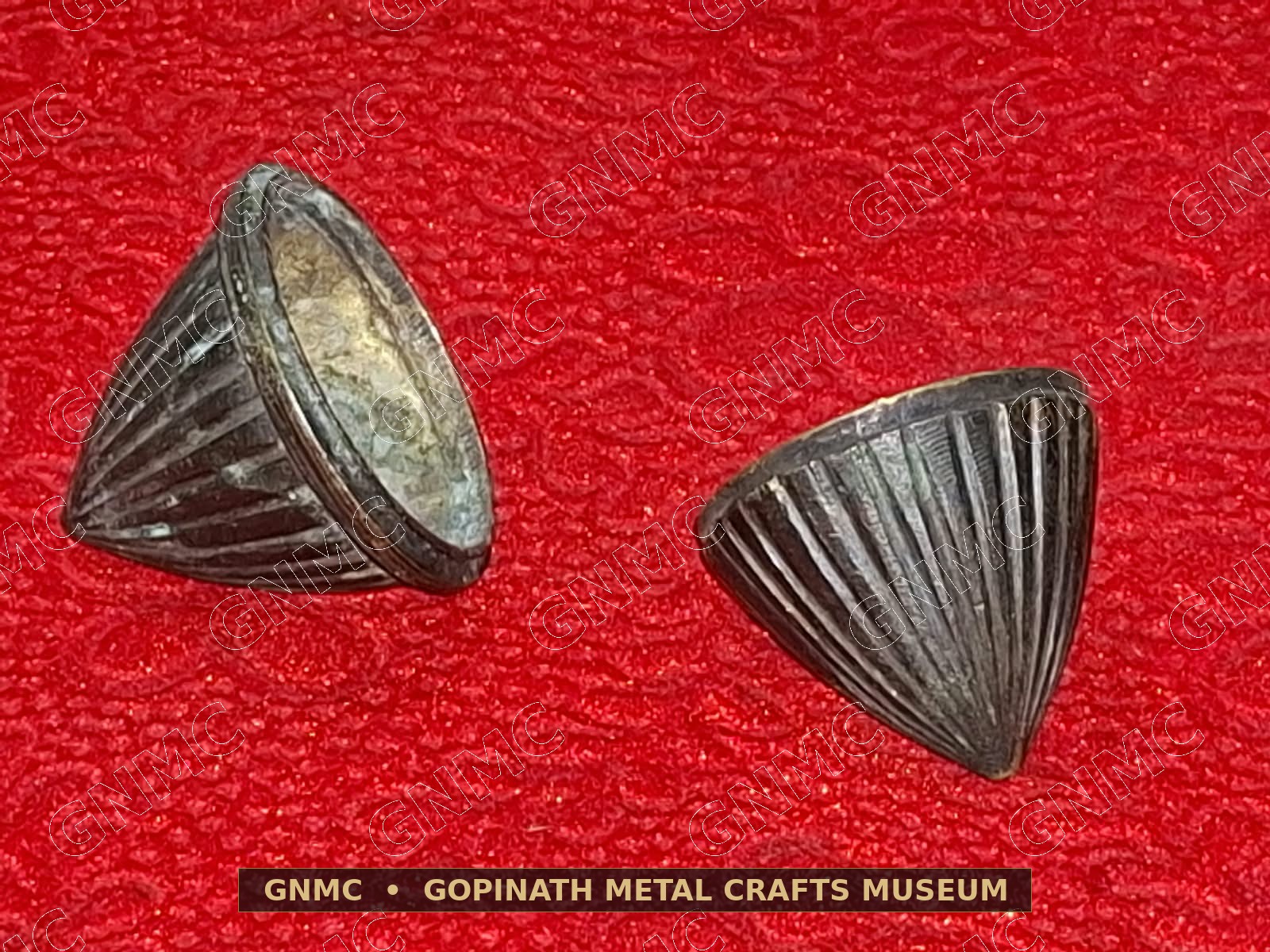
Traditional heirloom coin-keeping Karata pot with sculpted contouring.
Customer Price – ₹5,000/-
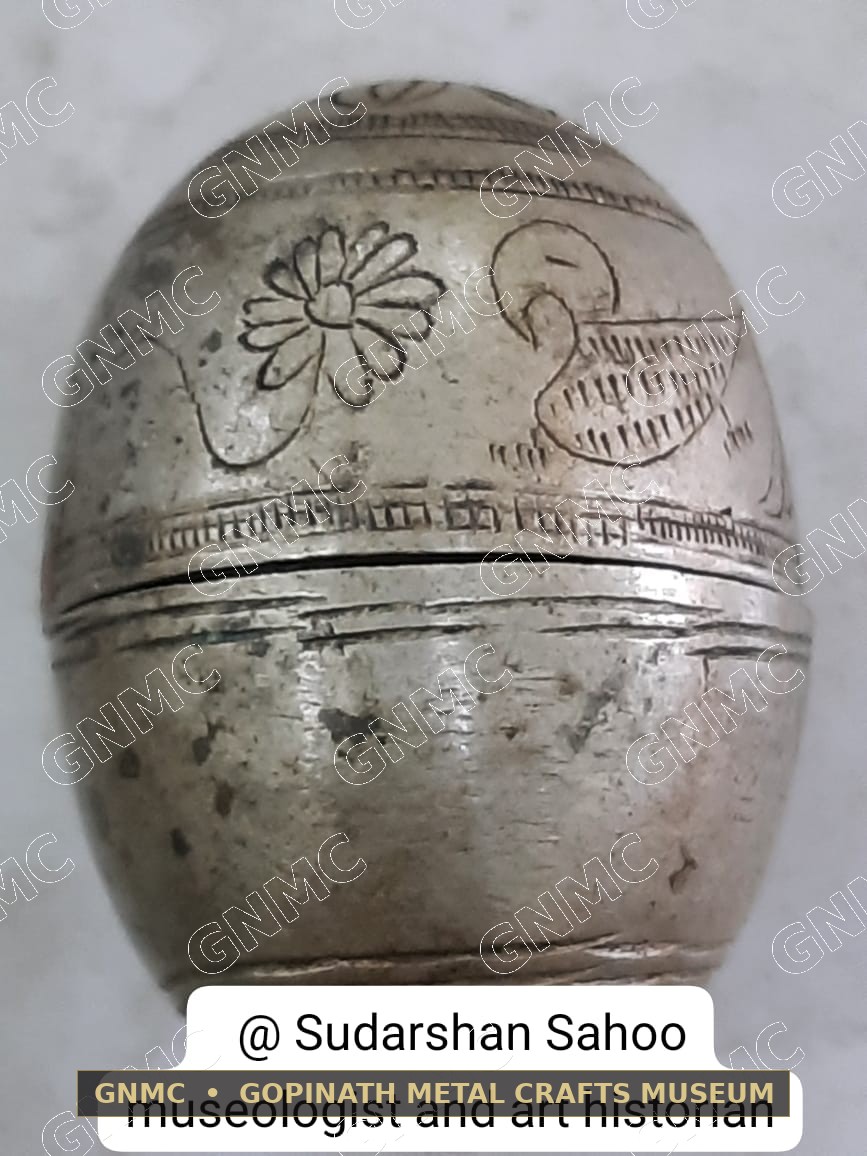
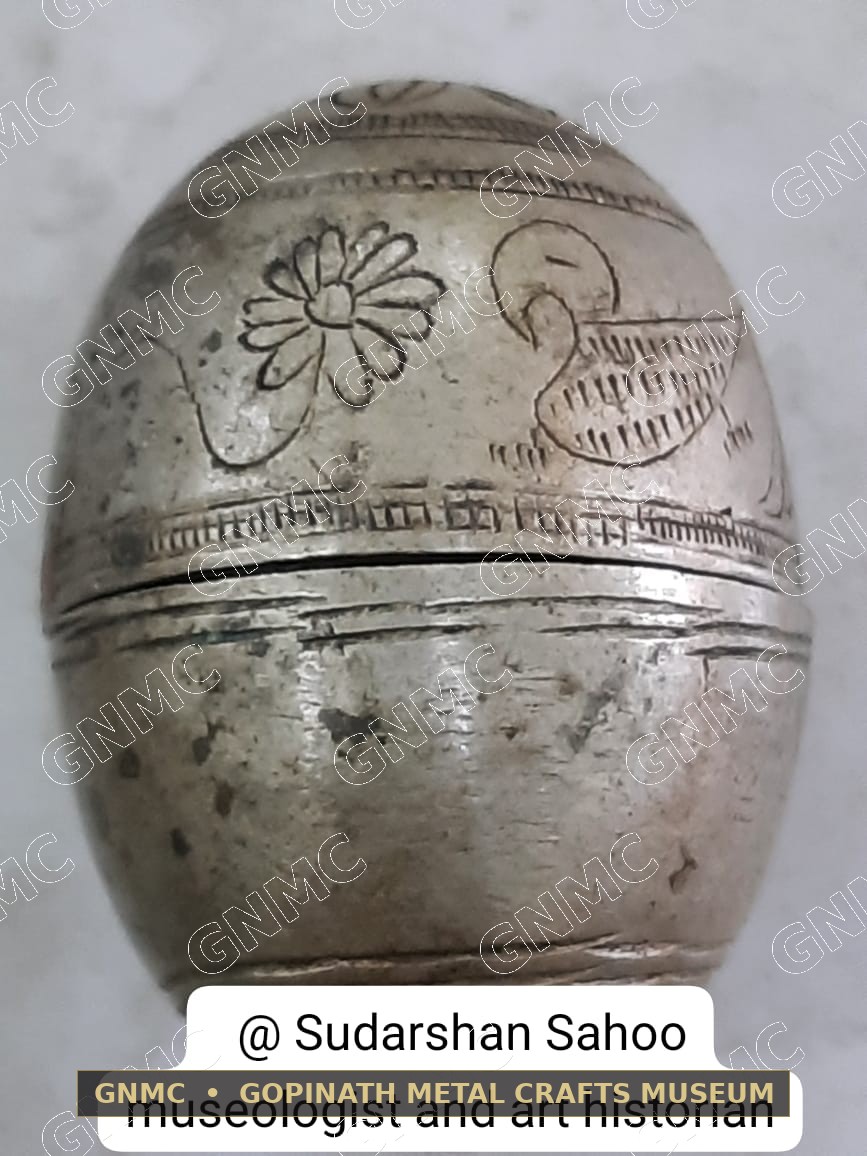
Traditional coin-keeping Karata pot with artisanal latch lid.
Customer Price – ₹3,500/-
Living Archive • Bhubaneswar
Gopinath Heritage Museum of Brass and Bell Metal
Sri Sudarshan Sahoo • Founder, Art Historian & Museologist
Plot No 1084/2608, Tulasi Vihar, Jagamohan Nagar, Jagamara, Bhubaneswar 751030, Odisha, India
Sri Sudarshan Sahoo: The Torchbearer of Odisha's Brass and Bell Metal Heritage
Art Historian & Museologist • Founder, Gopinath Heritage Museum
Introduction
In a world swiftly moving towards modernization, ancient crafts often face extinction. But amidst this, Sri Sudarshan Sahoo, Art Historian and Museologist, a 70-year-old visionary from Village-Kantilo, Odisha, shines as a beacon of hope. Born into a humble Kansari artisan family, he has devoted his life to preserving the traditional brass and bell metal utensils and dying metal artifacts of Odisha. His relentless efforts not only conserve heritage but also inspire a new generation to reconnect with their roots.
The Early Life of Sri Sudarshan Sahoo
Hailing from an artisan family living along the Mahanadi river in Nayagarh district, Sahoo's parents toiled day and night, crafting utensils from brass and bell metal. However, the influx of machine-made aluminum and steel utensils pushed the age-old handicraft towards decline, forcing many artisans into economic hardship.
In an effort to support his family, Sahoo initially joined the banking sector. But the plight of fellow artisans haunted him. Inspired by his father, Late Gopinath Sahoo (a celebrated master craftsman of kansa plates) and his mother, Late Champa Devi (a skilled hand engraver on metalware), he vowed to preserve and promote the dying metal art and craft.
Tribute to Master Craftsmen Late Gopinath Sahoo & Late Champa Devi
In 1988, Sri Sahoo took a revolutionary step. At his own cost, he began collecting ancient brass and bell metal utensils and artifacts. Despite his busy banking career, he transformed half of his residential house in Jagamara, Bhubaneswar into the Gopinath Heritage Museum of Brass and Bell Metal Crafts and Neglected Arts.
Today his museum houses around 8,000 rare ancient artifacts (including 2,000 tribal pieces) displayed across 25 galleries. It has become a treasure trove for researchers, students, historians and heritage lovers across India.
Significant Contributions to Brass and Bell Metal Craft Revival
1. Collection and Conservation
For over 38 years, Sri Sahoo has meticulously collected, catalogued, and conserved precious brass and bell metal artifacts, investing his personal resources.
2. Innovation and Artistic Design
Blending traditional craftsmanship with innovation, he has designed new artistic pieces through his own creativity, such as:
HAND ENGRAVED
Clever Crow (Brass vessel with a crow atop)
Kandarpa Hasti, "Kandarpa Ratha", "Kandarp Nauka" and "Kandarp Aswa" on brass plates
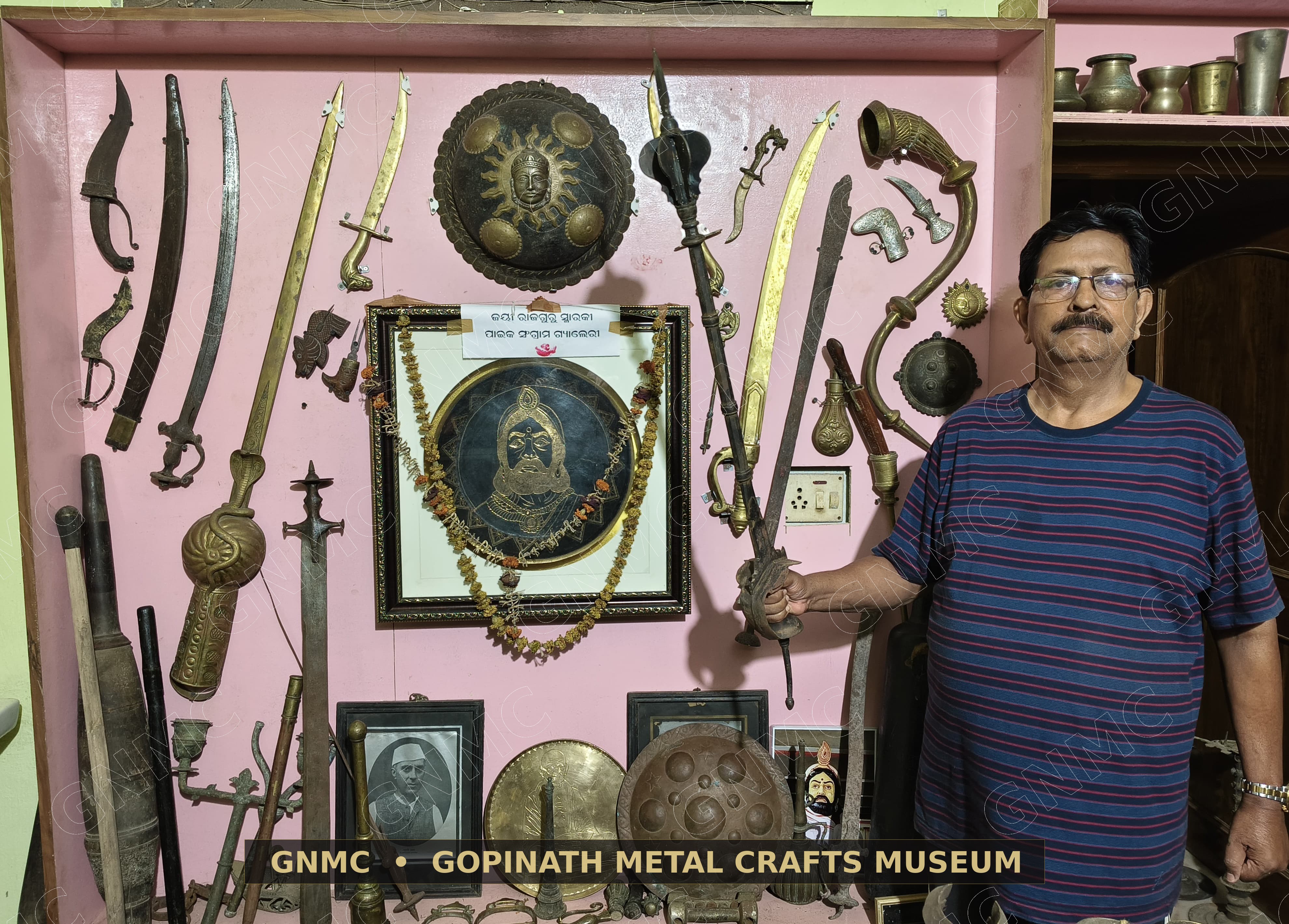
Images of Bapu, Netaji Subhas Chandra Bose, Dr. APJ Abdul Kalam, Jayee Rajguru and other freedom fighters on bell metal plates.
3. Employment Generation
Through arranging raw materials, marketing initiatives, and design innovation, Sri Sahoo has created sustainable employment opportunities for skilled artisans.
4. Research and Publications
Armed with an M.Sc in Agriculture from OUAT Bhubaneswar, Sri Sahoo has extensively researched the health benefits of brass and bell metal utensils. His findings have been published through prominent heritage journals like PURUSHA and major newspapers including Dharitri, Sambad, Prameya, and Sakala.
His popular articles include:
Pakhala Kansaa
Kansaa Thaalira Kathaa
Dibi eka alokita itihasa
Handaa Haandira Sansaara
Utkaliya Paramparare CHILLAM
5. Public Awareness through Media
Sri Sahoo has appeared on numerous television programs and cultural broadcasts, including:
Doordarshan, Bhubaneswar — International Museum Day Discussion
News-7 TV — Breakfast Odisha, Atulya Pakhala (Biswa Pakhala Dibas)
He has tirelessly campaigned about the socio-economic impact and health benefits of traditional utensils through print and electronic media.
Key Addresses & Workshops:
Culture Department, Odisha Govt. — Speaker on Utkaliya Kansa Kala Re Ama Asmita
Utkal University, Bhubaneswar — Speaker at National Seminar on Preservation and Conservation of Heritage with special reference to Odisha
JDCA, Bhubaneswar — Presentation on Use and benefits of traditional Kansa Pital Bartan
Santiniketan (Centre of Excellence) — Speaker and paper presentation on developing tribal museum documentation, preservation, and curation
Chilika Folk Carnival — Keynote Speaker
Impact of His Work
Revival of Dying Crafts: His efforts have reignited hope among Kansari artisans, offering them a sustainable path to continue their ancestral heritage.
Health Benefits Awareness: More households across Odisha and India are rediscovering brass and bell metal utensils for their scientifically proven health advantages.
Educational Influence: Students, scholars, and researchers visiting his museum gain first-hand insights into Odisha's rich metallurgical legacy.
Economic Empowerment: Artisan families receive renewed livelihood opportunities through design contemporary innovations of traditional skills.
Why Sri Sudarshan Sahoo's Work Matters
Sri Sahoo's dedication to preserving Odisha's brass and bell metal handicrafts is not just an act of conservation, but an active mission to revive a vanishing heritage. His work inspires artisans, educates the public, and contributes to boosting India's rich cultural legacy.
His museum, research foundation, documentation, and awareness campaigns are critical milestones toward keeping ancient traditions vital in the modern world.
Conclusion
In a fast-changing world, the preservation of traditional crafts is vital. Sri Sudarshan Sahoo's life's work stands as a testament to passion, perseverance, and pride in one's roots. His efforts ensure that the glorious craftsmanship and metallurgical genius of brass and bell metal lives on for generations to come.
Let us celebrate and support this visionary guardian of India's living heritage!